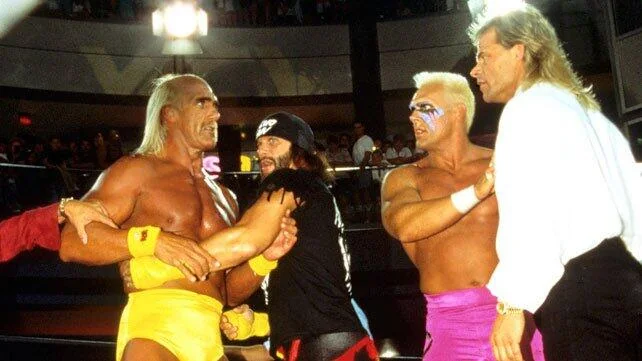
WWF ultimately prevailed over WCW when the company signed a deal for WCW assets from Turner, announced on March 23, 2001. The final Nitro aired on March 26, when Shane McMahon claimed on television that he was the buyer. Those dates mark different things. The first belongs to the business deal, the second to the farewell broadcast and the story WWF built around it. The people who made Raw and Nitro worth switching between had been competing for the same Monday-night viewers since 1995.
How Raw and Nitro became Monday night rivals
Raw arrived first. The World Wrestling Federation launched Monday Night Raw on USA Network from New York’s Manhattan Center on January 11, 1993. The close crowd and small room made the live hour feel different from the promotion’s existing television offerings. When WCW introduced a live flagship on TNT two years later, the choice of Monday put competing national wrestling programs in front of cable viewers on the same night. The usual stakes of a title match now sat alongside another question: would the main event still be the most interesting thing on television once fans checked the other channel?
Nitro’s debut and the decision to go head-to-head
WWE’s account of Nitro’s launch, which draws on the people who made it, describes WCW executive Eric Bischoff pitching prime-time television to Ted Turner. The result began on September 4, 1995 at the Mall of America, with spectators lined up at the surrounding balconies. The opener paired Brian Pillman with Jushin Thunder Liger. Hulk Hogan defended his title against Big Bubba Rogers, and Lex Luger’s appearance brought the WWF connection into the first broadcast. Look at a clip of the open concourse and ring and you can see how differently the two shows could present the same basic attraction.
What the ratings battle changed about the shows
Both promotions gave fans a reason to catch a weekly broadcast as it happened. On Raw in January 1998, Steve Austin’s confrontation with Mike Tyson helped set up WrestleMania XIV. On the July 6 Nitro, WCW went the other way and put Goldberg’s world-title challenge against Hulk Hogan on regular television. Seeing the finish to that match mattered immediately, before a viewer had bought a pay-per-view. WWF’s 1999 SEC filing described Raw as the top regularly scheduled cable series for nineteen consecutive weeks through June 30, using Nielsen ratings. That was a broader cable ranking, and it shows the kind of audience claim WWF was making by the end of the decade. The site’s Attitude Era guide picks up the WWF characters and style that took hold during that run.
What WWF bought from Turner in March 2001
The paper trail has three dates. On Friday, March 23, World Wrestling Federation Entertainment, Inc. announced a binding agreement with Turner Broadcasting System, then part of AOL Time Warner. On Monday, March 26, fans saw the last Nitro and the WWF-led ownership angle. On Friday, March 30, WWF announced that the transaction had closed. The company’s Form 8-K filed with regulators reproduces both Friday releases as separate exhibits. It explains how Monday could mark the public farewell while the company had another announcement to make later in the week.
The March 23 announcement and the assets in the deal
The buyer received global rights to the WCW brand, tape library and other intellectual property. WWF’s fiscal 2001 annual report describes the transfer as substantially all of WCW’s intellectual properties and certain other assets. That covered the rights behind the name and the hours of old footage that could be edited into a home video or used to sell a later television project. The networks themselves, TNT and TBS, stayed with Turner. The rights to the library and a weekly television slot are different parts of a wrestling operation. WWF could use WCW’s name and footage after the old Monday slot was gone.
If you’re looking up what WWF paid, $2.5 million is the purchase price in the fiscal 2001 report. That filing also described about $1.8 million in related acquisition costs. The company’s later accounting restatement kept the purchase price separate and treated costs for ending certain acquired licenses and related agreements as expenses. This distinction matters when two accounts use different totals. A purchase price, an expense reported in a later period and the amount assigned to a film library on the books answer different questions.
WWF’s press release anticipated new WCW programming on TNN under its existing relationship with Viacom. Read that as the company’s plan at the time. The release pointed to the next Monday’s Raw and last Nitro as the immediate places to see the brands overlap, without establishing that the familiar TNT series would keep broadcasting. The business logic extended well beyond one production decision. WWF’s executives talked about reusing footage across television, home video and internet services and developing material with the new brand. That helps explain why a WCW match can still appear in a WWE-owned archive long after the original program ended.
What happened on the final Nitro and the Raw simulcast
On March 26, 2001, Raw Is War ran on TNN from Cleveland, Ohio, and Monday Nitro aired on TNT from Panama City Beach, Florida. They shared part of their coverage through a simulcast. Both television audiences could see the ownership angle, even though the two shows had different cards and were taking place more than one state apart. That partly explains why one person can remember the McMahon segment from Nitro while another has always called it a Raw moment. They saw the same part of the story.
There was a full WCW card around the shared segment. In the first match, WCW United States Champion Booker T took on world champion Scott Steiner with both belts at stake. Booker won the world title and left with both belts. Sting and Ric Flair wrestled what became the last match on Nitro. Those names make it easier to spot the actual farewell show. Booker and Steiner tell you what was at stake at the start; Sting and Flair tell you which match bookended the series. Booker T’s account of the final Nitro offers a perspective from the locker room as well as the card.
For the plot, the important detail is where each McMahon stood. In Cleveland, Vince’s character talked as if he controlled the outcome and wanted to make the paperwork part of WrestleMania X-Seven. Shane stepped into the WCW ring in Florida and announced that his name was on the contract. By going directly to the other ring, the producers let viewers see a tangible new home for Shane’s character just as that broadcast was about to end. The dated WWE clip of Shane’s announcement preserves the storyline version. The corporate paperwork from the same week identifies the actual buyer as World Wrestling Federation Entertainment.
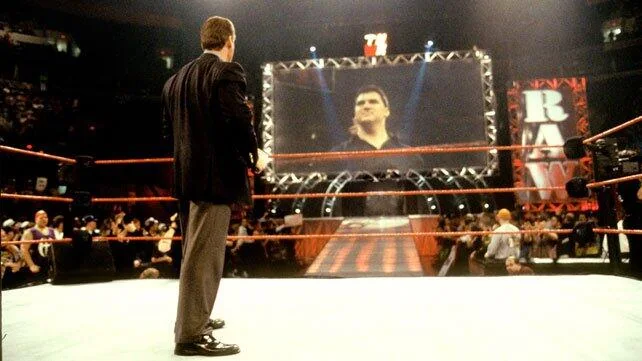
Look up “Raw March 26, 2001” for the WWF presentation or the simultaneous announcement. Search “WCW Nitro March 26, 2001” for the whole farewell card, and add a matchup if the results mix the footage together. You can hear the decisive line in a short clip, but the feel of the last WCW broadcast also comes from the champions, announcers and crowd around it. In the course of one night, wrestlers still competed for WCW’s titles on TNT while the shared segment prepared a story for WWF television.
How the Invasion carried the rivalry into WWF storylines
Spring ended the regular head-to-head broadcasts, but the WWF used WCW as a rival inside its own shows. Lance Storm rushed the ring during the May 28, 2001 Raw. On the July 2 Raw, Booker T defended the WCW Championship against Buff Bagwell. That match is a useful example of the change in the business. The belt and presentation still signaled WCW, but the television program containing the match was Raw. You can follow that gap between the original promotions and their later television identities throughout the story.
The July Invasion card brought in the Alliance
On the July 9 Raw, former ECW wrestlers including Tommy Dreamer and Rob Van Dam entered the story, and the WCW and ECW factions ultimately joined together. Shane and Stephanie McMahon were presented as their respective owners. The group became the Alliance. The site’s ECW history explains how the original independent promotion and the subsequent WWE use of the name fit together. For the 2001 angle, the relevant point is that the new team drew on the identity of two former competitors within one WWF-produced story.
The July 22 pay-per-view, billed as InVasion, ended with an Inaugural Brawl. Booker T, Diamond Dallas Page, Rhyno and both Dudley Boyz faced Steve Austin, Kurt Angle, Chris Jericho, Kane and The Undertaker. Austin’s late turn helped the Alliance win. The event did business as well as telling a story: WWF’s quarterly report estimated about 700,000 buys compared with about 400,000 apiece for its May and June events. That comparison describes the immediate commercial response to the July card. It leaves plenty of room for fans to debate how WWF used the roster in the months that followed.
Survivor Series gave the angle its finish
On November 18, the Survivor Series main event made the stakes winner-take-all in the storyline. Austin started on the Alliance side this time with Angle, Booker T, Rob Van Dam and Shane. The Rock, Jericho, Big Show, Kane and The Undertaker defended WWF. Angle returned after his elimination and struck Austin. The Rock then scored the deciding pin to become the sole survivor, ending the Alliance angle. The championship history continued separately until December 9, when Chris Jericho won the two world titles at Vengeance.
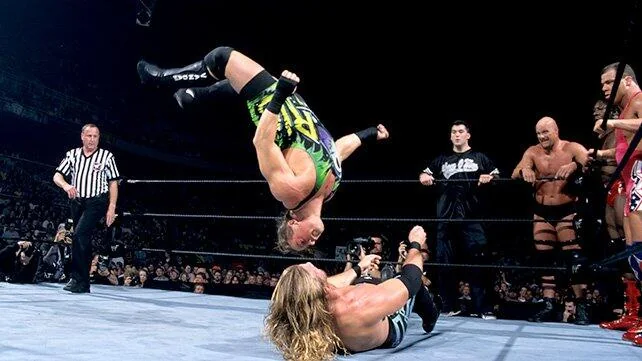
Compare those lineups with the late-nineties Monday shows and the appeal and limits of the angle come into view. The two pay-per-views gave Booker T, Rob Van Dam and other alumni meaningful roles, while much of the deciding action revolved around longtime WWF headliners. Goldberg, who beat Hogan for WCW’s championship on Nitro, would wrestle for WWE two years after the purchase according to WWE’s biography. A promised clash between brands can feel different from a match featuring all of their best-known stars at the same time. That helps explain why nostalgia for the war and enthusiasm for its on-screen sequel can pull in different directions.
Where to see the matches and broadcasts today
To see what the competition looked like before the sale, start with an ordinary dated Nitro. The verified WCW channel labels its May 20, 1996 broadcast a full episode. Ric Flair faces Eddie Guerrero and Sting and Lex Luger defend their tag titles. A complete program gives you the announcers, the pace, the rest of the card and the way information was handed from one segment to the next. Save the original airdate when you bookmark it. The year attached to an upload is the year the channel made that copy available.
Next, use WWE’s January 4, 1999 playlist to see related scenes from both shows on a single night. Raw had been taped on December 29 in Worcester, Massachusetts. Nitro commentator Tony Schiavone gave away the Rock versus Mankind result before much of the audience had seen it. Hogan took the WCW title from Kevin Nash on Nitro that night. In WWE’s interview with Foley and Nash, both wrestlers look back on the same pair of broadcasts from different jobs in different companies. Listen to the narration and compare the finishes. The pair gives you a better feel for the audience’s immediate choices than a retrospective view of who came out ahead years later.
Then watch the March 26, 2001 finish in two parts. The verified WCW channel lists Sting versus Ric Flair as a full match. WWE’s separate Raw clip supplies Shane’s announcement. A watch listing for one of those can carry the correct date while omitting the other entirely. For the July pay-per-view, Netflix had a public WWE Invasion catalog entry in the November 20, 2026 check. Look for that specific title in your region before relying on playback. WWE’s November main event result can confirm the teams and finish while you look for the Survivor Series archive. For links and regional availability checks across promotions, the site’s official WWE YouTube guide covers the difference between whole programs and clips.
If you only have time for two short recordings, pair the Sting and Flair match with Shane’s appearance on that same night. The match shows two WCW wrestlers closing a program that had built its own audience. The shared clip turns a public corporate agreement into the premise for another television feud. The next stop after those two is the July Invasion match or the November elimination match, depending on whether you want to see the Alliance take control or see how it lost. Keep the original dates with the links and you can follow what happened without mistaking the real sale for the ending of a booked match.
Join the discussion
Comments