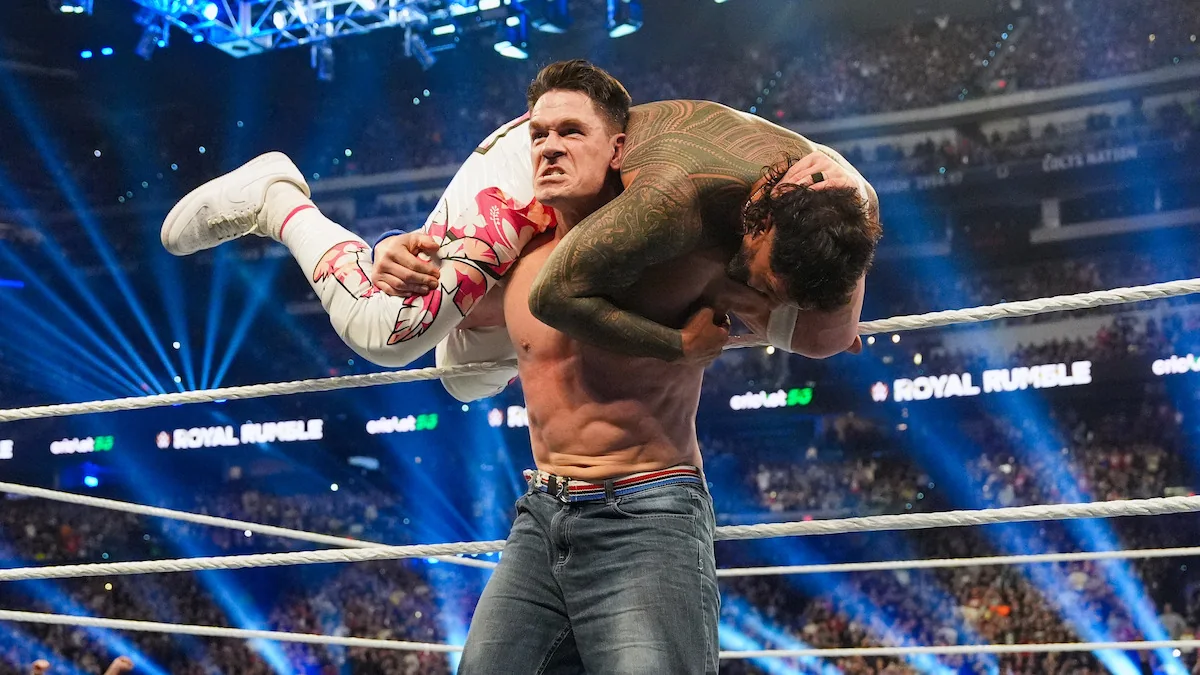
WWE generally plans match outcomes and storylines in advance. The wrestlers perform those stories in front of a crowd, and the physical work and injury risk are real. Kayfabe is the convention that keeps the story believable on screen. To understand a finish, a promo, or a claim about an injury, start by asking what the source actually records.
Contains spoilers for selected historical matches, including the 2025 Royal Rumble and WrestleMania 41.
What WWE scripts before the bell
WWE generally decides who wins a match in advance. It also develops rivalries, writes segments for television and plans moments that move a story to its next show. A finish is the sequence that settles the match, such as the referee counting a pin or calling for the bell after a submission. The planned winner and the finish are related decisions. An overwhelming victory and a win secured after outside interference can send the same two wrestlers in very different directions.
The production around that decision has several jobs. Writers develop a story, performers give it shape in front of the crowd, and the control team turns the action into a broadcast. WWE describes the path from its writing room in Stamford to work backstage at arenas. For a viewer, that makes it possible to ask a specific question about a segment. You can look for evidence about who was meant to advance, how the segment was produced, or what the official result shows. WWE's creative and production overview.
What the writers' room plans
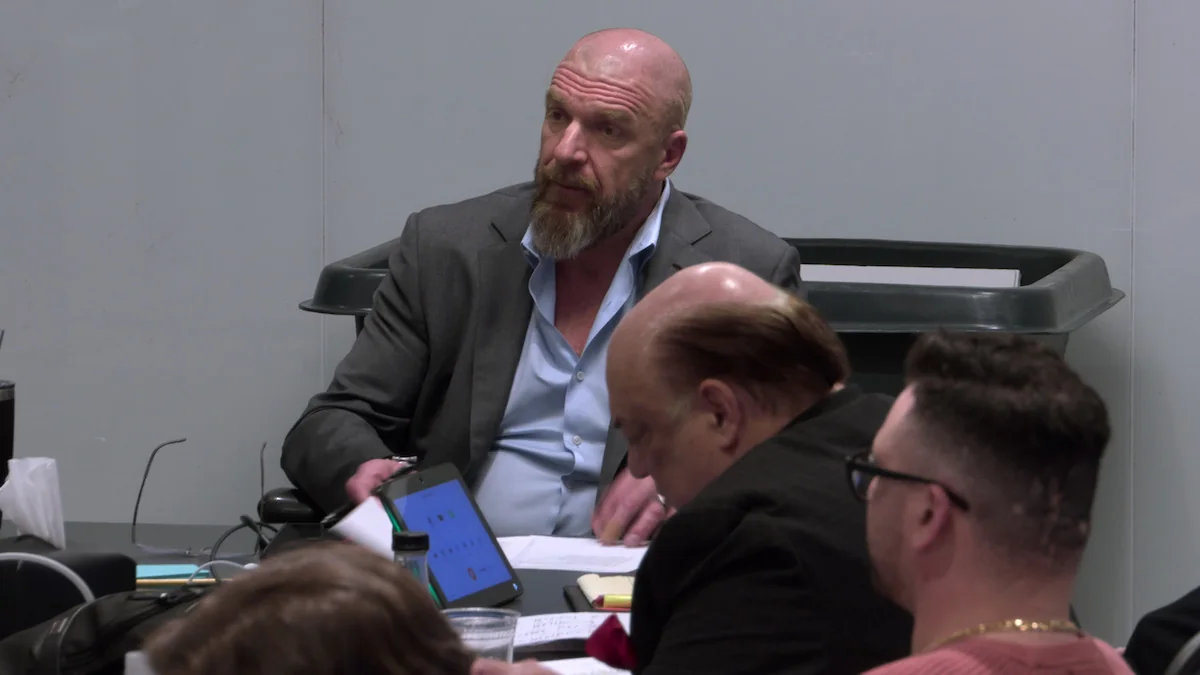
The 2025 men's Royal Rumble offers a documented example. In the Netflix series WWE: Unreal, Paul “Triple H” Levesque asks the creative team to discuss possible winners. CM Punk and John Cena came up, and writer Ed Koskey proposed making room for Jey Uso. Netflix's account of the episode says the group considered a WrestleMania pairing between Punk and Gunther before ultimately going with Uso as the Rumble winner. The discussion shows how deciding one result also changes the stories WWE can tell for the next several weeks. Netflix's writers' room account.
The aired results complete the example. Uso last eliminated Cena to win the Rumble and earn a world title opportunity. At WrestleMania 41 Saturday, he submitted Gunther to win the World Heavyweight Championship. A Rumble entry list or result only tells part of that story. The months between the two shows gave the audience a reason to care about the challenger taking on a champion who had already beaten him. Use the two dated records to follow what actually aired. Royal Rumble results and WrestleMania 41 Saturday results.
Why the live performance can change
Planning an ending still leaves people in the arena with choices. A performer can allow a reaction to settle before speaking, and production has to be ready to take the camera when that next moment arrives. WWE: Unreal shows wrestlers discussing movement and backstage staff coordinating the running show from the Gorilla Position. The level of detail varies by the material and the people involved. A public result gives you the finish. Evidence about the precise preparation behind an individual moment usually comes later, if a participant or production account addresses it. Netflix's look at WWE preparation.
Why kayfabe makes the story feel real
Kayfabe is the wrestling convention of treating characters, rivalries and events as real within the world of the show. It gives a rivalry continuity between matches. When a wrestler reacts to a rival's insult from the previous episode, the audience recognizes the history and understands why the next encounter matters. A fan can follow the story on those terms while knowing how the program gets made. Merriam-Webster's definition.
Take Kane's debut at Badd Blood on October 5, 1997. WWE's retrospective describes Paul Bearer laying the groundwork for the revelation that Kane was The Undertaker's younger half-brother. Kane interrupted Undertaker's Hell in a Cell match against Shawn Michaels. The reveal gave the audience a reason to follow the feud long after the night it began. The half-brother relationship applies to the characters played by Glenn Jacobs and Mark Calaway. You will encounter both kinds of names in articles about the same period. WWE's Brothers of Destruction retrospective and our guide to the characters and performers.
When a promo uses real life
A promo is a spoken segment that can advance a story before anyone wrestles. On the June 27, 2025 edition of SmackDown, CM Punk borrowed John Cena's older Doctor of Thuganomics persona for a rap roast. Punk's outfit and delivery made the reference legible to long-time viewers. The segment also worked for a newcomer who only needed to know that Punk was using Cena's own old routine to needle him before Night of Champions. The promo gave their title match another reason to feel personal. WWE's June 27 SmackDown recap.
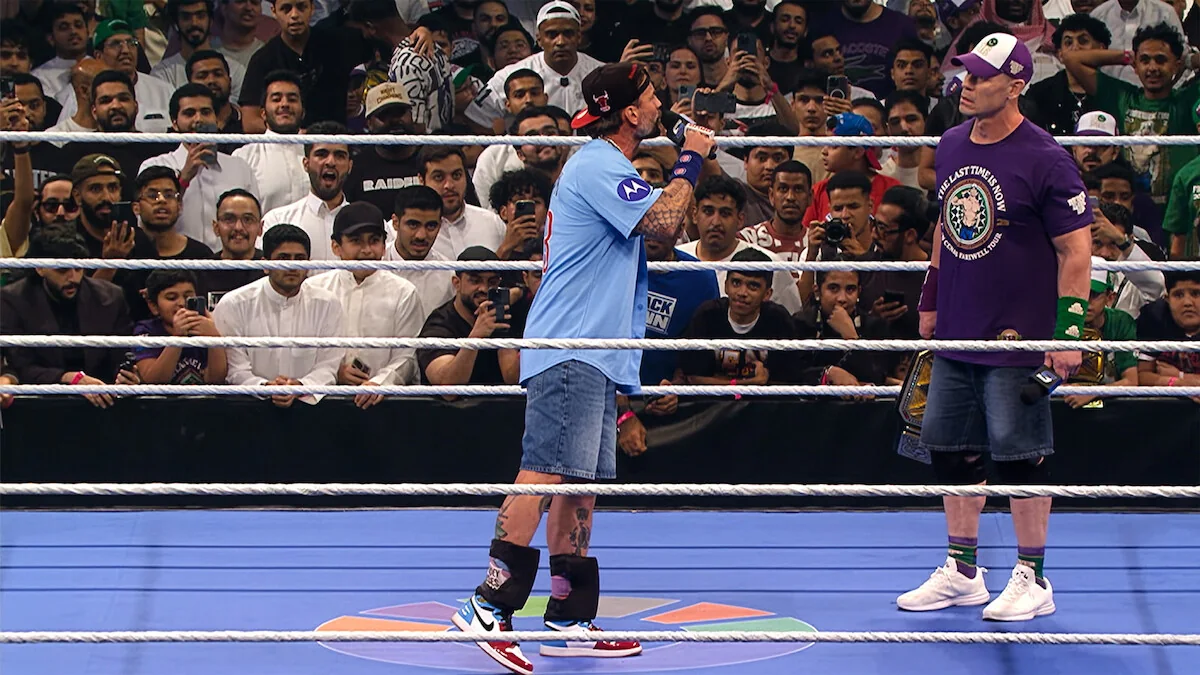
Netflix subsequently showed a separate exchange from that moment in WWE: Unreal. Punk told Cena away from the live microphone that he would miss him. Both men described the exchange as emotional while reflecting on Cena's retirement tour. Their accounts give the story a second layer. The audience heard a rival pressing his advantage, while the performers were also sharing a moment of affection during a farewell run. The documentary lets you hear and attribute the personal part without trying to deduce it from Punk's expression on television. Netflix's clip and participants' recollections.
What a real injury can change
An injury can change who appears on the next show, which match goes ahead, and whether a champion can keep defending a title. A wrestler can also finish a match while injured, so the final bell alone tells you very little about their condition. Check what was confirmed about the incident, then follow the results and announced cards to see how the show handled it. Even without access to a creative meeting, a fan can establish when a title was surrendered or when a replacement was named.
Look at Finn Bálor and Cody Rhodes. Both finished matches against Seth Rollins, and WWE later reported surgery in both cases. The details explain two very different consequences for the card. In Bálor's case, a newly established championship needed another winner. In Rhodes's case, a scheduled match went ahead, then his recovery took him away from the show for months. The dated match records help you keep those developments in order. Bálor's surgery update and Rhodes's surgery update.
When a title plan gets rewritten
Bálor defeated Rollins at SummerSlam on August 21, 2016, to become the first WWE Universal Champion. He relinquished the belt on Raw the next night. WWE's separate injury report cited a ringside doctor and later confirmed shoulder surgery, so there is evidence about his health beyond his on-air appearance. The title lineage still includes Bálor's victory. The relinquishment simply meant his reign ended and the championship became vacant. SummerSlam result and August 22 Raw.
WWE filled the vacancy the following week with a Fatal 4-Way Elimination Match featuring Rollins, Roman Reigns, Big Cass, and Kevin Owens. Owens took the title after Triple H intervened during the finish. That intervention belongs to the story WWE went on to tell. The vacancy is the identifiable change brought about by Bálor's injury. Keeping those details separate lets a viewer follow the booking without making up an alternative title match that WWE supposedly had ready. August 29 Raw results.
When a wrestler competes with a confirmed injury
Before Hell in a Cell on June 5, 2022, WWE confirmed that Rhodes had torn his right pectoral tendon and would still face Rollins. Rhodes won the advertised match. WWE later confirmed that he had surgery, and its 2023 Royal Rumble result identifies his victory there as a return from injury. For a fan building the timeline, those are three useful markers: a match that went ahead, a medical update, and a documented return. The bruising visible that night is part of what viewers remember, but the reports are what establish the nature of the injury. WWE's pre-match update and Royal Rumble 2023 result.
What the broadcast can tell you about blood
Blood on a WWE show can come from a genuine injury. At Hell in a Cell in October 2015, Brock Lesnar faced The Undertaker and won. WWE separately reported that Lesnar had suffered a cut and received medical attention during the match and treatment afterward. The two accounts answer different questions. The result records which wrestler left with the win. The injury report supports the claim that a real cut occurred. A fan remembering the scene has a specific dated example to look up, instead of relying on what blood often means in wrestling. Hell in a Cell results and WWE's follow-up on the injury.
Start with a description that fits the evidence. A dated clip might show blood on someone’s face, the referee coming over, or the camera cutting to a wide shot. Those observations say what reached viewers. A claim about the origin of the blood, the severity of an injury, or a decision to include it in a story needs additional evidence. Even a close-up has limits. It leaves most of the lead-up out of frame, and it cannot tell you what a performer or clinician learned after the segment. If the only source is a short clip, leave those details open.
Viewers can also be looking at different versions of a scene. Our coverage of the parking-lot segment on the August 31, 2026 edition of Raw compares reports of pixelation with the version later shared by Triple H. WWE's recap gives the story context for that appearance by The 946 and The Usos. The comparison can be useful for identifying the shot people are talking about. A picture edit by itself leaves the person's condition uncertain. Note which feed or upload you saw and what came before and after the edit. A replay can also differ in length because Netflix removes commercial breaks in ad-free versions of live events. That makes a shorter runtime a weak clue about what happened to any particular shot. Our guide to WWE broadcast edits, WWE's August 31 recap, and Netflix's replay guidance.
How to verify a finish, a storyline or an injury
Start with the date and the show. WWE can advertise a match on one episode, announce a change on the day of the event, and publish the result later that night. All three pages may circulate next to one another. A shared headline that says someone will challenge for a title belongs to a different moment from a result saying they won it. Sound confident about the stage that the source actually documents. Leave the rest open until you find a dated update.
Day 1 on January 1, 2022 is a good test. Brock Lesnar was due to challenge Roman Reigns for the Universal Championship. WWE's same-day announcement said Reigns had tested positive for COVID-19 and would be unable to compete. WWE added Lesnar to the other championship bout, which became a Fatal 5-Way for the WWE Championship against Big E, Seth Rollins, Kevin Owens, and Bobby Lashley. A preview naming Reigns and Lesnar was accurate for the card it described when it was published. The later update establishes what WWE changed and the reason it gave. WWE's Day 1 announcement.
The event recap confirms Lesnar actually entered the five-man match and won the WWE Championship. On January 6, WWE said Reigns had been medically cleared and promoted a confrontation between the two champions. The belts matter here. Without their separate names, it would be easy to tell a version in which Lesnar took the Universal Title away from the absent champion that night. Matching the date, participants, and championship name gives you a fuller account, and the medical notice addresses why the original pairing changed. Day 1 results and WWE's January 6 follow-up.
- For the finish, open the event result and look for the winner, the recorded decision and any title change. A confrontation, post-match attack or interview can shape the next show without adding another match to the record. Find the dated results.
- For the next match, find a current announcement and identify exactly what it advertises. A wrestler can be promoted for an appearance before WWE gives them a match. An event can also keep its date and change its lineup. Check announced match cards.
- For an injury or backstage decision, look for an update that explicitly addresses that claim, with a named person or organization willing to state what happened. If a recap calls an incident part of a rivalry and offers no separate evidence, describe the incident as it was presented on the show.
You can enjoy a finish as part of the rivalry and still be precise about the evidence. The next time a clip raises a question, pause long enough to put its date, show and issue in one sentence. Check the source that addresses that issue. It will make the result easier to explain and give you a better starting point for the next episode.
Join the discussion
Comments