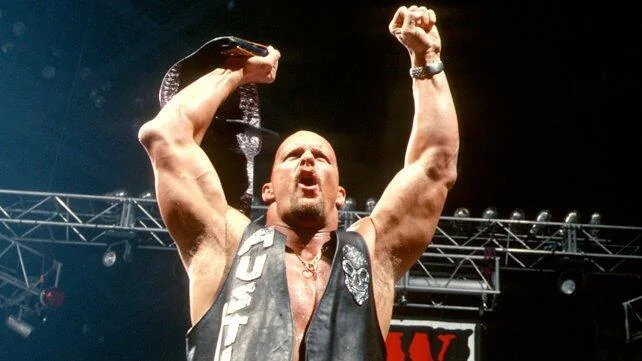
The Attitude Era was WWE's late-1990s and early-2000s transformation built around rebellious stars, adult television and the competition with WCW. Its dates depend on the definition being used. This guide explains the boundaries, the characters and a short route through the matches that show why it mattered.
Historical spoilers: major match results and character turns are discussed below.
The Attitude Era was a gradual change, not a single night
The Attitude Era describes WWE's shift toward confrontational characters, more adult television and strongly connected weekly storylines in the late 1990s and early 2000s. The company was called the World Wrestling Federation, or WWF, during most of that period. Calling it WWE's Attitude Era is a modern reference to the same promotion, rather than a claim that the WWE name was already in use throughout the 1990s.
Why different timelines use different dates
There is no single boundary that makes every historical account wrong. WWE's own broad company timeline labels the era 1996-2001, while its retrospective on defining moments acknowledges that identifying an exact beginning is difficult. Austin's 1996 King of the Ring speech marks an important early development; the increasingly confrontational television of 1997 supplies another useful starting point.
This guide treats 1997-2001 as the central viewing period, with 1996 as a prologue and the changes of 2002 as the transition into the next chapter. That is a practical convention for watching the archive. It does not mean a performer, logo or creative idea instantly stopped belonging to one period when the calendar changed.
When someone gives a different date, ask what they are measuring: Austin's emergence, the promotion's branding, the beginning of a particular storyline, the end of the Monday Night War or the later brand split. Those events overlap without being interchangeable. For an archive watchlist, write down which event or change the chosen boundary represents. That makes comparisons between timelines useful instead of treating their different labels as disputed match results.
What changed in the television product
The clearest change was how the shows invited fans to react. A rebellious wrestler could attract the loudest support while insulting authority; an executive could become the central television antagonist. Interviews, backstage scenes and interference often connected one match to the next, making the weekly show feel like an unfolding argument.
Adult language, sexual material and depicted violence were also prominent. Those elements help identify the presentation, but they do not explain its appeal on their own. Character motivation and the promise of a confrontation next week supplied the momentum. The word storyline matters here: an on-screen arrest, threat or corporate conspiracy belongs to the fiction of the programme unless separate evidence establishes a real-world event.
Raw Is War turned weekly television into an ongoing contest
Raw Is War made the weekly programme part of the attraction, rather than merely a place to advertise the next pay-per-view. Its name, staging and confrontational tone fitted a promotion trying to persuade viewers that something consequential might happen before the show ended. A title change, betrayal or unexpected arrival could give an ordinary Monday a place in a larger storyline.
The visual presentation reinforced that promise. WWE's retrospective on Raw's sets shows how the programme's changing entrance structures and industrial imagery belonged to its identity. Those details matter when you watch the archive: the environment helps explain the tone before a wrestler speaks. They are also a reason not to treat every episode from the 1990s as if it shared one permanent look.
The Monday Night War shaped the viewing experience
The Monday Night War was the television competition between WWF Raw and WCW Monday Nitro. It was a business and programming rivalry, not a single interpromotional wrestling match. With a major alternative airing on the same evening, each promotion had a reason to create developments that viewers wanted to see as they happened.
Historical ratings deserve their own context. Wrestlenomics' analysis of Nielsen data distinguishes the cable-household rating discussed at the time from measures such as individual viewers and age-group ratings. A familiar headline about winning a week does not mean that every age group chose the same programme. The number of people in an arena is a separate measure again; keep the television comparison attached to the metric being discussed.
For the fan watching years later, the practical consequence is simpler: watch an episode around a major match, not only the match itself. Opening interviews, interrupted finishes and closing scenes establish why a confrontation matters. The same wrestler may be pursuing a title, resisting an authority figure and negotiating an alliance across several segments.
Modern Raw has its own context and viewing arrangements. The current Raw schedule helps keep today's programme separate from an archive search. A 1998 episode and a current broadcast can share the Raw name without sharing the same roster, presentation or distribution.
The leading characters made the era bigger than its shock value
The era worked because its leading performers offered different reasons to watch. Austin's defiance, The Rock's verbal confidence and Mick Foley's vulnerability were recognisable dramatic identities. They could share the same programme without telling the same story. Removing those contrasts leaves a collection of stunts and catchphrases with much less meaning.
Austin and McMahon gave rebellion a central storyline
Austin versus Mr. McMahon turned an authority dispute into the central television engine. Austin was presented as the star who refused to become the company's obedient representative; McMahon's on-screen executive character tried to control the champion and the show. The audience could understand that conflict without needing an encyclopaedia of title lineages.
The distinction between the executive and the character is important. The televised threats, ambushes and alliances were storyline developments. They should not be read as a documentary record of how every actual employment decision was made. The creative strength was that the fictional conflict could move through interviews, matches, stipulations and supporting characters while keeping a clear emotional centre.
The Rock, Foley and a roster of competing personalities
The Rock's rise offered a different kind of command: delivery, timing and the ability to make a confrontation feel important before the bell. His rivalries and alliances also show why a performer should not be permanently labelled hero or villain across an entire era. Read the episode's relationships rather than assuming that a familiar name always occupied the same side.
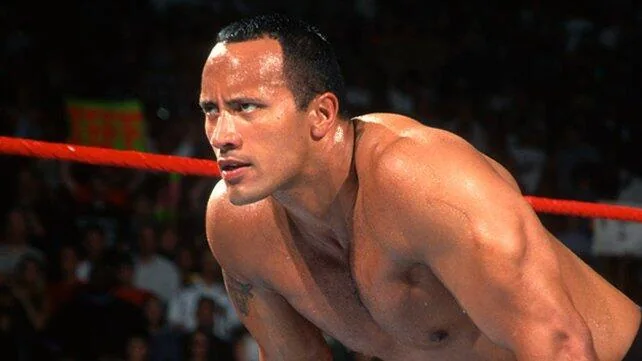
Foley's Mankind, Cactus Jack and Dude Love personas supplied further contrasts, from unsettling violence to comedy and sympathy. A persona is a performed wrestling identity; several names on an archive listing do not necessarily indicate several different people. Foley's appeal also reminds viewers that physical vulnerability can matter as much as dominance.
Beyond those three, Triple H, The Undertaker, Kane, D-Generation X and other factions gave the shows competing loyalties. A faction is a storyline group, often mixing singles wrestlers and teams. Its membership and purpose can change. Follow who helps whom in the episode you are watching. A faction name on an archive listing cannot, by itself, explain all of its shifting alliances across the central years.
Four viewing stops reveal how the wrestling evolved
These four events offer a compact route through the period's different strengths. They are viewing recommendations, not a statistical claim that four cards contain every important development. Watch the relevant build-up where possible; the results make more sense when you know what each performer was trying to prove.
WrestleMania 13 made Austin's defiance visible
Bret Hart defeated Austin in their Submission Match on March 23, 1997. The crucial distinction is the finish: Austin did not tap out. He passed out in the Sharpshooter, and special referee Ken Shamrock stopped the match. The official result and the audience's understanding of the defeated wrestler could therefore point in different directions.
That is why this is a valuable first stop. Watch Hart's control, Austin's resistance and the aftermath as one sequence. The result remains a Hart victory, while Austin's resistance supplies the character development. Keep both observations together when describing why the match mattered. The match illustrates how wrestling can use an officially recorded defeat within its scripted competition to strengthen a performer's presentation.
WrestleMania XIV and Royal Rumble 2000 show different main events
At WrestleMania XIV on March 29, 1998, Austin defeated Shawn Michaels to win the championship. This provides the coronation that the earlier Hart match did not: the central rebel now held the promotion's leading title. Watch how the presentation treats that change as the start of new problems rather than a permanent happy ending.
Then move to Triple H defending against Cactus Jack in the Street Fight at Royal Rumble on January 23, 2000. Triple H retained. The match offers a different dramatic problem: an established champion confronting an opponent whose identity promises punishment and endurance. Its violence belongs to a particular stipulation; it does not establish that every Attitude Era match operated under Street Fight rules.
WrestleMania X-Seven combined spectacle with a major turn
On April 1, 2001, Austin defeated The Rock for the championship with help from McMahon. Their closing alliance deliberately changed the relationship that had driven so much of the preceding television. A viewer can dislike the direction while recognising its purpose: it was a major character turn, not a routine clean win in another chapter of the same rivalry.
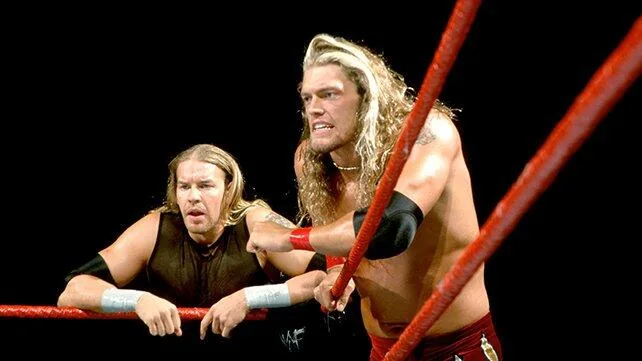
The same card includes the Tables, Ladders and Chairs match in which Edge and Christian defeated the Dudley Boyz and Hardy Boyz for the tag-team titles. TLC is won by retrieving the suspended championships, not by scoring a normal pinfall. It demonstrates that the period's spectacle extended beyond the singles main event and that understanding the stipulation changes how you follow the action.
Use the results guide to keep a finish, a title change and an editorial judgement separate. The winner is a factual record; what the match contributes to an era is an argument supported by that record.
The era's popularity does not make every creative choice timeless
The Attitude Era contains influential performances and material that can be uncomfortable or simply uninteresting to watch now. Both observations can be true of the same episode. Highlight compilations select memorable entrances, promos and finishes. Watch a complete episode before treating that selection as typical of every segment across several years.
Read the women's division and adult material in context
Chyna's Intercontinental Championship success and Lita's athletic presentation belong in any account of the period. Their accomplishments also should not be used to imply that every woman received equivalent opportunities or competitive presentation. Match roles, television time and the kinds of stories offered to different performers varied considerably.
Some women were framed through sexualised contests or relationship stories rather than sustained championship competition. Contemporary retrospectives on the development of women's wrestling distinguish those conditions from later periods. That context helps explain why remembering an individual breakthrough is different from declaring the entire division an ideal model.
For an archive watch, ask the same useful questions you would ask of a current segment. Does the performer have a clear objective? Does the match allow the audience to understand an ability or rivalry? Does a provocative scene advance a story, or does it rely entirely on humiliation? Those are editorial judgements, not claims that every viewer must respond identically.
The same care applies to dangerous-looking highlights. The fact that a physical stunt became famous does not make it a sensible standard against which every later performer should be measured. Appreciate the storytelling and the performers without treating more punishment as an automatic sign of better wrestling.
This gives nostalgia a useful place without handing it the final verdict. The era can be important because of the characters and television it developed while still containing creative choices that fans are free to criticise, skip or discuss in their original context.
The ending makes more sense as a transition into another era
The era's ending is best understood through several changes that altered the promotion's competitive setting and television structure. A major match can feel like a creative finale without also being the date of a corporate transaction, a name change or a roster reorganisation.
The WCW purchase and 2002 changes moved the goalposts
The corporate announcement of the WCW brand purchase was dated March 23, 2001. It concerned rights including the brand and tape library. The subsequent television reveal that Shane McMahon owned WCW belonged to the Invasion storyline; it should not replace the actual business announcement in a historical timeline.
With the old rival's regular television competition gone, the setting that had shaped Raw changed. The Invasion and championship unifications created another phase during 2001. In 2002, the roster division into Raw and SmackDown brands and the May 6 announcement of the WWE name provided further landmarks. Those are concrete changes, while deciding which one closes the Attitude chapter remains a matter of historical framing.
Familiar performers and creative habits continued into the period usually called Ruthless Aggression. This is why a hard boundary can be misleading: television does not need to replace every wrestler, title and storytelling device before a new historical label becomes useful.
Build an archive watchlist around stories rather than clips
Choose one thread first: Austin's rise, The Rock's changing alliances, Foley's championship pursuit or the tag-team rivalry. Pair a major event with the weekly episodes immediately before and after it. Record the programme name, full episode date and event year together. Recurring event names can otherwise lead you to a different rivalry or a later rematch.
Official clips are a useful introduction, but a short montage may remove a finish, interference or a scene needed to understand a turn. Check the actual catalogue available in your country before assuming a complete run is included. The WWE viewing guide is the appropriate place for current access information.
That approach lets the era explain itself over several shows. You can appreciate the performances, question the choices and understand why the next episode mattered without requiring every segment to live up to its highlight-reel reputation.
Start with one rivalry and its surrounding weekly television, then add the next event. The Attitude Era is easier to understand as a sequence of performances and consequences than as one fixed date or a collection of shocking clips.
Join the discussion
Comments