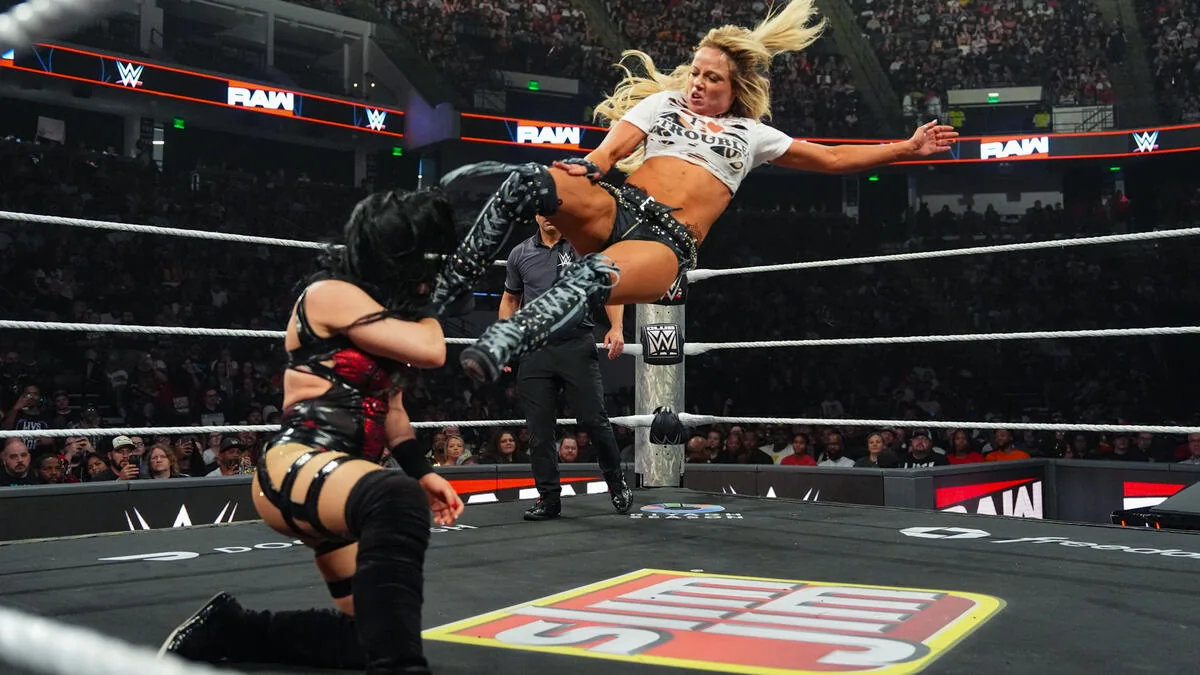
Spoilers for WWE Raw on September 7, 2026. Liv Morgan retained the Women's World Championship against Stephanie Vaquer after Judgment Day interference, a belt strike and Oblivion. Becky Lynch tried to help Vaquer, but Roxanne Perez still delivered the weapon that changed the final exchange.
The result was clear; the argument is whether the ending rewarded a competitive rematch or postponed its most interesting question. Here is how the finish unfolded, why Becky's earlier conversation matters and what Morgan's retention leaves unresolved. This analysis reflects the official results and published coverage available on September 8, 2026.
Liv Morgan retained the Women's World Championship
Liv Morgan defeated Stephanie Vaquer by pinfall on Raw on September 7, 2026, keeping the Women's World Championship. The decisive sequence involved a championship belt supplied by Roxanne Perez, a strike with that belt and Morgan's Oblivion. WWE's official September 7 results confirm Morgan's successful defense.
That result answers the immediate title question, but it leaves the competitive question open. Morgan did not demonstrate that she could finish Vaquer without assistance. The challenger had established enough momentum to make a title change plausible before The Judgment Day complicated the closing stretch. Viewers can accept the recorded result while arguing that Vaquer was denied a fair conclusion.
- Winner and champion afterward: Liv Morgan.
- Challenger: Stephanie Vaquer.
- Recorded finish: pinfall after Oblivion, following an unseen belt strike.
- Outside involvement: Raquel Rodriguez and Roxanne Perez supported Morgan; Becky Lynch tried to oppose them.
The distinction between an unfair finish and a disqualification matters here. The referee counted Morgan's winning fall; this was not a Vaquer victory by disqualification that left the championship with Morgan. It also was not a match abandoned without a winner. The controversy concerns how Morgan obtained the pin, rather than uncertainty about whose name belongs in the results column.
For readers checking the wider championship picture, the WWE champions overview provides the broader reference. This match belongs to Morgan's ongoing reign, with Vaquer's challenge unresolved in the story even though Monday's official match result is settled.
Why this rematch mattered to Stephanie Vaquer
Vaquer entered September 7 with a specific objective: reclaim the championship Morgan had taken from her. That makes the defense different from a champion meeting an unrelated weekly challenger. The attraction was a second chance to settle a loss that already involved the same faction standing around Morgan.
There was also a recent competitive step on the way back. In WWE's August 24 results, Vaquer defeated Roxanne Perez in her first match since WrestleMania. Judgment Day's involvement and Becky's assistance were already part of that encounter. September's ringside problem therefore did not materialize without warning; it grew out of the matches and confrontations leading into the title opportunity.
WrestleMania created the championship debt
At WrestleMania 42 Saturday on April 18, Morgan defeated Vaquer to become Women's World Champion. The official WrestleMania results describe Perez distracting the referee and Rodriguez knocking Vaquer from the ropes. Vaquer fought back against the group, but Morgan ultimately caught her with Oblivion.
The September rematch reversed their formal positions: Morgan defended, while Vaquer pursued. Yet the central obstacle remained familiar. A challenger could outfight Morgan for a stretch and still have to account for other people outside the ring. The championship debt in this rivalry is an emotional one: viewers were being asked to care whether Vaquer could recover what she lost and get a fair answer against Morgan.
That background raises the standard for a follow-up. Repeating the participants creates recognition, but a satisfying second meeting usually needs some change in what they learn or accomplish. Morgan's allies can remain effective villains while the challenger develops a response to them. If that response fails, the failure should tell us something useful about the next confrontation.
None of this establishes an automatic contractual right to another title match. It explains why the September opportunity carried weight and why the finish attracted scrutiny. Vaquer's claim in the story is easy to understand; the question after Monday is whether WWE turns that claim into a new, clearly defined challenge.
The match gave Vaquer a credible route to victory
The best argument for watching the match is the competition before the interference. Vaquer repeatedly brought Morgan close enough to defeat that the closing interruption had something to interrupt. Morgan also produced enough resistance to make the contest more interesting than an extended attack on a helpless champion.
For example, Morgan's sunset flip powerbomb created a near-fall when Vaquer was working from the turnbuckles. Vaquer later connected with the SVB without securing the winning count. Those moments, recorded in Daisy Ruth's match report, gave both wrestlers opportunities before the outside assistance decided matters.
The knee attack and the fight over the pace
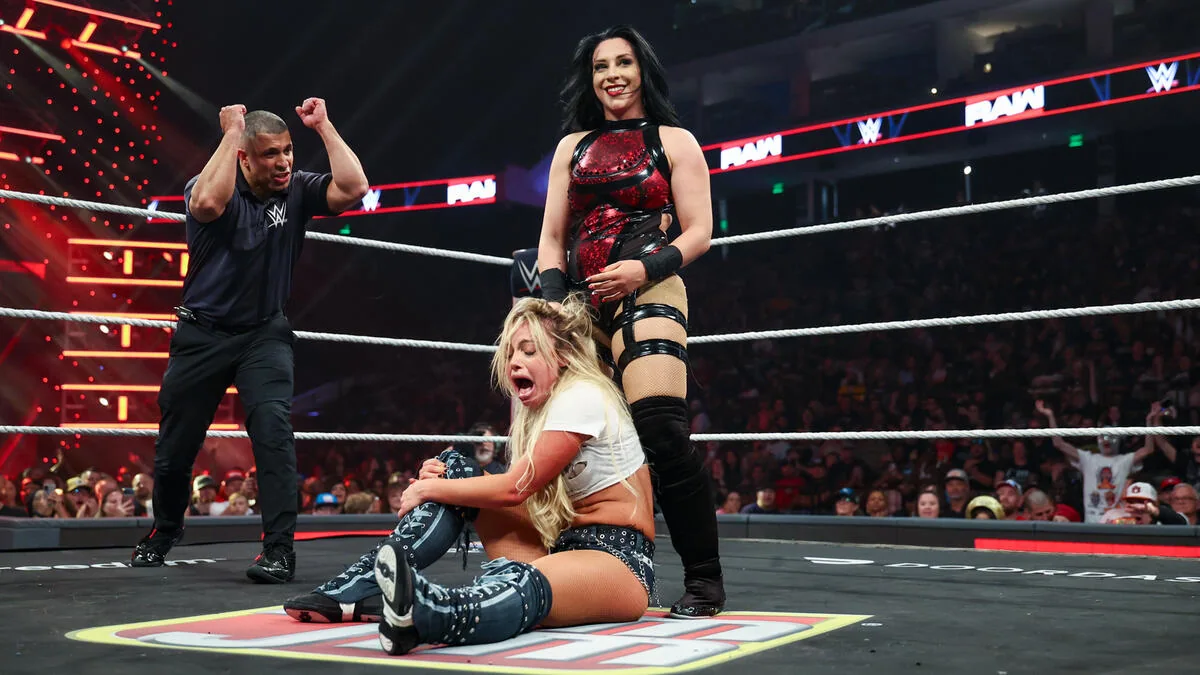
Morgan's opening evasions established a clear contrast. She wanted Vaquer chasing and reacting, while the challenger wanted to keep the fight close enough to apply pressure. Leaving and reentering the ring served the champion's character: she could frustrate an opponent who had waited for this opportunity, then look for a moment to attack on her own terms.
Vaquer's Dragon Screw changed the emphasis by targeting Morgan's leg. In wrestling terms, that attack offered a way to interrupt the champion's mobility and keep her available for follow-up offense. The subsequent Devil's Kiss, including the version on the announce table, turned Vaquer's control into an emphatic visual. This is an assessment of the match's physical storytelling; the sequence does not establish a real injury diagnosis.
The important progression was from pursuit to control, then from control to attempts to finish. Big offense matters most when it brings the challenger closer to a decisive cover or forces the champion to find a new escape. Vaquer did that here, but Morgan kept responding. Her own attacks and kick-outs gave the eventual assistance a context: Judgment Day helped a champion who had already survived substantial pressure.
Vaquer's counter to an Oblivion attempt is especially useful when assessing the ending. It showed that Morgan's finishing move was not an unavoidable answer whenever she chose to use it. The challenger could read it and respond. Morgan ultimately needed a different opening before landing the move that won the match.
The official Raw match highlights are a useful starting point for revisiting those exchanges. A clip devoted only to the final interference would leave out the competitive work that makes the frustration understandable.
How Judgment Day changed the finish
The ending worked through several distractions with different purposes. One prevented Vaquer from completing an attack. Another occupied the referee and Becky. The decisive advantage was the belt that reached Morgan while attention remained elsewhere. Calling all of this a single run-in misses why Becky's arrival failed to solve the problem.
Rodriguez interrupted the attack, and Perez supplied the belt
The closing order in Joshie Lopez's detailed Raw coverage makes the sequence easier to follow:
- Vaquer prepared for the Vaquer Inferno from the top rope.
- Perez distracted the referee, and Rodriguez pushed Vaquer from the turnbuckles.
- The referee ordered Rodriguez away. Becky pulled her from the apron and sent her into the steel steps.
- Perez supplied Morgan with the championship belt before escaping Becky's pursuit.
- Morgan struck Vaquer with the belt, followed with Oblivion and secured the winning pinfall.
Rodriguez's involvement interrupted Vaquer at a vulnerable moment: committing to an aerial attack left the challenger exposed to someone outside the match. Perez then supplied a separate advantage after the original disruption. That second action is the reason chasing the first threat away did not restore a fair contest.
Becky was trying to oppose Judgment Day, but her presence could not instantly erase what Perez had accomplished. By the time the champion had the belt, Morgan no longer needed both allies beside her. The sequence gave the faction a practical advantage through multiple people performing different jobs, even as one of them was being removed from the scene.
Why the official result is a pinfall
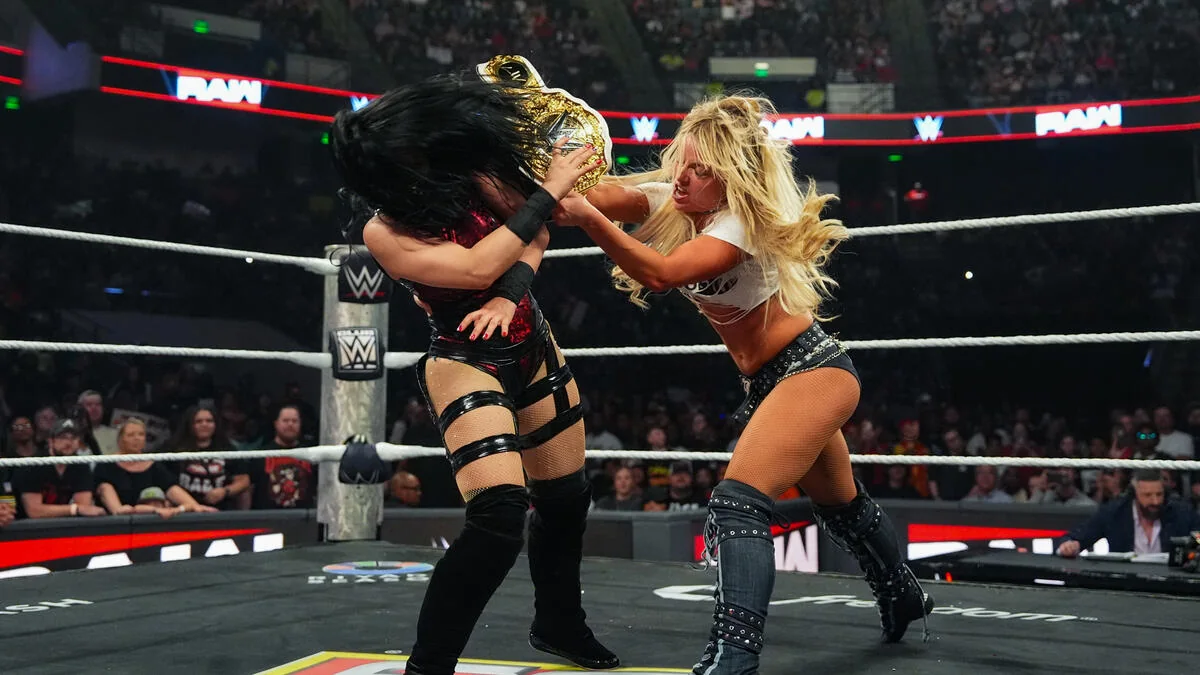
The referee's attention remained on the activity outside the match while Morgan used the belt. Once she landed Oblivion, the official returned to the action that produced the fall. The broadcast therefore presented an illegal shortcut that escaped the referee's observation, followed by a counted pin.
Whether that distraction looked believable is a separate criticism. A viewer can reasonably question why an official remains occupied with people leaving ringside while a championship match continues behind them. That is an objection to how the sequence was staged and explained on screen. It does not turn the published result into a disqualification or establish that a decision was reversed afterward.
The relevant chain is also more precise than saying Becky cost Vaquer the title. Perez provided the weapon and Morgan used it. Becky's attempted intervention was unsuccessful, but it was not the same action as handing the champion a belt or attacking the challenger. Keeping those roles distinct matters when considering how Vaquer might respond to her next.
Becky Lynch's help came with an unresolved disagreement
Becky's role makes more sense when the match is connected to the earlier backstage conversation. She offered Vaquer assistance against Judgment Day while seeking the first title opportunity if Vaquer became champion. Vaquer declined to ask for that help, maintaining that she preferred to fight her own battles. Their goals overlapped, but their proposed arrangement did not become an agreement.
The official Becky-Vaquer backstage segment presents that disagreement as part of the episode. Vaquer's position is understandable: accepting help from someone who wants your prospective championship creates an immediate obligation and another potential rival. Becky's argument also has practical force: beating Morgan individually does not remove the other people who can interfere.
Morgan then added a personal provocation within the show, taunting Becky and insulting her husband. WWE published the dated Morgan-Lynch exchange separately. That televised confrontation supplies context for Becky reappearing during the match despite the earlier dispute. It does not give us access to anyone's private feelings or establish a real dispute outside the program.
There are consequently two tensions to carry forward. Vaquer wanted independence and still encountered a numbers disadvantage. Becky offered a solution with a benefit for herself, then intervened without producing the outcome she had proposed. Neither woman achieved the useful bargain that might have turned a shared opponent into a workable partnership.
It would be premature to label the finish a Becky betrayal. She did not strike Vaquer, provide Morgan's weapon or announce that she wanted Morgan to win. Equally, her appearance does not erase the disagreement and establish an uncomplicated friendship. The interesting material is the space between those positions: cooperation can be necessary while trust remains difficult.
That is a stronger question for the next chapter than simply assigning all blame to the attempted rescue. Vaquer has reason to challenge Morgan's method of retaining. Becky has reason to keep pursuing the championship. How they negotiate those ambitions will determine whether their involvement develops beyond another argument followed by another interrupted match.
Did the ending justify another chapter?
My assessment is that Morgan and Vaquer delivered a worthwhile title match, but the ending offered limited progress toward resolving their individual rivalry. The action supplied a reason to want more. The familiar interference supplied a reason to be cautious about what another meeting would actually settle.
A good performance can still have a frustrating payoff
The useful distinction is between enjoying the match and accepting its dramatic payoff. Vaquer's pressure, Morgan's resistance and their counters can succeed even if the final distraction disappoints. Conversely, a finish that keeps several wrestlers involved can advance a weekly story without providing the satisfying conclusion a championship rematch appeared to promise.
Published reviews reflect those different priorities. Zack Heydorn's SI review assigned the booking a 6/10 and emphasized the deferred resolution and increased tension. In Wrestling Inc.'s staff review, Samantha Schipman welcomed movement in the women's stories and credited a solid match while acknowledging the interference.
The SquaredCircle finish discussion also includes viewers who praised the wrestling while criticizing the familiar ending. That is an illustration of one response, not a survey of all fans. There is no need to combine unlike reviews into an artificial consensus score.
For me, the weakness is repetition without a sufficiently different outcome for the challenger. Vaquer remains convincing in the ring, but being convincing cannot indefinitely substitute for meaningful progress. Morgan retaining is a legitimate storytelling choice; relying on the same general obstacle places more responsibility on the follow-up to show why this meeting mattered.
What the title picture actually needs next
A productive continuation would change one of the conditions that allowed the interference to work. That could involve a clearly announced restriction on ringside involvement, a more deliberate response from Vaquer, or an agreement with Becky that has understandable terms. These are editorial possibilities, not announced stipulations or confirmed televised matches.
Morgan also benefits from having a competitive question to answer. She survived significant offense here, but the belt decided the final opening. A later defense could develop her resourcefulness or force her to solve a problem her allies cannot immediately fix. Simply preserving the championship is less interesting than showing what preservation costs her or changes around her.
Follow the Raw schedule for the next episode, and use the Netflix viewing and replay guide to revisit the full context. As of September 8, this account establishes Morgan's retention and the unresolved tensions around it. Any new televised championship match needs its own announcement before expectation becomes a confirmed card.
Join the discussion
Comments