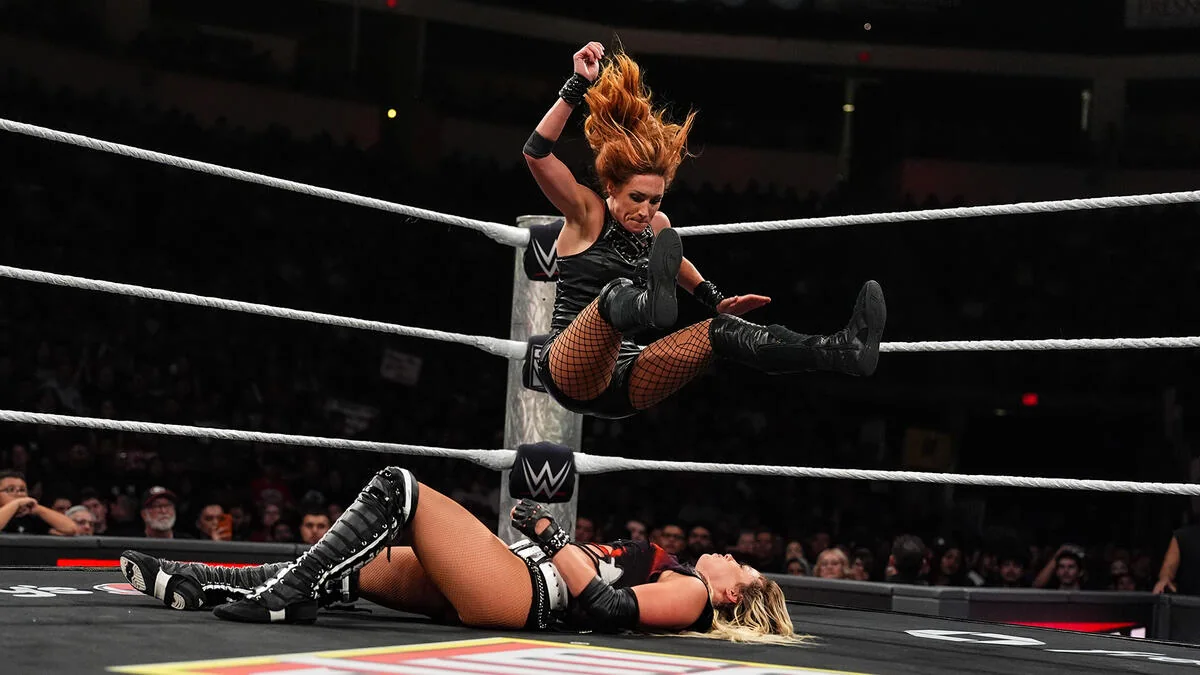
Becky Lynch defeated Liv Morgan by disqualification on Raw on October 26, 2026. Liv Morgan remained Women's World Champion. Raquel Rodriguez and Roxanne Perez interfered at the decisive moment, producing a match loss that protected the championship rather than a clean Morgan victory.
Results spoilers follow for the Fresno main event and its aftermath. The finish is understandable under WWE's normal title-match conditions, even if another Judgment Day escape left some viewers frustrated. Here is what the decision means, where the post-match chaos fits and what remains unsettled as of October 29.
Becky Lynch won the match, and Liv Morgan kept the championship
The official October 26 result is Becky Lynch defeating Liv Morgan by disqualification, with Morgan retaining the Women's World Championship. WWE's Raw report makes both parts explicit. Morgan's championship survived because of the type of finish, not because she received the referee's victory. A result can therefore go against the champion without creating a new reign.
That distinction is easy to miss when a headline says Morgan escaped or retained. Those descriptions identify who left with the belt. They do not necessarily identify who won the contest. Lynch had a recorded victory, but the particular victory did not satisfy the normal condition for taking the championship. There was no subsequent reversal awarding Morgan the match, and no title switch was erased after the fact. The two records simply reflect different consequences of the same finish.
Why the advertised contenders match became a title defense
The show originally promoted Lynch against Stephanie Vaquer to determine Morgan's next challenger. Adam Pearce opened Raw by saying Vaquer was not medically cleared and announcing Lynch would instead challenge Morgan for the championship that night. Fightful's announcement report documents that change. The title opportunity came from Pearce's decision, rather than Lynch winning a contenders match that never took place.
For someone returning after seeing the advance card, that is the missing bridge. The advertised route to a future title shot became an immediate defense against the champion. Vaquer's absence also explains why a three-woman rivalry produced a singles main event. It does not supply a medical diagnosis, a guaranteed recovery date or an announcement that she permanently left the championship picture. The show established her availability for October 26; any later clearance or return needs its own update. The actual stakes of Lynch versus Morgan should be read from the revised announcement, rather than the older promotional graphic.
The finish turned on a broken-up pin, not a Morgan victory
The last exchange needs to be separated from everything that followed the bell. Morgan and Lynch had already traded enough damage and near-falls to make the championship feel vulnerable. The decisive intervention prevented the contest from reaching a normal pinfall finish. The Judgment Day's involvement preserved the belt while costing its own champion the match.
Lynch survived Oblivion and countered into the Manhandle Slam
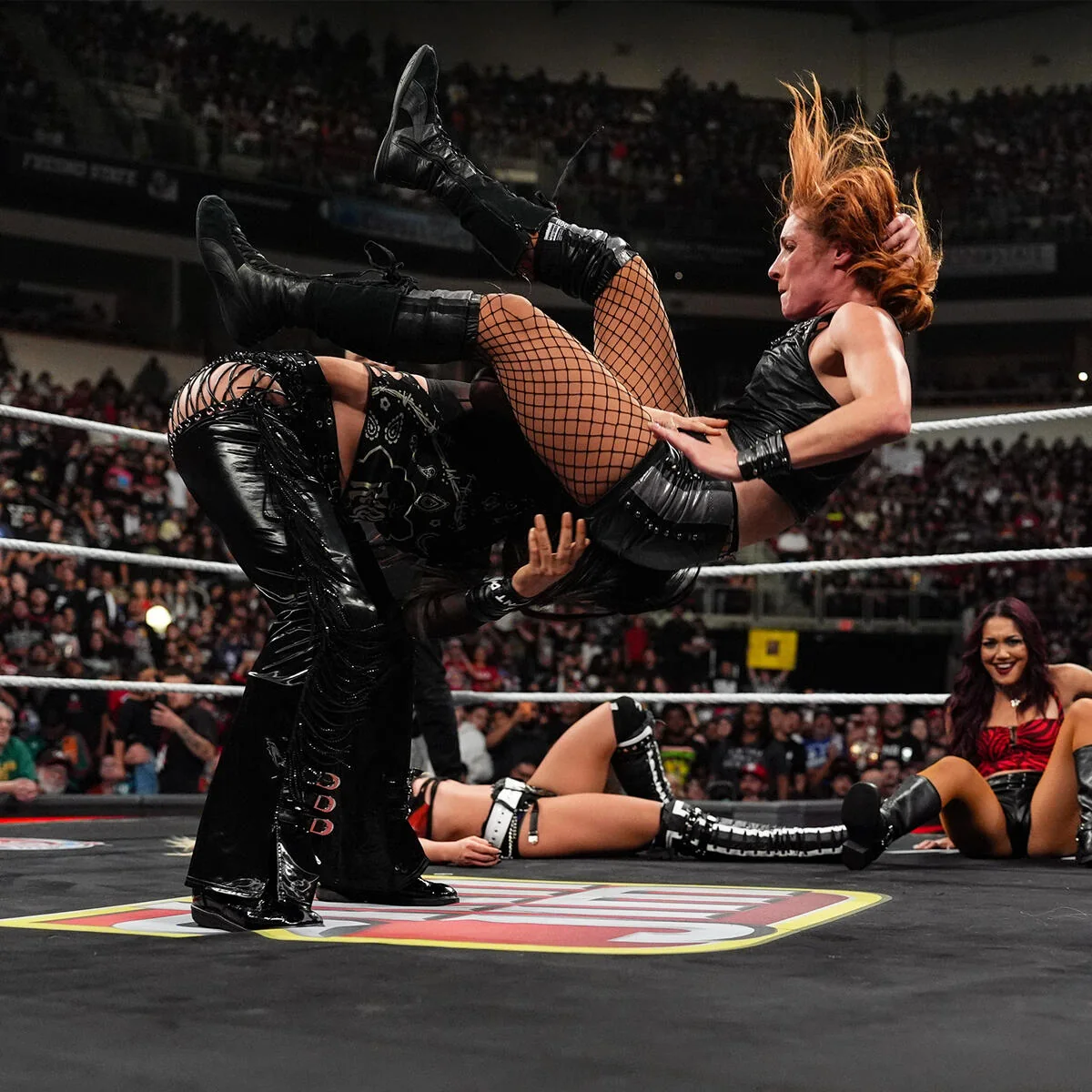
The bout was not a run-in replacing an entire wrestling match. Lynch survived Morgan's Oblivion, and Morgan survived earlier danger from Lynch. The official match highlights identify the October 26 title encounter. The longer live accounts add the important late sequence: Lynch threatened with Dis-arm-her, dealt with the women at ringside and returned to counter another Oblivion attempt into a Manhandle Slam.
As POST Wrestling describes the finish, Lynch followed the counter with a cover before the interference. That made the save meaningful: the champion was facing an immediate three-count threat. It still does not prove Lynch would certainly have won without outside involvement. A threatened finish and an awarded pinfall are different things. The show left the clean outcome unanswered, which is exactly why the title situation remained combustible.
Raquel Rodriguez and Roxanne Perez forced the disqualification
Raquel Rodriguez and Roxanne Perez entered to break up the cover and attack Lynch. F4W's contemporary report describes their intervention after Lynch hit the Manhandle Slam. The illegal attack gave the official a reason to stop the contest and award Lynch a DQ win. Neither Rodriguez nor Perez became a legal competitor simply by entering the ring, and their actions did not count as Morgan completing a successful pin.
The cost-benefit within the story is plain. The faction could live with a loss on Morgan's match record because the belt stayed with her. Lynch could hold up the victory as evidence she had not been fairly beaten, yet she had no new championship to show for the effort. That combination protects the challenger from a decisive defeat and protects the champion's reign at the same time. It also places a burden on the follow-up: if both sides escape the strongest consequence, the next chapter has to offer something more than a replay of the same interruption.
Why a disqualification win does not normally transfer a WWE title
Under the normal conditions of a WWE championship match, the challenger cannot take the title simply because the champion is disqualified. The referee can penalize the champion's side and award the opponent a victory while the existing reign continues. October 26 used precisely that distinction. Lynch won the contest through the illegal intervention; Morgan's reign was not ended by a pinfall, submission or another announced title-winning condition.
There is official historical support beyond this one result. WWE's account of John Cena's 2012 cash-in explains that Cena's DQ victory left CM Punk champion. A guaranteed championship opportunity can produce a match victory without producing the belt. The principle explains why a faction may accept its champion losing a match if the alternative is watching the challenger complete a three-count.
The word "normally" matters. WWE can announce a special condition making a title change on disqualification. At WrestleMania XXVIII on April 1, 2012, John Laurinaitis specifically told Punk he would lose the WWE Championship if disqualified against Chris Jericho, as the official match report records. That exception created a different incentive. It was not the condition announced for Morgan versus Lynch on October 26. Equally, making a match No Disqualification removes that route to a loss; it does not automatically ban allies from ringside or prevent them from influencing the finish.
DQ, count-out and no contest describe different outcomes
A disqualification gives the match to the opponent of the offending side. A count-out concerns failure to return under the official's count; in an ordinary title match it also does not normally transfer the championship. A no contest means the match ends without an awarded winner. These labels should not be swapped simply because an ending was chaotic, incomplete as a feud or unpopular with the audience.
For this particular main event, the simplest correction is also the most useful: Lynch has a DQ win, Morgan has a retained title, and neither has a decisive singles pinfall over the other from this bout. Calling it a no contest erases Lynch's awarded result. Calling it a Morgan victory mistakes championship possession for the win-loss record. Both errors make the next stage of the rivalry harder to understand because they remove the very grievance the finish left Lynch.
The post-match rescue changed the scene without changing the result
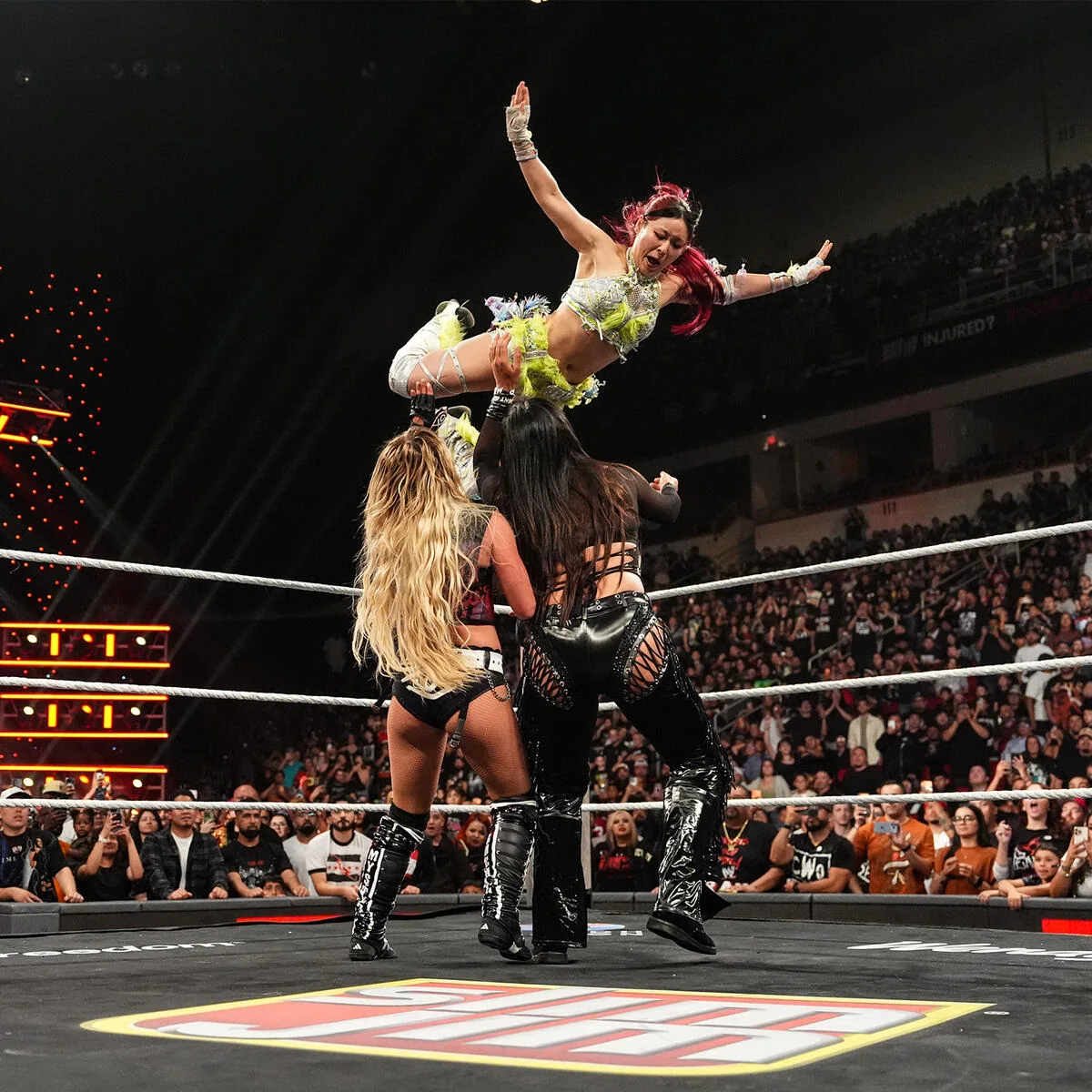
The Judgment Day continued attacking Lynch after the disqualification. Chelsea Green and IYO SKY came out to oppose them, widening the scene beyond the champion and her challenger. These appearances had identifiable context. Green was Morgan's advertised Crown Jewel opponent, while SKY had already beaten Rodriguez in a non-title match earlier that evening before suffering another Judgment Day attack. Helping against the faction connected existing rivalries rather than creating a new championship match on the spot.
The bell had already settled Lynch versus Morgan. Green and SKY hitting moves afterward did not become legal tags into that contest, and a wrestler standing over the champion during the brawl was not being awarded the Women's World Championship. The distinction matters because the ending rapidly introduced another way Morgan might lose the belt: Tiffany Stratton arrived with the Money in the Bank briefcase and a referee, hit the Prettiest Moonsault Ever and tried to exploit the situation.
Dominik Mysterio pulled Morgan out before a cash-in match could begin. Morgan therefore survived two separate dangers: a title defense ended by disqualification, followed by a threatened new championship match that never started. Our Money in the Bank cash-in rules guide explains that second threshold. For this result, the point is narrower: Dominik's rescue did not award Morgan a win over either Lynch or Stratton.
The closing image also invited speculation about a larger group confrontation. It is reasonable to notice several women sharing enemies and helping one another. It is too early to translate that observation into an official WarGames lineup, a permanent stable or a particular stipulation. Those would require separate announcements. What October 26 actually established was a faction still able to protect its champion, multiple opponents willing to resist it and an unresolved contract threat. The dramatic field expanded while the recorded main-event outcome stayed exactly where the referee left it.
Why another Judgment Day escape frustrated some viewers
The central complaint is not difficult to understand. If a challenger does the hard work of reaching a plausible winning position and the champion's friends repeatedly cancel the payoff, the audience can start anticipating the interruption instead of investing in the near-fall. The heel may be behaving logically within the story, yet the television can still feel repetitive. Explaining the championship rule answers why Morgan kept the belt; it does not settle whether this was a satisfying use of that rule.
The post-Raw discussion contained both criticism of repeated Judgment Day protection and appreciation for the women's wrestling on the episode. Some comments welcomed three women's matches and the time given to Lynch and Morgan, while others felt faction stories were moving too slowly. That is a small, self-selected set of reactions, not a measure of what every viewer thought. It nevertheless identifies a concrete editorial question: did the ending develop the rivalry, or mainly preserve it?
The September 7 interference had a different official finish
There is a useful recent comparison. On September 7, Morgan defended against Vaquer. Rodriguez and Perez intervened, Lynch tried to oppose them, and Perez passed Morgan the championship belt. WWE's official report says Morgan used the belt and followed with Oblivion to win. That was a Morgan victory assisted by interference. October 26 instead awarded Lynch a DQ win when the save became the match-ending violation.
Those endings are not interchangeable, even if the recurring faction presence produces a familiar feeling. The September 7 finish analysis covers the earlier match. Comparing the two shows how the same supporting cast can protect a champion through different mechanisms: one hidden enough to permit the decisive finish, another overt enough to stop the contest. The common frustration is delayed resolution, rather than an identical winner on the record.
Accuracy also keeps the criticism focused. October 26 did not end every match by disqualification: Bayley made Lyra Valkyria submit in their No Disqualification match, and other bouts had pinfall finishes. Nor does disappointment prove a secret motive involving merchandise or future event plans. The fair criticism is narrower and stronger: this title rivalry again withheld a decisive singles answer, so viewers deserve a consequential response to the interference that caused it.
What a meaningful follow-up would need to settle
Lynch's DQ win gives her a clear complaint, but it does not announce a rematch by itself. A promoter or on-screen general manager still has to establish the next contest and its conditions. As of this October 29 guide, the confirmed result is the October 26 disqualification. Any proposed Lynch title win, surprise return or larger-team stipulation remains a possibility to discuss rather than a match to place on the calendar.
One useful test for the next chapter is whether the characters respond to what defeated their plans. Lynch now has an obvious reason to demand protection against Rodriguez and Perez. Morgan has an obvious reason to keep them nearby. A new condition could change those incentives, or a clear in-ring result could settle the unresolved singles question. These are editorial ways the story could progress, not announcements that a cage, ringside ban or title-change-on-DQ stipulation has been booked.
Meanwhile, WWE continues to advertise Morgan in a champion-versus-champion Crown Jewel match with Green. That pairing concerns a different prize from Lynch's October 26 challenge for the Women's World Championship. Our Crown Jewel Championship rules guide explains the distinction. A future Crown Jewel result should not be used to rewrite the type of match Lynch just won, and an advertised event pairing is still subject to intervening title changes and announcements.
Follow the dated Raw schedule for the next chapter and the results feed for completed outcomes. The question to carry forward is specific: will Lynch receive a chance to settle the championship issue without the same faction escape? Until a new announcement or result changes it, October 26 stands as a Becky Lynch victory by disqualification and a Liv Morgan title retention. Understanding both lets you judge the story on its actual choices.
Join the discussion
Comments