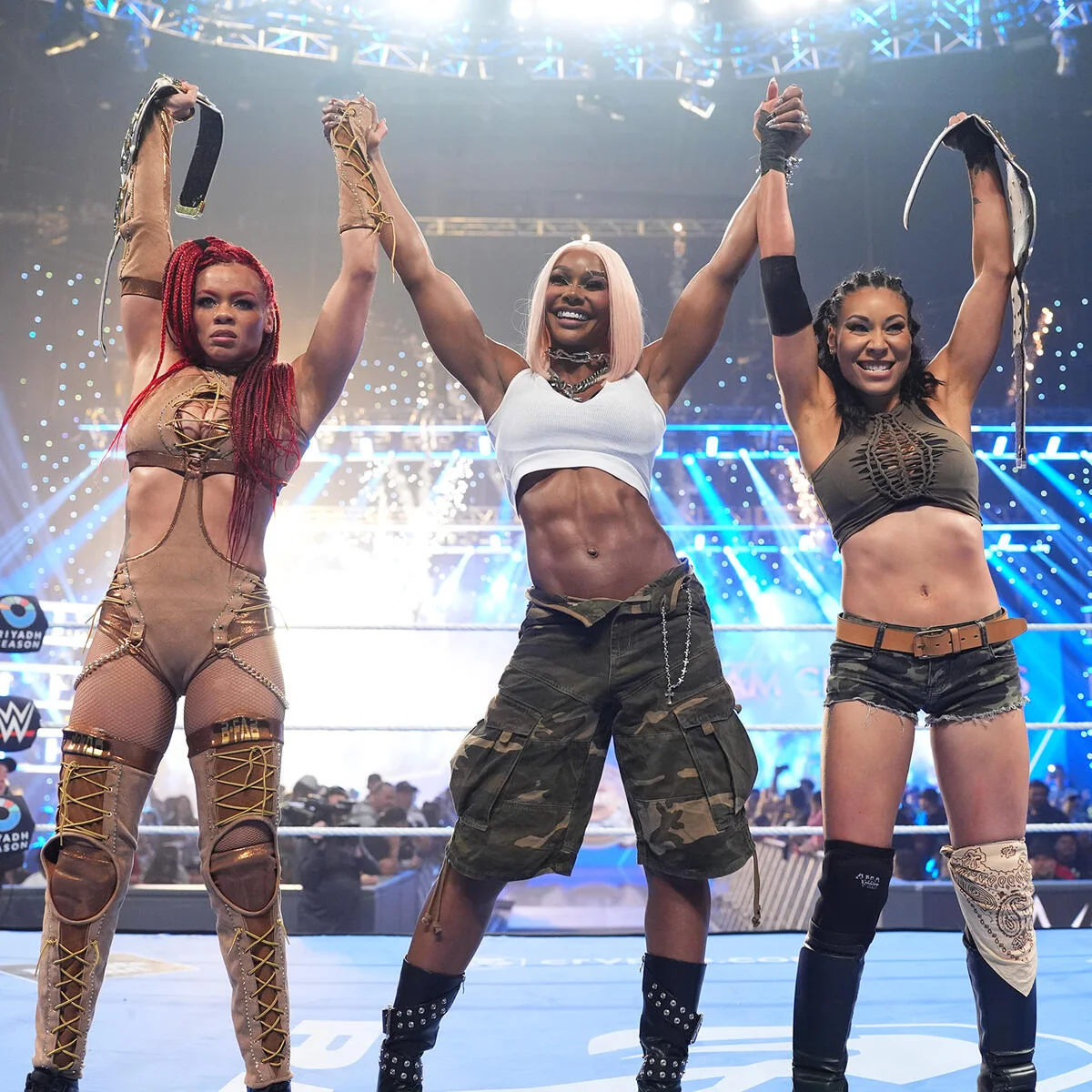
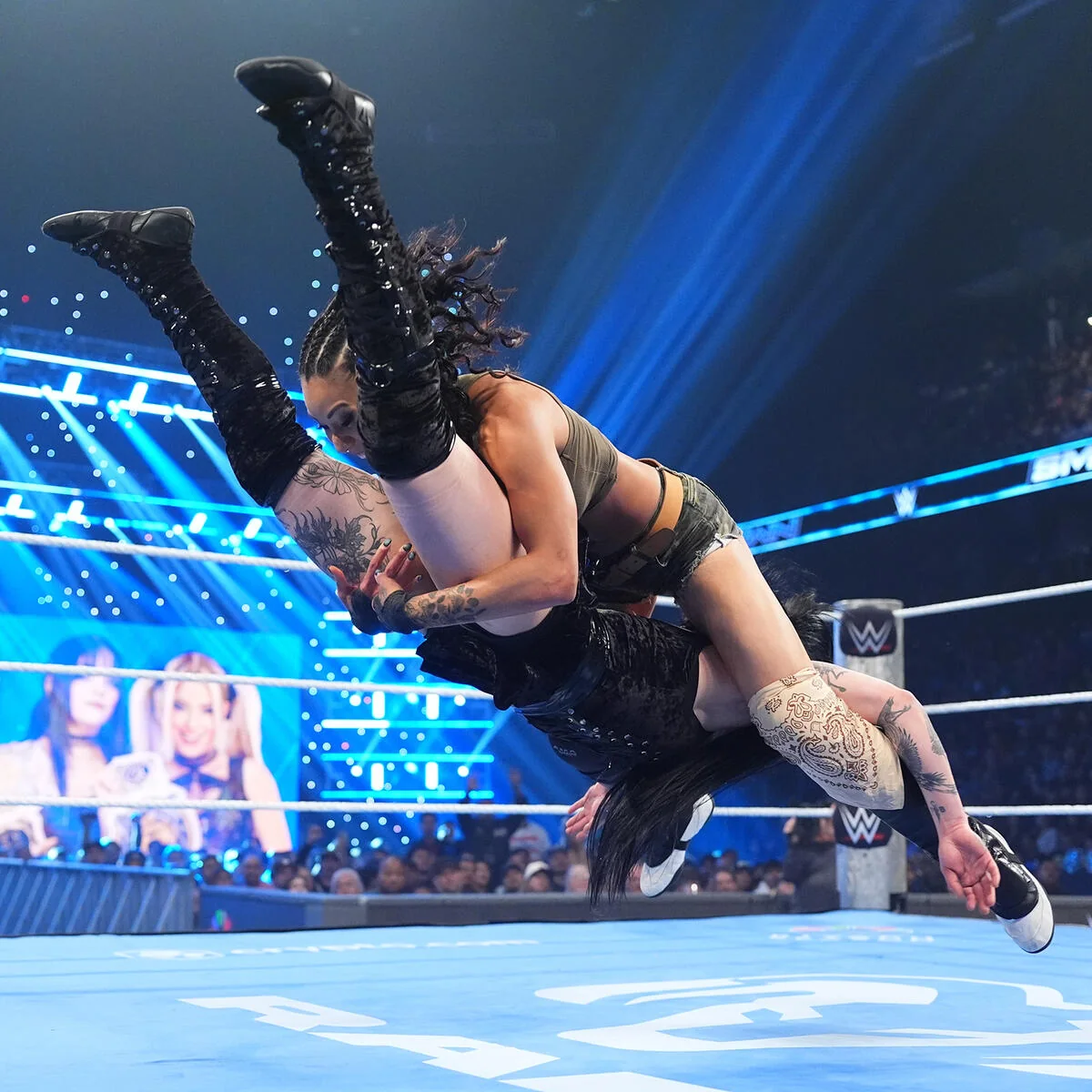
Michin and B-Fab won the WWE Women's Tag Team Championship from Alexa Bliss and Tatum Paxley on SmackDown on October 23, 2026. Jade Cargill struck Paxley while the referee was out of position, and Michin followed with the Styles Clash and pin.
Results spoilers follow. The win gave both women a first WWE championship while ending Bliss and Paxley's two-week reign. Those two consequences explain the mixed response: congratulations for the performers, questions about the finish and frustration at another rapid title change. This analysis is current to October 29.
Michin and B-Fab became champions on October 23
Michin and B-Fab defeated Alexa Bliss and Tatum Paxley to win the WWE Women's Tag Team Championship on SmackDown on October 23, 2026. The match took place at Toyota Arena in Ontario, California. Michin pinned Paxley after the Styles Clash, with Jade Cargill's intervention providing the opening. WWE's official results record the title change, rather than merely an upset in a non-title match.
The championship belongs to the winning pair, Michin and B-Fab. Cargill helped them win and celebrated with them, but her presence does not make this a three-person championship reign. WWE's title history lists Michin and B-Fab as the new team beginning October 23. A faction standing together with gold and the people officially recognized as its holders are related images, not identical information.
That is the first distinction behind the debate. A controversial winning sequence can still produce a recorded title switch. The referee counted a pinfall, the champions were changed and the new reign began. Saying the win involved help is a description of how it happened; it is not evidence that the decision was voided. Fans looking at a later champions page should use its date, because the October 23 result remains historical even if another team eventually takes the belts.
The significance also reaches both sides of the match. Michin and B-Fab gained a championship position, while Bliss and Paxley's new partnership lost the titles almost immediately after acquiring them. The question is consequently larger than whether a surprise title change occurred. It is whether the switch provides enough direction for the winners and enough meaningful continuation for the beaten team. The finish, the short prior reign and the performers' own response explain why a single result generated such different reactions.
Jade Cargill's unseen strike created the winning opening
The championship changed hands through a straightforward final action: Michin hit the Styles Clash and pinned Paxley. What made the result controversial was how she reached that position. Cargill struck Paxley from ringside while the referee was out of position. That help is part of WWE's own account, so describing it does not depend on a fan theory about what the camera happened to catch.
Paxley's missed opportunity led into the Styles Clash
Bliss and Paxley had their own offensive stretches before the ending. The contemporary match report describes Bliss hitting a DDT on Michin and taking B-Fab out with a crossbody. Paxley attempted a 450 splash, but Michin moved and Paxley rolled through. A subsequent attempt at Cemetery Drive was blocked at the ropes. The failed opening left Paxley vulnerable to Cargill's strike and the Styles Clash that followed.
That sequence gives both teams a role in the result. The former champions were not simply handed a loss without threatening their opponents, and Michin still had to convert the outside assistance into a legal cover. Paxley was the wrestler pinned. Bliss losing the championship as her partner is a team consequence, rather than a separate fall scored over Bliss. For anyone looking up which woman took the finish, the distinction prevents an inaccurate singles-style account of a tag-team title switch.
Why the result was a pinfall rather than a disqualification
The television audience seeing interference is not the same as the referee penalizing it. Fightful's title-change report explains that Michin distracted the official, opening the way for Cargill to strike. The referee then counted the pin. WWE recorded new champions; it did not announce a DQ win for Bliss and Paxley or an overturned decision.
This is why an assisted victory and a disqualification are different descriptions. One tells you something about the route to the finish; the other names the official result. When a referee calls for a DQ in an ordinary championship match, the belts normally remain with the existing champions. Our Lynch-Morgan DQ explanation covers that consequence from the following Raw. October 23 instead ended with a counted pinfall. The unfairness was presented as part of the story, while the championship change remained valid in WWE's record.
Alexa Bliss and Tatum Paxley held the titles for two weeks
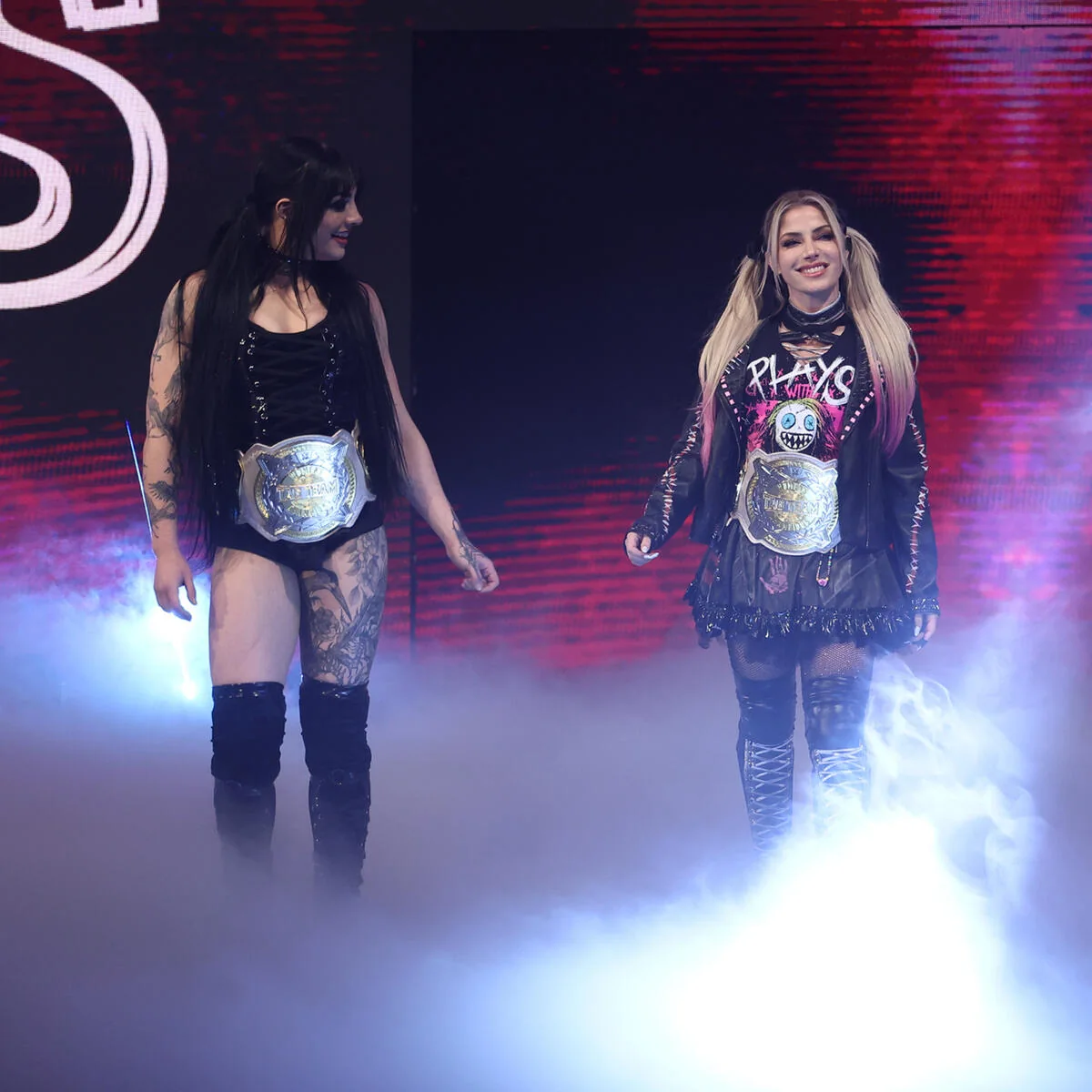
Bliss and Paxley's reign began on October 9 and ended on October 23. Those are the endpoints listed in WWE's championship history. The switch therefore came two weeks after their title win, rather than after an established months-long run. That short window is central to the negative reaction: fans had barely started following the new champions' dynamic before the belts moved again.
Counting championship reigns and evaluating a partnership are different tasks. The dates identify how long the team held this championship, not how long either performer has been in WWE or how many matches the pairing could still have together. Losing the belts does not announce the end of Bliss and Paxley as partners. It does, however, remove the most obvious platform for demonstrating that their October 9 win would lead to a sustained run against other teams.
The October 9 win began with a replacement partner
The origin of that reign makes the rapid loss more pointed. Charlotte Flair was originally set to team with Paxley against Fatal Influence. The show presented Cargill, Michin and B-Fab attacking Flair backstage, leaving her unable to compete. Bliss replaced her and teamed with Paxley to defeat Fallon Henley and Lainey Reid. POST Wrestling's October 9 report records that substitution and Paxley pinning Henley after Cemetery Drive.
That earlier intervention matters because Cargill's group was already entangled in the championship story before Michin and B-Fab won it. An attack designed to change the challengers helped produce the Bliss-Paxley pairing; another outside strike then helped end its reign. The symmetry gives the faction a visible thread across the two title changes. It also gives the former champions a grievance that can be developed without pretending the October 23 match was an isolated accident.
The on-screen attack is the established explanation for Flair's withdrawal from the October 9 contest. It should not be expanded into an independent diagnosis, a guaranteed return date or a backstage reason for the later title change. Likewise, the short reign alone does not prove either team is about to split. What it does establish is a clear follow-up obligation: show what the loss does to Bliss and Paxley, especially after their unexpected opportunity had created a new partnership to invest in.
A first WWE championship can matter beyond the storyline
For Michin and B-Fab, this was their first championship in WWE. That is the specific milestone reported in Fightful's post-match reaction article. It should not be inflated into a claim that Michin had never held a title anywhere in professional wrestling. The importance is securing a first place in WWE's championship history, together as this team.
Wrestling routinely invites two different responses at once. The on-screen characters used an unfair advantage and gave their opponents a reason to seek revenge. The performers also reached a career marker they had worked toward. Congratulating the latter does not mean treating Cargill's strike as fair competition. Disliking the former does not require dismissing the effort behind the achievement. Keeping both levels in view makes the reaction more interesting than choosing between unconditional praise and hostility.
Michin and B-Fab described a personal milestone
In their posts after the show, Michin emphasized winning near home with family watching and thanked her brother for helping inspire her interest in wrestling. B-Fab reflected on persistence and believing in herself through setbacks. PWMania's October 24 report reproduces those messages. They explain why the night mattered personally without claiming to reveal WWE's future booking plans.
The two expanded on that feeling in an October 28 Complex Graps interview, transcribed by Fightful. Michin described the title goal feeling possible again through her partnership with B-Fab and Cargill. B-Fab discussed progressing from managing groups to wrestling as part of an actual tag team. Those experiences make the win more substantial than an interchangeable surprise result: both women could identify what had changed in their own careers.
That perspective also sets a reasonable expectation for the reign. The belts can give the pair opportunities to show teamwork, speak with championship stakes and face opponents with a clear objective. None of that requires promising an exact number of defenses or a lengthy run. It requires the ensuing television to let the new champions develop the position they have just acquired, so the milestone produces something fans can continue following.
Why the title change received congratulations and criticism
The response was divided in a specific way. Fans could be pleased to see Michin and B-Fab achieve a first WWE title while questioning why Bliss and Paxley's reign ended so quickly. The SquaredCircle result thread contains both kinds of comments. It is evidence of a discussion, not a scientific sample or proof that the whole audience rejected the new champions.
Celebrating the wrestlers does not settle the booking argument
The positive argument starts with the performers and the opportunity. Giving Michin and B-Fab championship stakes creates a reason to feature their teamwork and a concrete objective for opponents. A surprise result can also make a weekly title defense feel less predetermined. If every newly crowned team automatically survives its first challenge, fans can become confident that the advertised stakes will not change anything.
The objection concerns preparation and payoff. Were the challengers presented strongly enough before winning? Does the championship position help them become more distinct, or mainly furnish another prop for Cargill's story? Did the program give Bliss and Paxley enough time to make their partnership matter? Those questions can be asked without denying that the winners worked toward a personal milestone. They evaluate the television surrounding the wrestlers rather than the validity of their gratitude.
A short reign needs a consequence for the losing team
In the separate reaction discussion, readers questioned the rapid movement from Fatal Influence to Bliss and Paxley and then to Michin and B-Fab. The useful concern is whether each switch adds a chapter or merely changes the champions' names. A short reign can work if the loss produces a revealing conflict, a compelling chase or a significant decision. It becomes harder to defend if the beaten team simply disappears from the issue.
Another recurring request was a wider range of title defenses. Comments in the live SmackDown thread asked to see the belts beyond the same show and rivalries. That is a preference expressed by viewers, not an announcement of defenses on Raw, NXT or another promotion. The underlying point is about depth: more meaningful opponents would give the new champions a chance to demonstrate that their reign has its own identity.
The next few appearances will therefore matter more than a one-night label of success or failure. Michin and B-Fab need opportunities to make decisions as champions, while Bliss and Paxley need a response to losing through outside help. Cargill's involvement supplies an immediate antagonist, but the tag champions should also get to be the center of their own championship story. That is a fair standard for both the fans celebrating and the fans questioning the switch.
What to watch in the new champions' next chapter
The first question is what WWE actually announces for the belts. A title win does not automatically establish the first defense, guarantee an immediate rematch or make a fan-proposed challenger official. As of this October 29 guide, the October 23 result is settled, while future championship matches need their own advertisements. Check a dated card rather than assuming the previous champions will receive the next shot simply because the finish gave them a strong complaint.
The second question is how much agency Michin and B-Fab receive. Cargill created the winning opening, but the new champions can still develop their own match strategy and voice. Watch who chooses the challengers, who handles pressure when an opponent cuts off a tag and whether the pair can win situations where Cargill's punch is not available. Those are concrete ways to evaluate the team without demanding that the show suddenly abandon the faction relationship that helped put them in this position.
The third is how Bliss and Paxley react. Their title run began with an unexpected partnership and ended through outside assistance two weeks later. A response can give the loss meaning even before another championship match is booked. Conversely, treating the defeat as a disposable result would strengthen the complaint that the previous switch lacked purpose. No injury rumor or predicted breakup is needed to identify that narrative responsibility.
Use the SmackDown schedule to follow the next appearance, the match cards for confirmed defenses and the champions page for current recognition. October 23 gave Michin and B-Fab a first WWE championship and left Bliss and Paxley with an unresolved grievance. Whether that becomes a strong reign depends on what the television does with both consequences, rather than the surprise alone.
Join the discussion
Comments