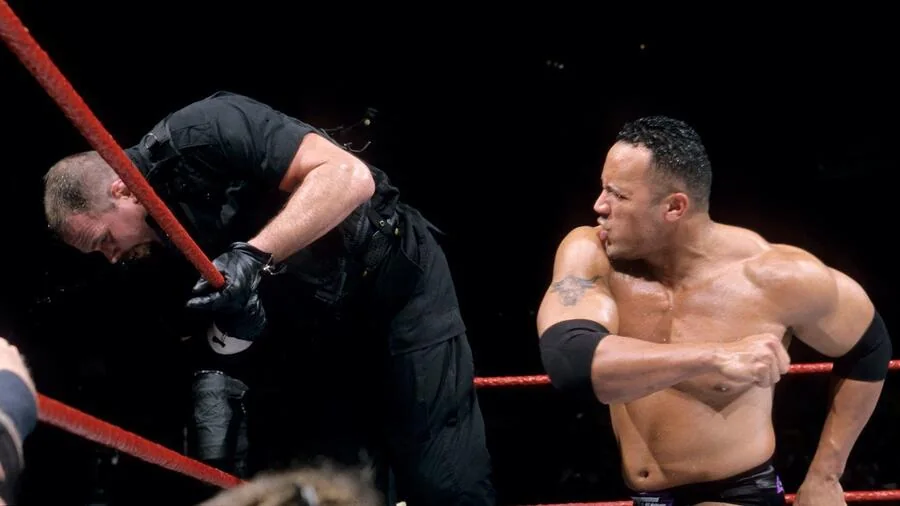
Which games belong in the SmackDown timeline?
The original order is WWF SmackDown!, SmackDown! 2: Know Your Role, Just Bring It, Shut Your Mouth and Here Comes the Pain. Those five releases are followed by the seven SmackDown vs. Raw games, beginning with the unnumbered 2004 edition and ending with SmackDown vs. Raw 2011. WWE '12 then changes the annual series' name.
That is the useful sequence when someone asks for WWE SmackDown games in order. It follows the main console game's development, rather than putting every wrestling game with a WWE licence into one enormous list. The early titles were released under the WWF name; retaining that historical wording helps you identify the actual disc instead of searching for a renamed version that never existed.
There are two ways to enjoy this chronology. A returning fan can find the game remembered from childhood, while a new player can see how the series moved from the original PlayStation to PlayStation 2 and eventually multiple console families. Neither approach requires finishing an older career before starting the next game. This is a release sequence, not a twelve-part story with a required ending.
Count the original series separately from every WWE game
WWE's official gaming retrospective covers several branches of wrestling games. WWF No Mercy on Nintendo 64 belongs to the same general period as the first PlayStation SmackDown games, but it is not their numbered sequel. Likewise, games called Raw or Day of Reckoning should not be inserted between two SmackDown releases simply because they appeared during the same wrestling era.
The distinction matters when following a recommendation. Someone praising No Mercy's approach is discussing a different game from someone recommending SmackDown! 2. Both can be worthwhile, but a purchase based only on the year and a familiar wrestler can easily lead you to the wrong series. Match the full title and platform before comparing rosters or modes.
The television show is another separate use of the name. The games borrow WWE's presentation and performers, but this list does not tell you which weekly episodes to watch first. For the current broadcast, use the SmackDown schedule. For the games, begin with the release tables below and read the edition year alongside the actual release year.
The original five games run from 2000 to 2003
The original run contains two PlayStation releases and three PlayStation 2 releases. Both of the first two games arrived in 2000, so sorting only by year will not establish their order. From there, the series advances through Just Bring It in 2001, Shut Your Mouth in 2002 and Here Comes the Pain in 2003.
| Order | Game | Release year | Original platform |
|---|---|---|---|
| 1 | WWF SmackDown! | 2000 | PlayStation |
| 2 | WWF SmackDown! 2: Know Your Role | 2000 | PlayStation |
| 3 | WWF SmackDown! Just Bring It | 2001 | PlayStation 2 |
| 4 | WWE SmackDown! Shut Your Mouth | 2002 | PlayStation 2 |
| 5 | WWE SmackDown! Here Comes the Pain | 2003 | PlayStation 2 |
The table uses release years because launch days differed by territory. A European copy and a North American copy can belong to the same place in the sequence even when their dated listings differ. Japanese editions also used the Exciting Pro Wrestling name, which explains why an import collection can look different without containing a separate missing sequel.
Two PlayStation games establish the starting point
The first SmackDown! establishes the Yuke's-developed, THQ-published PlayStation branch. Its successor, Know Your Role, is the second game, not a subtitle attached to the same disc. The short gap between them is why memories of the original can blend with memories of its expanded follow-up.
For a chronological replay, spend enough time with the first game to understand its movement, presentation and season approach, then compare the sequel. Know Your Role expands the package with additional match options and creation possibilities. You do not need to exhaust every unlock to appreciate the progression; the useful comparison is what changes when you move from one release to the next.
Three PlayStation 2 games complete the original run
Just Bring It is the first PS2 entry. It is often informally treated as SmackDown 3, but Just Bring It is the title to use when finding the actual product. Shut Your Mouth follows, adding a season built around WWE's changing roster and draft-era presentation.
Here Comes the Pain is the last entry before the versus branding. Its body-part damage system gives a practical reason to notice how match strategy changes: the target of an attack matters, rather than every move being merely another step toward a finishing animation. That does not make it a direct recreation of every match WWE presented in 2003.
Choose between these games by the experience you want as well as their order. A player studying the first PS2 transition has a reason to start with Just Bring It. A player seeking the final original-name edition may begin with Here Comes the Pain and return to its predecessors later.
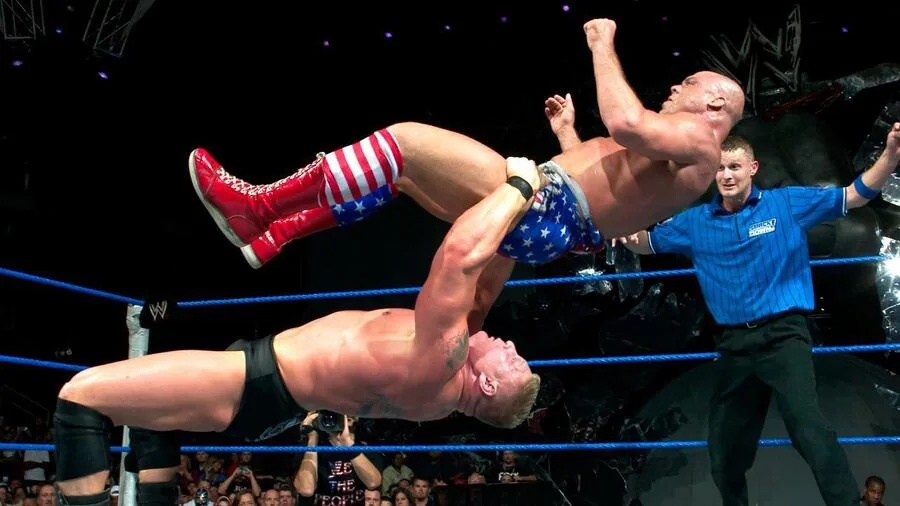
SmackDown vs. Raw continues the sequence through 2011
The next seven entries carry the SmackDown vs. Raw name. Read the title and release-year columns separately: the 2006 edition first arrived in 2005, and the 2011 edition arrived in 2010. An edition number is not automatically the year in which its original owners bought it.
| Game | Release year | Console and handheld versions |
|---|---|---|
| SmackDown! vs. Raw | 2004 | PS2 |
| SmackDown! vs. Raw 2006 | 2005 | PS2, PSP |
| SmackDown vs. Raw 2007 | 2006 | PS2, PSP, Xbox 360 |
| SmackDown vs. Raw 2008 | 2007 | PS2, PS3, PSP, Wii, Nintendo DS, Xbox 360 |
| SmackDown vs. Raw 2009 | 2008 | PS2, PS3, PSP, Wii, Nintendo DS, Xbox 360 |
| SmackDown vs. Raw 2010 | 2009 | PS2, PS3, PSP, Wii, Nintendo DS, Xbox 360 |
| SmackDown vs. Raw 2011 | 2010 | PS2, PS3, PSP, Wii, Xbox 360 |
This table follows the main console and handheld releases, leaving separate mobile adaptations outside its scope. Yuke's official development catalogue records the series under its successive names, providing a useful check against listings that use casual abbreviations.
Why there is no separately titled SmackDown vs. Raw 2005
The first game was simply WWE SmackDown! vs. Raw. Fans and databases sometimes add 2005 as a convenient season-style label, but that does not identify an extra game between the 2004 release and SmackDown! vs. Raw 2006. When a seller writes SvR 2005, inspect the photographed title and disc rather than assuming a missing sequel has been discovered.
The practical sequence is unnumbered SvR, then 2006, 2007, 2008, 2009, 2010 and 2011. Keeping the full title beside its release year also prevents a dated magazine review from appearing to discuss the wrong edition.
The platforms expand beyond PlayStation 2
SvR 2007 brings Xbox 360 into this sequence. The 2008 announcement expands the named platforms further, including PS3, Wii and Nintendo DS. This is why a later SvR shelf can contain several versions with matching cover years.
A shared title does not promise an identical package. Check the version-specific controls, modes and multiplayer arrangements before transferring a recommendation from one system to another. A handheld edition should be evaluated as the handheld release actually being sold, rather than assumed to reproduce every console feature.
Different modes give each edition its own appeal
The choice is not just older graphics versus newer graphics. In a 2009 developer interview, designer Bryan Williams distinguishes the authored Road to WrestleMania stories from Story Designer's player-created narratives. A fan who wants to play a scripted storyline and a fan who wants to book original segments have different priorities.
Use that distinction when revisiting the series. Identify the mode you remember, then confirm which edition and platform contains it. Do not expect every later game to retain every earlier mode, or an old online feature to remain available today simply because it appears on the original box.
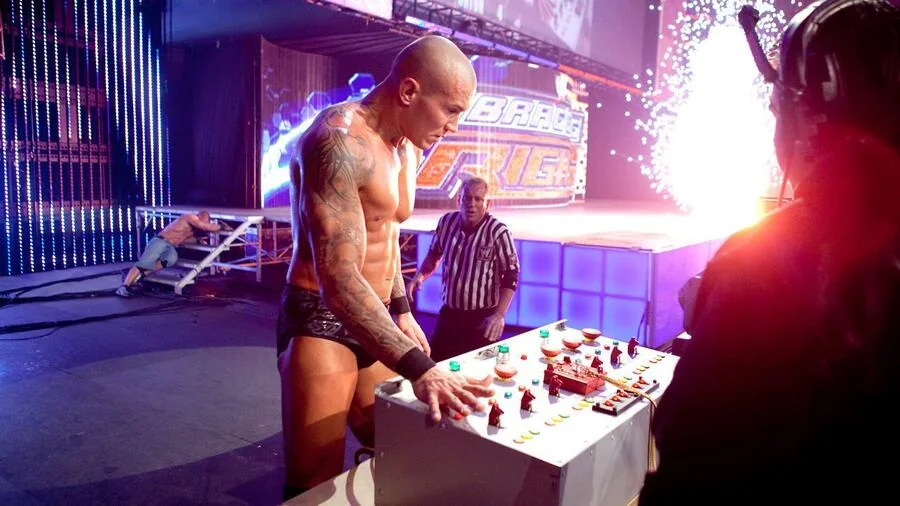
WWE '12 and WWE 2K carry the annual series forward
After SmackDown vs. Raw 2011 comes WWE '12, released in 2011. WWE '13 follows in 2012, then WWE 2K14 in 2013. There is no main annual release called SmackDown vs. Raw 2012 to insert between them. The title changes; the main series' history continues.
WWE addressed that change in its June 2011 interview with designer Bryan Williams. Reading the contemporary announcement is especially helpful here because an edition styled '12 was advertised for a November 2011 release. The naming convention continues the same distinction between release year and title year seen in the later SvR games.
| Next game | Release year | What the title signals |
|---|---|---|
| WWE '12 | 2011 | The annual series drops the versus branding |
| WWE '13 | 2012 | The next annual edition under the shorter name |
| WWE 2K14 | 2013 | The annual franchise begins its 2K-branded period |
A new name continues the lineage without creating a story prerequisite
In February 2013, WWE and 2K announced their publishing agreement. That is a business and franchise transition, not the revelation of another missing SmackDown chapter. A complete collection can follow the lineage across the names, while a focused SmackDown collection can reasonably stop with the last SvR-branded edition.
For a player, continuity of the series does not guarantee continuity of every mode, interface or control. Treat a later game as its own design and read its actual mode descriptions. A favourite feature from a PS2 edition is not automatically available because the newer release occupies the same annual slot.
Nor does following release order mean accepting the games as an exact documentary account of WWE. A roster, an authored story and a historical showcase serve different purposes. You can use the real championship information and event history to understand the wrestling, while treating your virtual results as the story of that particular playthrough.
Choose your starting point and check the exact edition
Release order is the clearest way to understand the series, but it need not dictate your first purchase. Someone interested in the original PlayStation's wrestling boom has a different starting point from a fan who wants to book a familiar Ruthless Aggression roster. Decide whether you are following the development history, revisiting a particular group of wrestlers or seeking a particular mode. That decision narrows a long shelf of similar boxes into a manageable choice.
Pick a route for history, roster nostalgia or a favourite mode
For the historical route, start with WWF SmackDown! and move to Know Your Role. Playing those two 2000 releases together makes the early expansion easier to appreciate. You can then compare the first PS2 entry, Just Bring It, with Shut Your Mouth and Here Comes the Pain. This is an editorial recommendation for seeing change between releases, rather than a claim that every sequel improves every feature.
For roster nostalgia, select the wrestling era first. If Brock Lesnar and Kurt Angle are the names that draw you back, Here Comes the Pain is a sensible game to investigate. Its body-part damage system is a documented distinction in WWE's history of the series. If your interest is the later Raw, SmackDown and ECW period, the expanded SmackDown vs. Raw editions provide a different snapshot. Look through the exact game's roster before assuming a favourite wrestler appears because they worked for WWE around that time.
For a mode-led route, investigate SmackDown vs. Raw 2009 for its Road to WrestleMania approach or the 2010 edition for Story Designer. Those are different activities: following a designed story and building your own are not interchangeable. Check the specific platform's feature list before choosing. A mode associated with an annual title in a retrospective is a starting point for that check, rather than a guarantee that every handheld and console version offers the same experience.
Check the disc, platform and available features before buying
Write down the complete title, platform and region shown on the actual item. A photograph of the box spine and disc is more useful than a seller's shorthand such as “SmackDown 2005.” Check that the disc matches the advertised case, ask about its condition and make sure the hardware you own can run that regional version. For a local multiplayer evening, also check the compatible controllers, player count and any storage needed to save progress. These are practical purchase checks, not features that should be inferred from another edition.
Owning a newer PlayStation does not establish compatibility with the original discs. Sony's PS5 safety guide says PS1, PS2 and PS3 format software cannot be played from disc on PS5. Sony's PS3 disc guide also makes PS2 compatibility dependent on the PS3 model. Check your precise machine rather than buying on the assumption that all consoles in a family behave alike.
Finally, treat launch-era online descriptions as historical information. A feature advertised when a game was new does not establish that its service, downloadable extras or community tools remain available today. Choose an edition whose confirmed local features meet your needs, verify compatibility and then use the chronology above to decide what to try next. One well-chosen game can be enough to revisit a favourite WWE era; collecting the entire lineage is a separate project.
Join the discussion
Comments