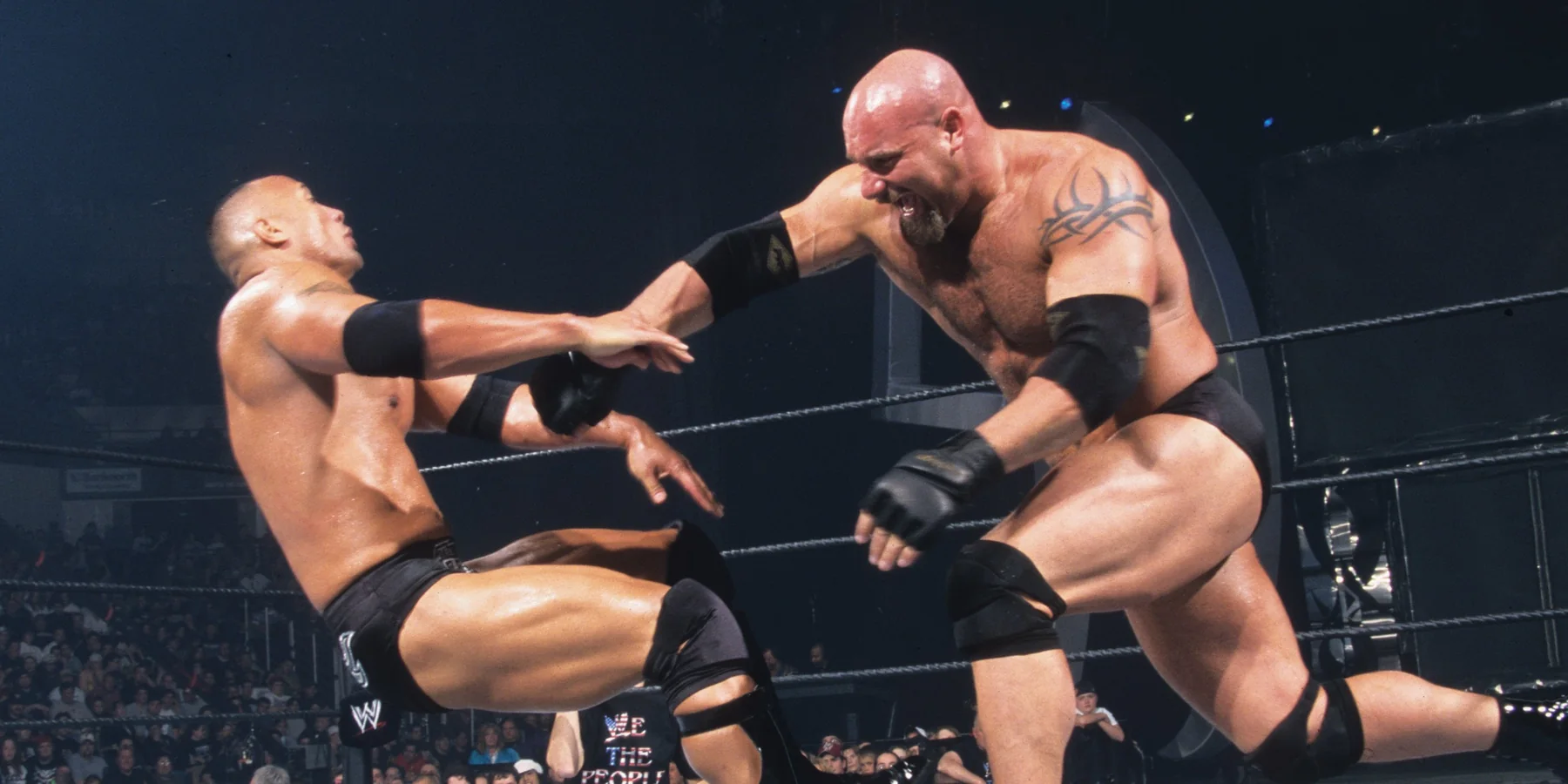
Goldberg, Roman Reigns and Brock Lesnar all have football backgrounds, but those backgrounds describe different kinds of experience. A useful comparison separates regular-season NFL appearances, a chance to win an NFL roster place and a college or Canadian football career. That distinction makes the stories more interesting—and the answer to “did he play in the NFL?” more accurate.
What counts as an NFL football career?
Start with the claim you want to check. “Signed with an NFL team” describes a transaction. “Appeared in preseason” describes participation in exhibition games. “Played in the NFL regular season” is a more specific claim about league competition. None of those phrases should automatically replace the others when you explain a wrestler's background to another fan.
The distinction matters because an old team photograph can support a much narrower statement than its social-media caption suggests. A player wearing an NFL uniform may have been pursuing a roster spot when the image was taken. The picture is still part of his story, but it cannot tell you how long he stayed, which games he entered or whether he reached the regular season.
WWE itself has revisited the connection. Its retrospective on Goldberg and Lesnar's football footage brings two familiar wrestling names into one football conversation. To understand their individual careers, go beyond the shared highlight presentation and ask what happened before and after the moment on screen.
Different records answer different questions. A university biography explains the athlete's college background. A signing announcement records a team's decision at a particular moment. A season statistics page addresses appearances and production in the competition it covers. Reading the date and the heading is as important as recognizing the name.
Ring names add another complication. Football records may use a legal name that a wrestling viewer does not immediately recognize. Establish that connection before deciding a search has found nothing. Equally, do not combine two people simply because a surname is familiar: the school, team and dates should also line up.
This guide follows three individual paths rather than ranking which sport is harder or declaring that one kind of background guarantees success in another. A brief opportunity can be meaningful without becoming a long professional career. College achievement can stand on its own. The aim is to describe each experience accurately enough that you know what to look for when the next old football clip appears.
Goldberg: the clearest regular-season example
NFL records list Bill Goldberg with 14 Atlanta Falcons appearances across 1992–1994. That is a concrete answer to the regular-season question, rather than an inference from a training photograph or a wrestling introduction.
His college background deserves its own place in the story. The University of Georgia's retrospective identifies him as an All-SEC defensive lineman in both 1988 and 1989. Those honors describe what he accomplished as a Bulldog; they should not be relabeled as NFL awards. The distinction lets you recognize a substantial college career without overstating what followed.
Wrestling then became a separate chapter. In a WWE interview about his debut years, Goldberg explained that football had been his original ambition and that wrestling became an option after that path ended. He described having to learn a new craft, including studying footage and reviewing his own training. The account is more revealing than an assumption that physical strength made the transition automatic.
For a fan watching his entrance or explosive offense, it is easy to see why commentators return to the football connection. The useful interpretation is that a previous athletic background became part of his presentation. It does not mean a wrestling move can be used to reconstruct his football statistics, or that success in one arena measures the same skills as success in the other.
There is also a promotion distinction to preserve. WWE's Goldberg biography places his initial rise in WCW, followed by his WWE debut on March 31, 2003. Calling every early Goldberg match a WWE match collapses that chronology. If you are exploring his career through old clips, check the promotion and year before connecting the footage to a particular stage of his life.
A useful viewing project is to compare the introductions around those early wrestling appearances with a later career retrospective. Notice which parts of the football background are mentioned, how his character is presented and what the match itself asks the audience to remember. This is an interpretation of wrestling presentation, not a way to assign additional football accomplishments.
Goldberg therefore provides the clearest example in this group of a wrestler with documented NFL regular-season participation. His football record and his wrestling reputation can both be discussed honestly without making them identical in scale. You do not need to turn a relatively short professional football career into a star quarterback's résumé to explain why the connection interests fans.
Roman Reigns: read the football record under Joe Anoa'i
For Roman Reigns, the useful name in old football records is Joe Anoa'i, sometimes written without the apostrophe as Joe Anoai. WWE has revisited his Georgia Tech background with Reigns himself. That connection lets a wrestling fan recognize the player in college reports that predate his familiar ring identity.
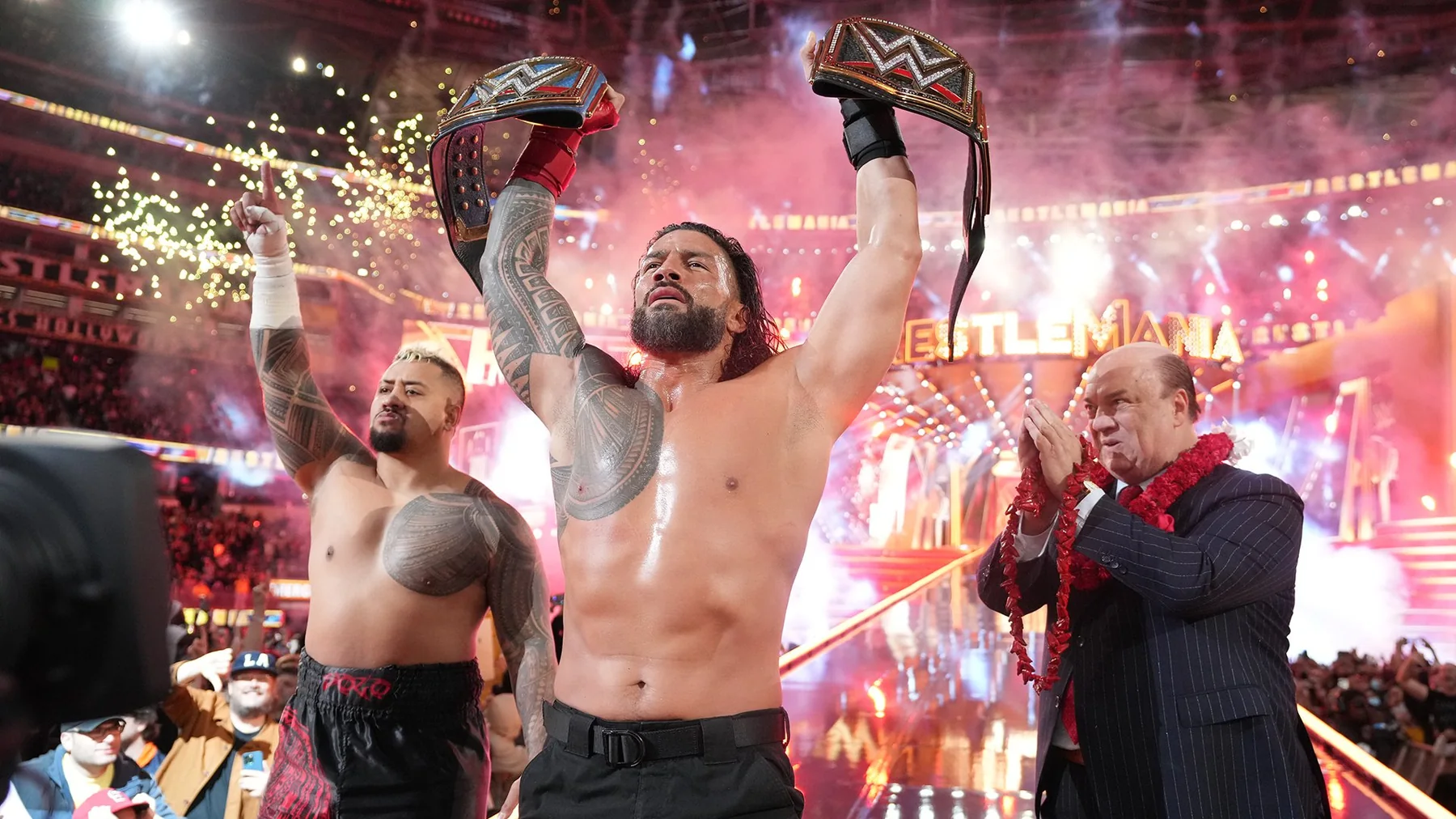
The college record is a strong starting point. Georgia Tech's 2006 All-ACC announcement names defensive tackle Joe Anoai as a first-team selection. It places him within an actual team and season, rather than reducing his football past to a throwaway line about having once tried another sport.
The NFL sequence is different. In its August 26, 2007 roster announcement, Jacksonville reported signing Anoai and noted his earlier undrafted signing with Minnesota, which had waived him on May 30. The Jaguars then included him in their September 1 roster cuts. Those dated team reports document opportunities and releases before the regular season, not a sustained NFL playing career.
This is why the concise description “college football player with NFL offseason opportunities” is more useful than calling Reigns an established NFL veteran. It recognizes that reaching those opportunities was real while keeping the outcome precise. If a clip identifies him as a former Viking or Jaguar, the next question is what phase of his career the description refers to.
His football story also extends beyond the NFL. The Canadian Football League's coverage of WWE identifies Reigns as a former CFL player. Canadian professional football belongs in the account on its own terms. It should not disappear simply because an NFL-focused headline is easier to write, and it should not be silently relabeled as NFL participation.
For wrestling fans, the college-to-professional transition offers a way to explore the person behind the entrance without pretending that football explains every part of his later character. You can appreciate the athletic background while still judging a WWE performance through the match, its opponents and the story presented on television.
When sharing an old photograph, include the name, team and year if the original record supplies them. A short accurate caption is more helpful than an exaggerated claim about a long NFL career. And when following present-day Reigns coverage, keep those historical affiliations separate from any current appearance announcement: an old football connection does not tell you where he will appear next.
Brock Lesnar: a Vikings opportunity after WWE success
Brock Lesnar's story reverses the simple idea that a football player finished with the NFL and then discovered WWE. The University of Minnesota's July 28, 2004 announcement reported his Vikings contract after he had already left WWE to pursue football. His professional wrestling identity was established before this NFL opportunity.
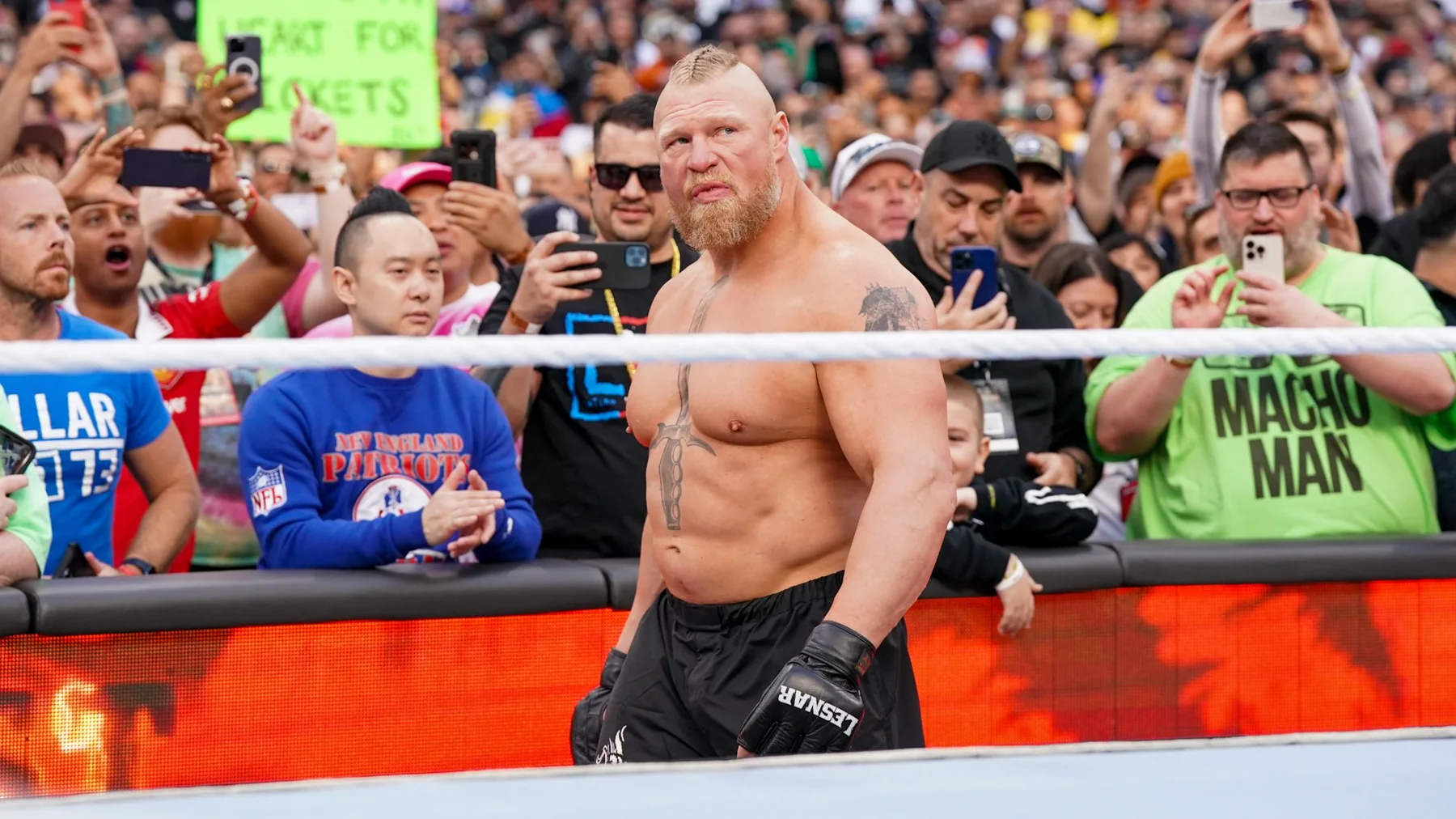
There is a second distinction in his college background. Minnesota identifies Lesnar as its 2000 NCAA heavyweight wrestling champion. That is a wrestling achievement, not a college football championship. Seeing “Minnesota,” “college champion” and “Vikings” close together in a short biography can make the sequence seem more conventional than it was. Read the sport attached to each achievement.
The university's M Club profile records his Vikings training camp and three preseason appearances. Contemporary UPI reporting dated August 30, 2004 records his release. Together, those sources describe a real attempt to earn a place and its outcome. They do not support turning the stint into a regular-season NFL career.
If you want to see the football rather than only read about it, the NFL's own Lesnar preseason highlight video identifies footage from a 2004 game against San Francisco. Notice that the upload came years later. The publication date of a retrospective clip is not the date of the action, a small distinction that prevents a surprising number of confused timelines.
Watch the clip as football footage first. Follow where Lesnar lines up and what happens during the play before reading it as a demonstration of a familiar wrestling persona. A short compilation selects moments; it does not reveal an entire training camp, every coaching assessment or how a roster decision was made. Those are different questions requiring different evidence.
For WWE viewers, the interesting comparison is the change in role. A performer already known to a wrestling audience was trying to earn a place in another highly specialized setting. You can find that ambitious without claiming that a recognizable name should automatically win a roster spot. It also explains why the football attempt belongs within his wrestling-era timeline, rather than serving as a generic “before he was famous” anecdote.
Keep the takeaway precise when discussing him with friends: Lesnar's Vikings experience involved camp and preseason in 2004, after his first WWE success. Goldberg's regular-season record and Reigns' college and professional opportunities provide different comparisons. The three paths share athletic crossover, but each has its own sequence, competition and outcome.
Following football after the wrestling connection
If these backgrounds make you curious about football, start with one team or matchup instead of trying to learn an entire league at once. Atlanta, Minnesota and Jacksonville now have a place in the story you have just read. That can be a reason to explore their games, provided you remember that the wrestler's historical association is separate from the team's present roster.
For the practical next step, NFL-Schedule.com's game and kickoff guide brings matchups and schedule information together. It is a related site in the same project as WWE Schedule. Use it to find a game that interests you and read its date and time; then confirm important details with the team or the relevant broadcaster before planning around it.
Choose your viewing region and time zone deliberately. A historical clip is available whenever you press play, while a live game occupies a particular appointment. Check what the listing's time means where you are and whether the viewing service covers your location. A schedule link helps you organize the search; it does not itself provide a broadcast subscription.
Keep wrestling plans visible as well. The upcoming WWE events page is the place to look for listed shows, rather than assuming a wrestler in this article will appear on the next card. Check the actual event details and official announcements for appearances that matter to you. A career profile is background reading, not an advertisement for a future match.
The WWE calendar can help preserve your wrestling appointments alongside a football game. Give each entry a clear name so that a team matchup cannot be confused with a weekly show or PLE. If you decide to catch up on wrestling afterward, remember that the WWE results page contains spoilers; choose whether you want the outcome before opening it.
The rewarding part of this crossover is discovering an unfamiliar chapter behind a familiar face. Follow the records carefully, watch the old footage in its proper context and then choose a current event on its own merits. You can enjoy both sports while keeping the difference between a football achievement, a roster opportunity and a wrestling storyline clear.
Join the discussion
Comments