Vintage WWE shirts fall into three useful categories: genuinely older garments, modern licensed reissues and new shirts with a vintage aesthetic. Decide which one you want before judging a listing by its logo, seams or price. This guide explains the graphic history, evidence, condition and fit checks that help a fan buy confidently without treating a photograph as an authentication certificate.
Updated October 13, 2026. Retail examples describe current specifications; archival photographs explain design history and do not authenticate merchandise offered by a seller.
Decide whether you want an old shirt or an old design
“Vintage WWE T-shirt” can describe several different purchases. A collector may mean a garment manufactured during an earlier wrestling era. A fan may simply mean a current shirt carrying an older graphic. A retailer may use vintage to describe faded colors, distressed artwork or a relaxed silhouette. Before comparing listings, decide which meaning matters to you.
Original vintage, licensed reissue and vintage-style are different
An original older shirt, a modern licensed reissue and a new vintage-style shirt should not be priced or described as the same thing. An original is an older physical garment, with its own production and ownership history. A reissue recreates or revisits a previous design on a newly manufactured garment. A vintage-style tee uses a retro aesthetic; it may not recreate any specific historical release. Licensing answers who is permitted to use the artwork, while age answers when the garment was made.
WWE Shop supplies a useful concrete comparison. Its Roman Reigns One Versus All Retro shirt explicitly describes a replica of a design originally released in 2014. The current garment has a boxier cut and heavyweight feel. That description connects the new product to older artwork; it does not mean the shirt you order was manufactured in 2014.
The distinction is even clearer with the 500 Level Roman Reigns Vintage shirt. Its product details describe a distressed portrait graphic and cotton construction, with current official licensing. Vintage appears in the product name as styling language. There is no reason to infer an old manufacturing date from that adjective alone.
Neither newer category is inherently a bad purchase. A licensed reissue may be the most practical way to wear a favorite design without risking an older collectible. A vintage-style tee may suit your wardrobe better than a precise reproduction. The problem arises when a seller charges for age or provenance that the evidence does not establish.
When messaging a seller, ask a specific question: “Are you describing the age of this physical shirt, a reissue of an old graphic, or a vintage-inspired style?” That removes ambiguity more effectively than asking whether it is authentic. Authentic can mean licensed, genuinely old, or genuinely made by the listed brand. State the property you care about, then evaluate the answer and photographs against it. An enjoyable shirt and a documented collectible are different goals, and choosing the goal first makes every later check easier.
Use wrestling history to understand the graphic
Knowing what a shirt refers to makes shopping more precise. A faction logo, a catchphrase, an event date and a particular portrait can point to different moments. That context helps you choose the version you want and question a seller's description. It does not independently establish when the physical garment was printed.
Austin 3:16, nWo and DX point to different stories
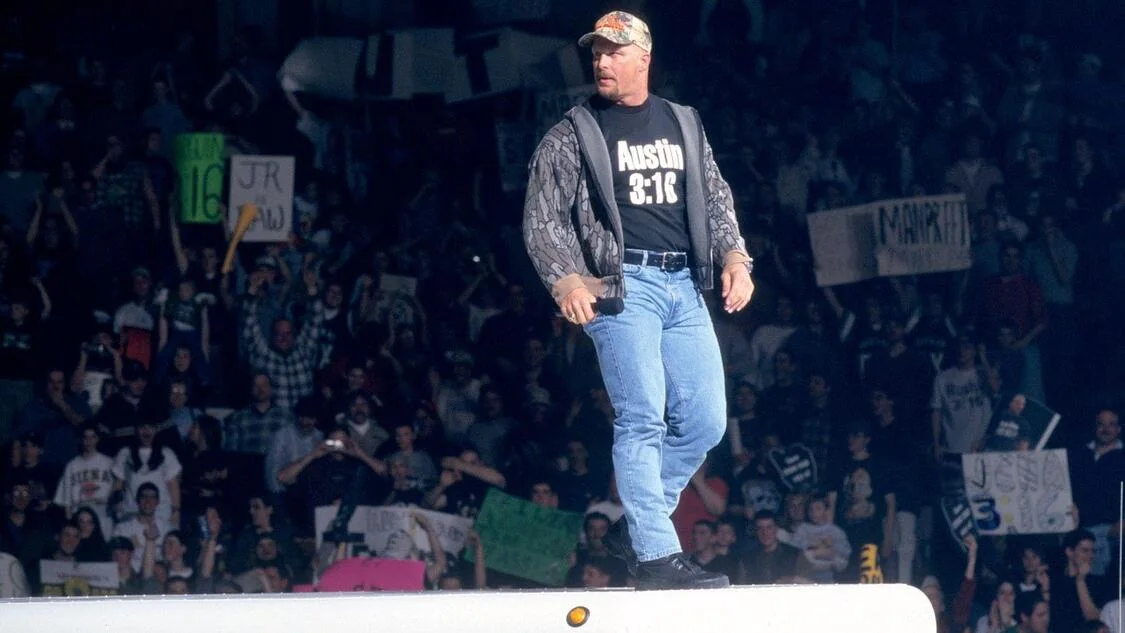
WWE connects Austin 3:16 with Steve Austin's victory over Jake Roberts at King of the Ring on June 23, 1996. Its historical shirt feature describes the familiar white lettering on a black front and a skull design on the back. For a buyer, that means front and rear photographs matter: a front-only modern interpretation may look similar in a search thumbnail while differing from the version you remember.
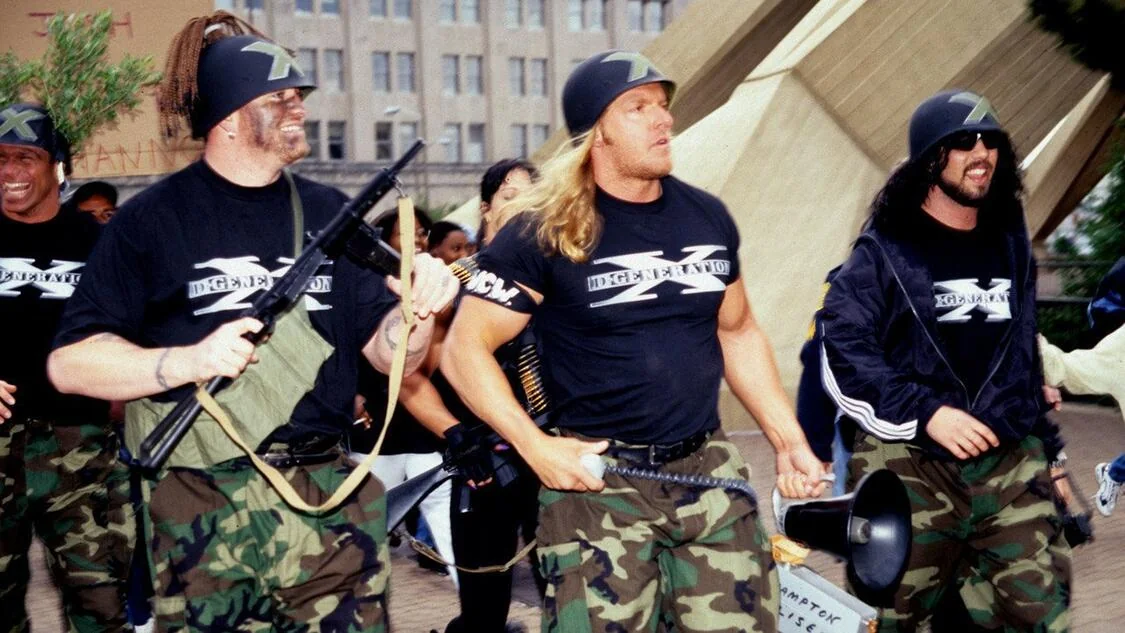
The same WWE historical feature discusses nWo as a WCW faction identity and DX shirts as a group uniform. These graphics share black-and-white wrestling imagery, but they represent separate histories. Someone collecting the Monday Night Wars may care about that distinction more than someone who simply wants a recognizable logo for a live show.
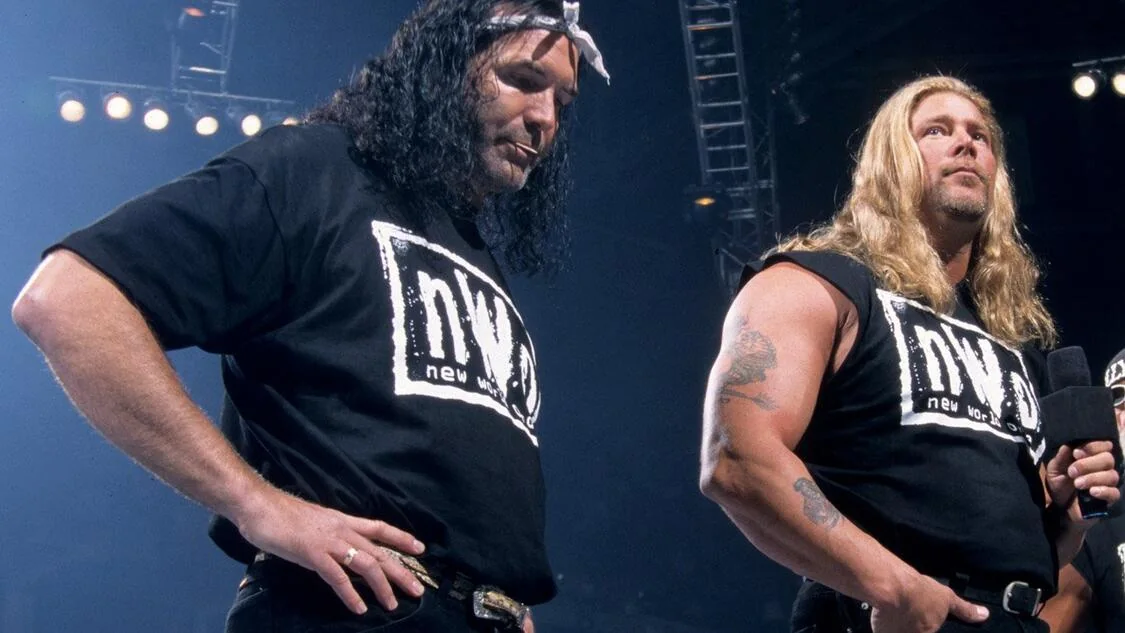
Write down the exact features you want: front wording, back design, logo variation, color and whether an event or location appears. An event-specific tee may matter because you attended that show. A generic portrait may be easier to wear but carry a different personal meaning. Asking for the right artwork avoids an expensive purchase that is old enough yet still the wrong version.
A WWF logo is a clue, not a manufacturing certificate
WWE's 2002 corporate filing records the company name change in May 2002. That date is useful historical context when a listing claims to be from an earlier WWF era. A modern-looking WWE mark on a supposedly untouched 1990s original raises a question worth asking.
However, the reverse inference is weaker: a WWF graphic alone does not prove a garment was made before the name change. Artwork can be reproduced, and branding history is not the same as a production record. Consider the graphic alongside the label, construction, condition and any credible purchase history. If those details disagree, do not use your familiarity with the wrestling moment to fill the missing evidence. You can love the original storyline and still decide the offered garment is insufficiently documented.
Ask for evidence before paying an original-vintage premium
An original-vintage claim should be supported by photographs of the actual garment. Request a full front, full back, neck label, any secondary or care label, sleeve hems, bottom hem and a close view of the copyright or licensing line. If a listing uses only a recognizable catalog graphic, you know the design being advertised but little about the shirt being shipped.
Ask how the seller arrived at the proposed date. “Purchased at this event by the previous owner” and “estimated from the label and graphic” describe different levels of evidence. A credible explanation can still be incomplete, but it tells you what is established and what remains an inference. An old receipt or an ownership account should also correspond to the specific design and item rather than merely prove the owner attended a wrestling show.
Labels, seams and copyright lines need to agree
Look for a coherent combination of details instead of a single decisive signal. A label can help identify a manufacturer or blank; seams show construction; a printed copyright line concerns the artwork or rights statement. A date printed beside a graphic is not automatically the manufacturing date of the cotton garment. An older design can be used again on a later licensed release.
Single-stitch construction is a useful example of why caution matters. Vintage Rare USA's construction guide explicitly says stitch count alone cannot distinguish an original from a modern reproduction. Do not turn an often-discussed collector clue into a universal rule. A shirt can have an old-looking seam and still need a convincing label, print and production story.
Photographs also have limits. Fading, cracks in a print and a worn collar can result from use, while newer products can deliberately use distressed artwork or washed fabric. A crisp graphic does not automatically disprove age, and a faded graphic does not prove it. Compare the whole garment and consider whether repairs or alterations are disclosed. A replacement label, removed tag or shortened hem can reduce the evidence available even when the shirt itself is older.
For an expensive purchase, seek an experienced collector or dealer's assessment and ask what that assessment covers. Dating a garment approximately is different from certifying a particular release. Our advice is a method for asking better questions, not an authentication certificate for a shirt we have not physically examined.
eBay's apparel buying guidance reinforces the value of item details and seller questions. Keep the answers within the platform's messaging system and preserve the listing. If the seller cannot provide the relevant views or explain a major inconsistency, you can pass without declaring the item fake. Insufficient evidence is already enough reason not to pay a premium for a claim that matters to you.
Check condition and measurements before buying
An older shirt can be collectible and still be uncomfortable or too fragile for the way you want to use it. Decide whether you intend to wear it regularly, wear it occasionally or preserve it as part of a collection. That decision changes how you evaluate holes, fading, repairs, staining and print wear. Age does not make a fit problem disappear.
Request actual garment measurements. The Vintage Rare USA sizing guide uses flat width and length measurements and notes possible variation in older garments. Compare the seller's measurements with a shirt you already enjoy wearing, measured in the same way. Ask where the length begins and whether the width is taken across the chest with the garment lying flat.
For example, two shirts labeled large can have different widths and lengths after different production cuts, use and laundering histories. If your comfortable reference shirt measures 23 inches across the chest and the offered shirt measures 20, the shared label does not resolve that difference. These are illustrative measurements, not a WWE size chart. Compare the physical shape rather than hoping a particular tag letter guarantees modern sizing.
Study condition photographs in useful light. Ask to see the collar, underarms, seams, lower hem and areas where the graphic is cracked or worn. A stain hidden by dark lighting matters differently from intentional distress printed into a new design. If the seller mentions a repair, request a close image and ask whether it changes the shape or strength of the garment.
eBay's pre-owned fashion guidance distinguishes levels of condition. The category label helps organize listings, but the disclosed flaws and actual photographs still determine whether a particular item meets your needs. One buyer may welcome a worn-in look; another may want a clean display piece. Neither should assume “good condition” means no visible wear.
Do not budget on the assumption that a stain will wash out, a stretched collar will recover or a shortened shirt can be restored to its original length. Treat the item in its documented present condition as the purchase. If restoration is essential, get informed advice before spending rather than experimenting on an expensive garment after delivery.
Finally, read the return terms before bidding or paying. Fit uncertainty is easier to accept when the measurements are complete and the transaction rules are clear. If the shirt must fit for a particular show, give yourself a separate everyday alternative. A rare collectible should not become an emergency wardrobe solution simply because the next WWE event is approaching.
Choose a modern licensed reissue when wearability matters
If your goal is to wear a favorite wrestling identity, a modern licensed release may be the best fit. It can give you clearer garment specifications, a current size chart and ordinary retail purchase terms. You are paying for the artwork and present-day garment, without needing to establish decades of ownership history before enjoying it.
This choice also helps separate a collection from a wardrobe. A documented older shirt can remain a display or occasional-wear piece while a new version handles travel, laundry and long event days. The two can have different purposes even when they share a slogan. You do not have to treat everyday wear as a test of how seriously you value wrestling history.
Read what the current release actually promises
Check the current product's front and back views, material, cut and care label. WWE Shop's John Cena Retro 8-Bit boxy shirt specifies cotton, a relaxed boxy fit and a tagless collar. Those details describe today's garment. They do not promise the same blank, print placement or construction as every older version of the 8-bit design.
Similarly, the current nWo Retro shirt is a licensed retail product whose specification should be read on its own terms. Compare the image with the precise artwork you wanted. If you care about an additional logo, back graphic or exact lettering, check it before checkout rather than assuming retro means an unchanged recreation.
Some sellers print current shirts after the order. The 80sTees WWE collection information directs buyers to individual size charts and product details. Read the specific processing estimate as well as shipping, especially before a birthday or show. New merchandise may be easier to source than a particular original, but that does not make every design available immediately in every size.
Care for the new release according to its own label. Do not use an old shirt's washing habits as a substitute for the present garment's instructions, and do not assume a distressed print is already damaged. The sensible purchase is a clearly described shirt that delivers the appearance and comfort you want. If the only reason to pay more is a vague vintage adjective, ask what concrete feature that extra amount buys.
Set a budget around evidence and the way you will use it
There is no useful universal price for a vintage WWE shirt. Graphic, size, production claim, condition, provenance and current demand all affect a particular offer. A seller's asking price is also an asking price, not evidence that a comparable garment has sold for that amount. Avoid turning one expensive listing into a market appraisal.
When recent sold comparisons are available, match them carefully. Compare the same graphic variation, similar condition and a similar level of age evidence. Include shipping and any charges shown for your destination. An unworn documented original, an altered older shirt and a new licensed reissue do not form a meaningful single price average merely because they feature Austin.
Your own purpose should set the ceiling. For regular wear, comfort and usable condition may outweigh rarity. For a display collection, documentation and a particular release may matter more than a modern fit. For a gift, a clearly licensed current shirt in the recipient's preferred cut may be kinder than an uncertain collectible whose measurements are hard to judge. There is no requirement to choose the most expensive category to demonstrate enthusiasm.
Use a written comparison before committing: what category is this shirt, what makes it the version I want, what evidence supports its age, what flaws are present, will it fit, and what happens if the delivered item differs from the listing? That final question deserves the actual seller terms, not an assumption that every marketplace transaction works the same way.
Keep the listing photographs and the seller's explanation of the production claim. On delivery, inspect those identifying details before washing or altering the garment. If the label, graphic or condition differs, document the discrepancy and use the purchase platform's process. Care decisions can wait until you understand the item you received. A rushed first wash should not erase the evidence you need to explain a problem.
The strongest purchase is a shirt whose story and physical condition meet your intended use. Choose an original when the historical garment itself is important and the evidence supports the claim. Choose a licensed reissue when you want an older design on a current wearable product. Choose vintage-style clothing when you want the look and the seller describes it honestly. Once those distinctions are clear, you can enjoy the graphic without paying extra for an age claim that a familiar wrestling logo cannot establish.
Join the discussion
Comments