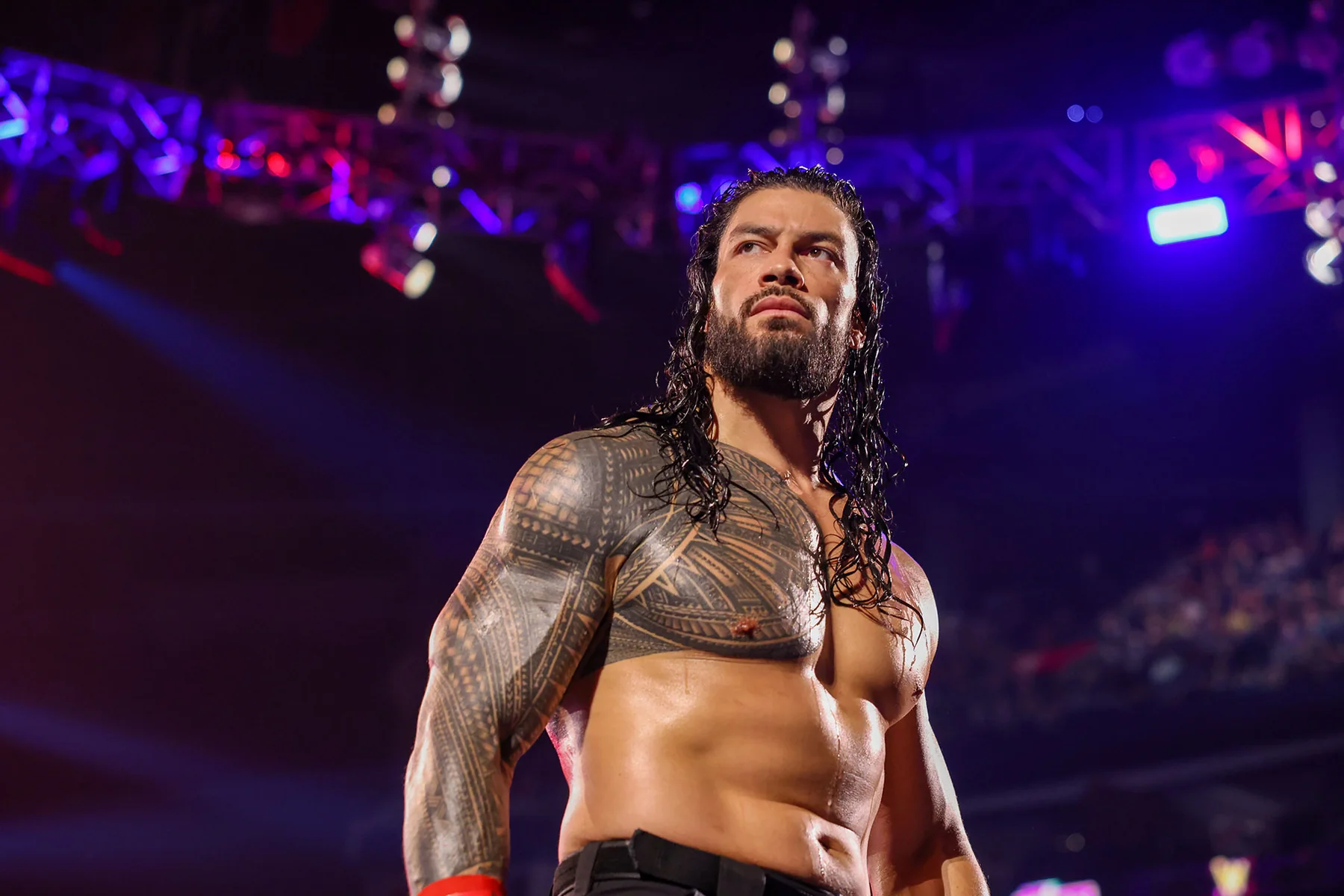
Roman Reigns is Sika's son and Rosey's younger brother. The Usos and Solo Sikoa connect through Rikishi's Fatu branch, while The Rock's connection includes the recognized bond between the Maivia and Anoa'i families. The precise relationship labels explain more than a list of Bloodline members. This guide separates actual descent, marriage, cultural family ties and WWE storylines.
Updated October 19, 2026; historical match examples are dated.
Read Roman Reigns' family tree through the relationship labels
Begin with the clearest connections: Sika was Roman Reigns' father, and Rosey was his older brother. WWE states both relationships in its April 18, 2017 announcement about Rosey. Those labels describe the people behind the characters, rather than a match stipulation or an on-screen alliance.
From there, read a family chart by the kind of connection it shows. A parent-child line identifies descent. A marriage line connects spouses and can bring another wrestling name into the wider family. A culturally recognized bond can connect families without representing shared biological ancestry. A line drawn between members of a WWE faction describes something else again: participation in a story.
Keeping those categories clear helps answer questions that a large diagram can obscure. “Are they family?” and “Are they biological first cousins?” are different questions. An answer to the first should not automatically be converted into a precise answer to the second. Equally, explaining the biological distinction should not dismiss the relationship the family recognizes.
Ring names make the chart harder to follow
Wrestling names add another layer. A relative can appear under a personal name on a chart and under a completely different name in match footage. Start with these identities, which WWE and its broadcaster's family feature identify:
| Wrestling name | Name used in family accounts | Immediate connection |
|---|---|---|
| Roman Reigns | Joe Anoa'i | The person at the center of this guide |
| Sika | Leati Anoa'i | Roman's father |
| Rosey | Matt Anoa'i | Roman's older brother |
Do not count those alternate names as additional relatives. The same principle applies when older footage uses an earlier wrestling character. A character change can alter the presentation while the underlying family relationship stays the same. For a wider career overview, the Roman Reigns profile provides context; the sections here follow the relatives and the connections between them.
Sika and Rosey are Roman's immediate wrestling family
The shortest route into the tree is Sika to his sons, Matt and Joe: the wrestlers fans know as Rosey and Roman Reigns. Afa sits beside Sika as his brother, making Afa Roman's uncle. That small arrangement answers several common questions without needing every branch of the dynasty on one screen.
It also makes the word “legacy” more concrete. Roman did not become related to those wrestlers when a television story began. The family connection existed independently of a faction name, a championship or whether relatives happened to be appearing together on the same program.
Sika and Afa were the Wild Samoans
WWE's Wild Samoans profile identifies Afa and Sika as brothers, describes their tag-team career and records their 2007 Hall of Fame induction. Their sons Samu and Rosey inducted them. Here, the professional partnership and the actual sibling relationship coincide.
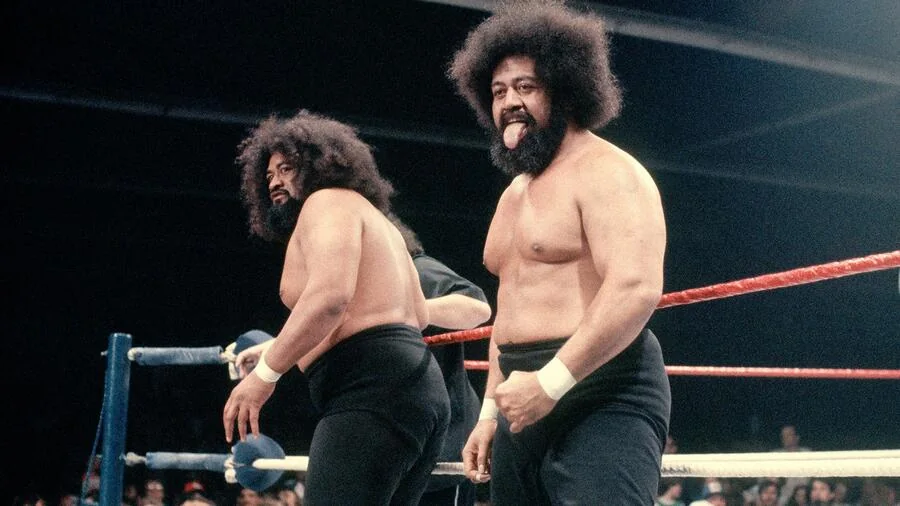
Their influence also extended through training. WWE credits them with developing relatives and other wrestlers. That distinction matters when reading a broad wrestling-family article: being trained by Afa or Sika is not, on its own, evidence of being their child or cousin. Training is a professional connection that can overlap with kinship, but it cannot substitute for a parent-child line.
Rosey was Roman Reigns' older brother
Rosey's relationship is equally direct. WWE's 2017 obituary identifies him as Sika's son and Roman's older brother. It recalls his 2002 debut with Jamal in 3-Minute Warning and his later tag-team championship with The Hurricane. Those are parts of his own career, rather than achievements borrowed from Roman's subsequent success.
In a WWE interview after Rosey's death, Roman discussed what his brother meant to him and carrying that memory into his work. The interview concerns a real loss, even though it appeared alongside promotion for a wrestling match. Read the family remembrance in that context rather than folding it into the fictional rivalry.
For a new viewer, the useful distinction is simple: Rosey is the answer to the actual brother question. A teammate called a brother in a promo may be expressing loyalty or a story relationship. That wording alone does not place another person beside Rosey on the immediate family tree.
The Usos and Solo Sikoa belong to the Fatu branch
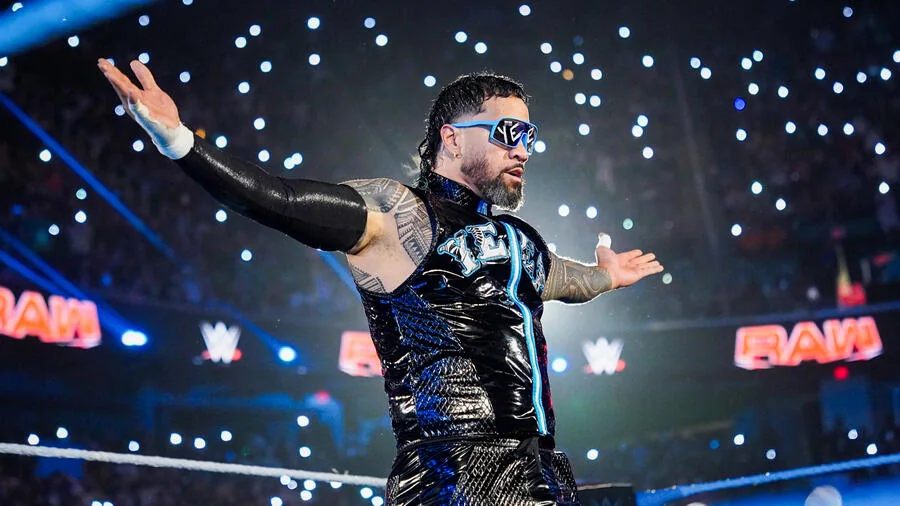
Jimmy Uso and Jey Uso are twins, and Solo Sikoa is their younger brother. Their father is Rikishi. WWE's Jey Uso biography and Solo Sikoa profile establish that immediate family. Those are actual sibling and parent-child relationships.
Put that group on its own branch before connecting it to Roman. Rikishi is the parent above Jimmy, Jey and Solo; Roman is Sika's son on another branch. The performers' shared involvement in a story does not move Roman into Rikishi's group of sons, and the twins' tag-team name does not make every ally their sibling.
Why Roman and the Usos sit in different generations
The detailed genealogy explains the apparent mismatch between the general word “cousin” and the chart. WWE's account of Elevera Anoa'i Fatu identifies her as Sika's sister and Rikishi's mother. Combining those links with Roman being Sika's son makes Roman and Rikishi first cousins; Rikishi's children are therefore Roman's first cousins once removed.
“Once removed” means one generation apart in that cousin relationship. It does not mean a relative has been expelled, separated by a feud or removed from a faction. It also does not measure how close the people are emotionally. In ordinary conversation and wrestling presentation, the shorter word “cousin” can cover that wider connection.
Age alone cannot settle the generation question. Relatives in different branches can be close in age while sitting at different distances from a common ancestor. Follow the parent-child links rather than comparing birth years or deciding that two wrestlers who attended school around the same period must be first cousins in the narrow genealogical sense.
For a fan reading a match preview, “Roman's cousin Jey” remains understandable shorthand. For a family-tree guide, the extra detail is useful: Roman connects to Rikishi at one level, then to Rikishi's sons one generation below. That explains the terminology without requiring the family to use formal genealogy in every interview or promo.
The Rock's connection includes a culturally recognized family bond
The Rock and Roman belong to the same extended wrestling-family story, but describing them as biological first cousins would misstate the documented connection. The key link is between Roman's grandfather, Reverend Amituana'i Anoa'i, and The Rock's grandfather, Peter Maivia, who were recognized as blood brothers.
USA Network's April 19, 2022 family feature explains that bond and notes that Afa and Sika regarded Maivia as an uncle. It describes a recognized family connection extending beyond biological descent. The phrase “blood brother” in that account identifies the bond; it does not claim the two men were biological siblings.
Peter Maivia links the Johnson and Anoa'i families
Follow the Johnson side separately. Peter Maivia raised his adopted daughter Ata, who married Rocky Johnson. Ata and Rocky were The Rock's parents. WWE's Rocky Johnson biography connects that marriage to the broader dynasty and identifies their son Dwayne, known in wrestling as The Rock.
The wrestling history gives that chain a visible landmark: in 2008, The Rock inducted his father into the WWE Hall of Fame. Peter Maivia's Hall of Fame profile likewise identifies him as The Rock's grandfather. These identities explain why both the Johnson and Maivia names appear in discussions of The Rock's heritage rather than representing competing accounts of who his father was.
Family vocabulary does not always describe biological cousinship
When a chart joins the Anoa'i and Maivia lines, label the grandfathers' bond explicitly. Drawing it exactly like a biological sibling line can make every later cousin calculation look more precise than the evidence supports. The clear explanation is the chain itself, with the type of relationship retained at each step.
That precision does not require dismissing how the family describes itself. “Cousin” can communicate a recognized family relationship without asserting a specific genetic degree. A fan can understand The Rock and Roman as family while also understanding why a biological cousin chart needs a different label on their connection.
Keep the explanation specific to this documented family. It is enough to describe the bond the sources identify; there is no need to invent a general rule for every Samoan family or claim that a television title determines cultural authority outside WWE.
The wider wrestling family has several distinct branches
A useful chart shows several branches instead of putting every familiar wrestler beneath Sika. WWE's notice about Elevera Anoa'i Fatu identifies her as Afa and Sika's sister and as the mother of Rikishi, Umaga and the Tonga Kid. That supplies the parent connection between the Anoa'i and Fatu names.
Jacob Fatu is the Tonga Kid's son, as his WWE profile states. He therefore belongs on that branch, rather than being added as another son of Rikishi because he appears near Solo or the Usos in WWE coverage. Shared surnames can help a reader notice a connection, but the named parent settles which line to follow.
Samu provides another example. WWE's 2024 Afa obituary identifies Samu as Afa's son and Rikishi, then known as Fatu, as Afa's nephew. The Headshrinkers paired those two relatives under Afa's management. Their team name did not mean they were brothers or both Afa's sons. Family relationships and the way a team is presented need to be read together.
Marriage adds a different line. WWE's family gallery identifies Naomi as Jimmy Uso's wife. That places her in the wider family through marriage; it does not make her an additional child of Rikishi or a biological sibling of Jimmy and Jey. Labeling the connection accurately is more informative than simply placing every wrestler's photograph in one undifferentiated group.
For an unfamiliar name, use the same short method: identify the performer, find the documented parent or spouse and follow that specific branch back toward the relatives you already know. Avoid treating an entrance together, a shared move or an on-screen declaration of loyalty as a new genealogical line.
This guide follows selected publicly documented wrestling connections. A reader does not need a list of private relatives to understand a match or the dynasty's professional history. The important improvement over a crowded name collage is clarity about how each included person connects.
The Bloodline storyline uses the family without reproducing the tree
The Bloodline draws meaning from these real relationships, but its membership is a storyline question. A family tree records connections such as parent, sibling, cousin and spouse. A faction list records who is aligned with whom at a particular point in WWE's narrative. The two can overlap without being interchangeable.
Sami Zayn makes the distinction especially clear. His WWE biography describes his 2022 involvement as an Honorary Uce. That role was a part of the story, not a claim that he had become Sika's child or Rikishi's son. Paul Heyman's association likewise concerns his professional character and role, rather than an added biological branch.
A performer can leave a faction while remaining related to other performers in it. Conversely, an ally can matter enormously to the story without being a relative. That is why the title “family tree” should not be placed over an unlabeled collage of everyone who has stood in a Bloodline segment.
Follow the match story and the real relationship separately
At Money in the Bank on July 1, 2023, Jimmy and Jey Uso defeated Roman Reigns and Solo Sikoa, with Jey pinning Roman. The match was presented as The Bloodline Civil War. Its teams put Solo opposite his own brothers, while Roman stood beside Solo.
That arrangement is a helpful test of understanding. The opposing sides changed neither Solo's relationship to the twins nor Roman's genealogical position relative to Rikishi's sons. The drama came from recognizable connections being placed under pressure within a scripted competition. The result belongs in the match history; the parent-child lines remain in the family tree.
When following a new segment, ask two questions: what is the documented relationship, and what happened between the characters on this date? Use a dated result to answer the second. Do not interpret an on-screen betrayal as proof of private hostility, or an alliance as evidence of an undisclosed family connection.
For future appearances, follow the WWE schedule and announced cards. For genealogy, return to the named parents and the kind of connection. That keeps both the story and the family's actual relationships understandable as WWE changes its matchups.
Read the parent-child lines first, keep the culturally recognized connections labeled and treat faction membership as a separate, dated story. That approach answers who is related without flattening the family into a television roster.
Join the discussion
Comments