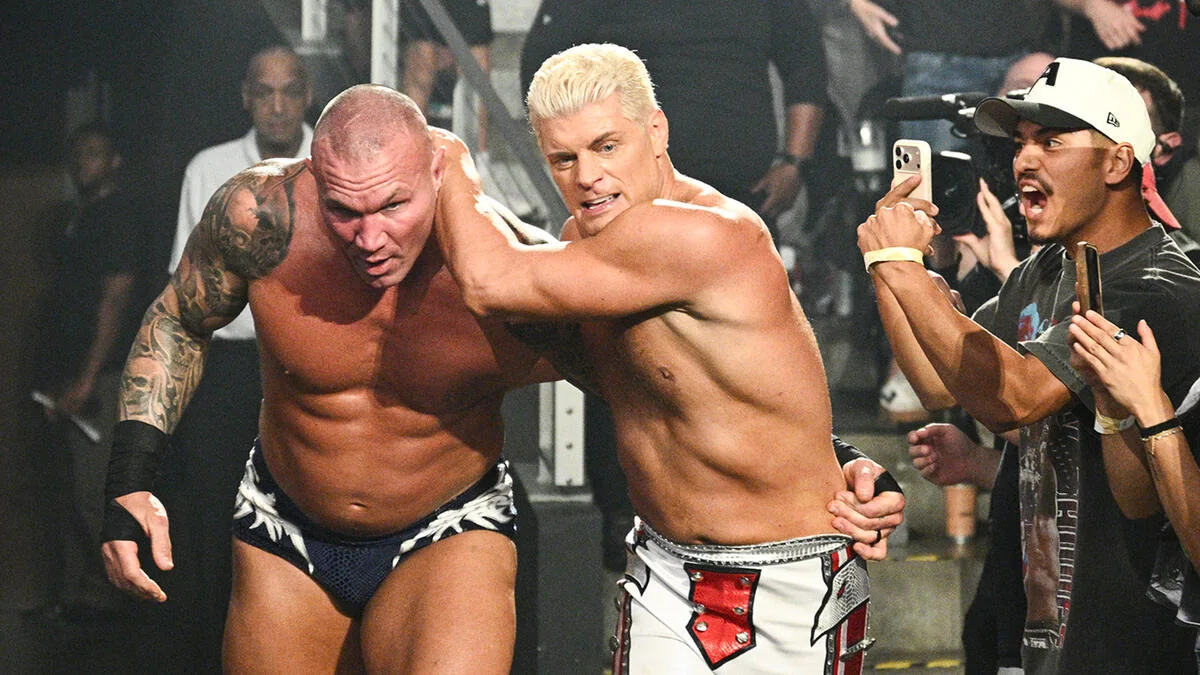
Spoilers for Sunday Night's Main Event, September 6, 2026. Randy Orton beat Cody Rhodes after a low blow and an RKO, exploiting Cody's hesitation over delivering a punt. The ending reopened a question about Cody's character without confirming a heel turn. This guide explains the result, the two-referee sequence and the earlier events that gave the choice its meaning.
The match took place in Atlanta, with Cody's family at ringside. The cover photograph shows the opening brawl from that September 6 encounter. Analysis below reflects the story as of September 8, before the next SmackDown.
How Randy Orton won the September 6 main event
Randy Orton defeated Cody Rhodes by pinfall at Sunday Night's Main Event on September 6, 2026. WWE's official recap identifies the decisive combination: a low blow followed by an RKO. The result was not a disqualification, a referee stoppage or a championship change. That distinction matters because the closing scene contained enough disorder to make a short clip misleading.
The opening Cody created but did not finish
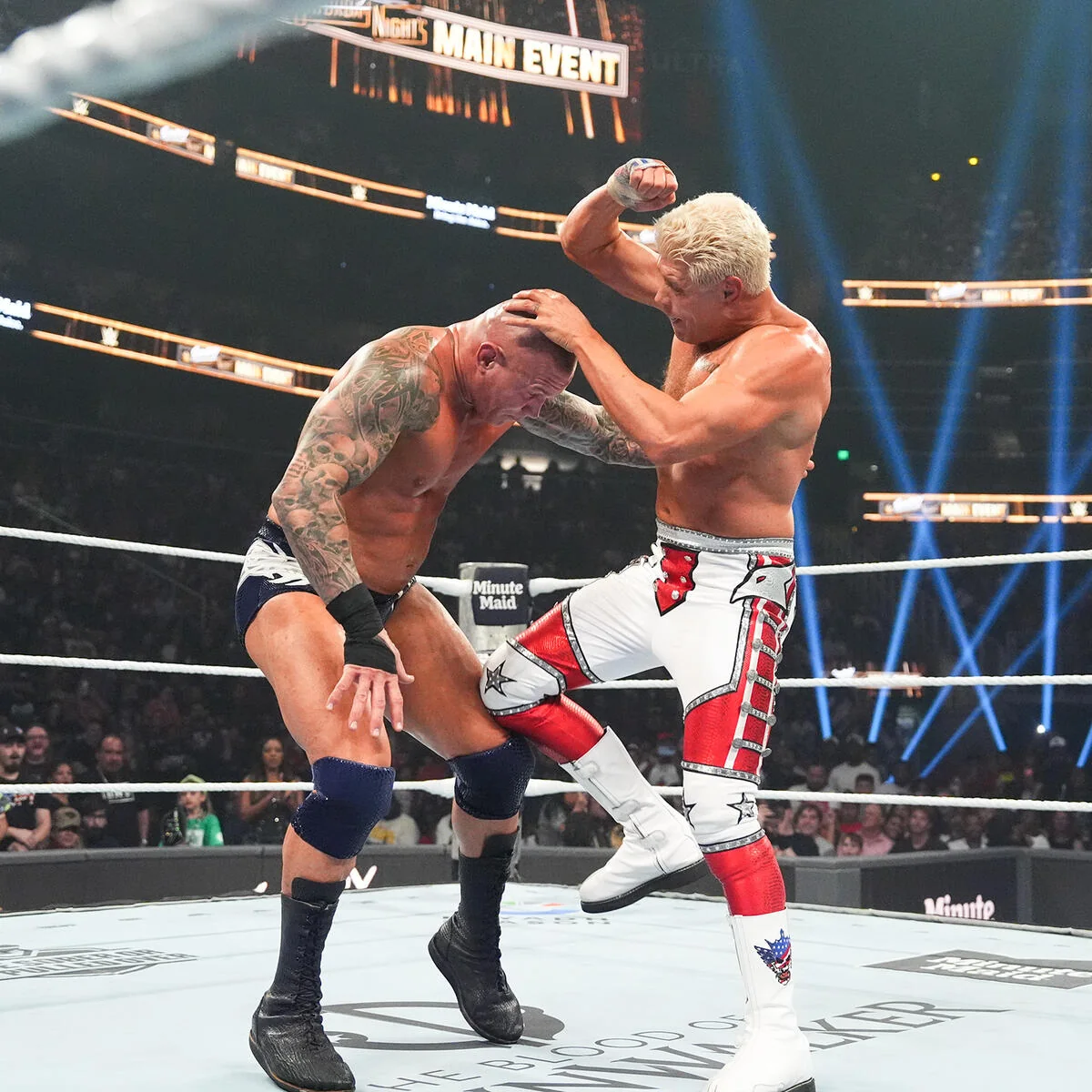
Late in the match, Rhodes landed two Cross Rhodes and moved toward delivering Orton's own punt. Orton raised a hand and pleaded with him to stop. Cody paused instead of completing the attack, leaving the veteran an opening that had little to do with escaping a wrestling hold. Orton turned a moment of vulnerability into the chance to strike below the belt.
The sequence works because the audience can recognize two different possible endings. One is Cody using the offense that brought him this close to victory. The other is Cody choosing a more personal punishment associated with his opponent. The show deliberately made him consider the second option before taking both options away. His hesitation therefore belongs in any explanation of the finish, but it should not erase Orton's deliberate foul.
Why a referee could count the pinfall
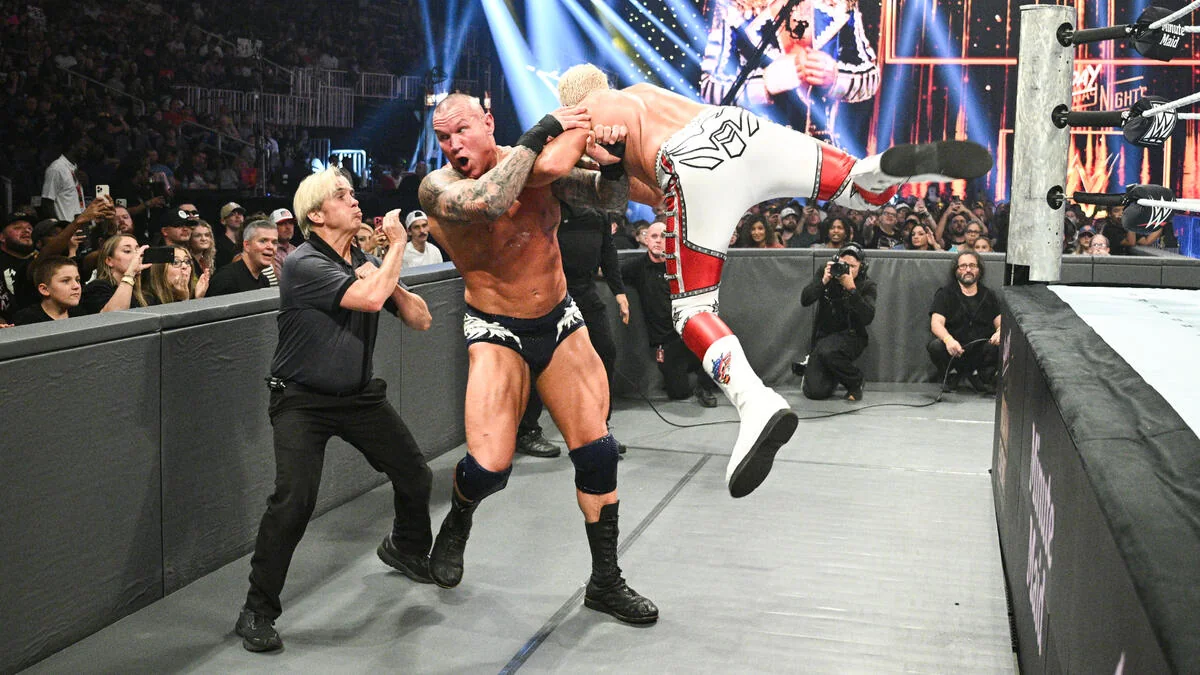
The officiating sequence supplies the missing practical detail. As Bryan Rose reported for F4W, the original referee had been knocked down during the action. A second official entered as Rhodes struggled with his next move. Orton's low blow caught both Cody and that replacement official, after which he delivered the RKO. The first referee recovered in time to count the pin.
That is why “the referee was down” and “the referee counted three” can both accurately describe the ending. They refer to different moments, with two officials involved. It was not the newly arrived referee deciding that a low blow was acceptable and immediately rewarding Orton. The first official returned to a pinning situation after the foul had created it.
For a results entry, the useful label is Orton wins by pinfall after a low blow. Calling it a clean win strips out the decisive act. Calling it a disqualification changes the recorded outcome. Calling it a stoppage confuses the concern around Orton with the actual finish. Fans can disagree about whether the referee choreography felt convincing while still keeping the official result precise.
The earlier chapters that made the punt matter
The September finish carries a specific memory from WrestleMania 42. On April 18, Rhodes retained the Undisputed WWE Championship against Orton, but the night ended with Orton attacking him and delivering a punt after the match. WWE's WrestleMania recap therefore gives the move a clear role in this rivalry: Cody had already experienced it as punishment after winning. His September attempt to reverse that image was more pointed than simply borrowing another wrestler's signature move.
There was also precedent for uncomfortable tactics on both sides. At WrestleMania, Cody attacked Orton's back and later poked him in the eye; Orton struck an official and ultimately turned on the returning Pat McAfee with an RKO. Those details make it difficult to describe Atlanta as the first time this feud blurred heroic behavior. The September match extended an existing problem: how far each man would go when normal routes to victory stopped working.
At SummerSlam on August 1, Orton's return created another reason for Cody to seek him out. During Rhodes' challenge to CM Punk, Orton delivered an RKO that helped Punk retain the Undisputed title. WWE described Punk as unaware of the intervention, so the angle should not be rewritten as a proven agreement between Punk and Orton. Its consequence for Cody was direct enough without that invention: an old enemy had interfered with a new championship opportunity.
The dispute then disrupted weekly television. On August 14 SmackDown, Orton attacked before Rhodes' scheduled match against Sami Zayn, triggering a brawl. Nick Aldis subsequently imposed a severe condition on the road to September 6. WWE's official explanation said that whichever Superstar initiated physical contact before Sunday Night's Main Event would never receive another Undisputed WWE Title match.
That was a restriction governing the build, not a championship being defended in Atlanta. It also did not make the September winner automatically number one contender. The useful connection is emotional: the two men had been made to wait while a title opportunity hung over their behavior. Once the match arrived, Cody had several grievances to answer at once. A pinfall could avenge a defeat or establish superiority, but it could not by itself undo the post-WrestleMania attack or restore the SummerSlam chance that Orton had spoiled.
What Cody's hesitation says about the match
The strongest reading of the ending is that Cody's competitive instincts and his desire for revenge stopped pointing in the same direction. That is an interpretation of the performance, not a report about WWE's internal plans. It explains why the closing pause received more attention than another near fall would have: the question changed from whether Rhodes could hurt Orton to what he wanted that damage to accomplish.
Revenge and winning became different objectives
By choosing to line up the punt, Cody made the conclusion about more than his own finishing move. A third Cross Rhodes would have continued an established route toward a pin. The punt promised a more personal answer to his rival. Neither choice guaranteed victory, and it would be too neat to say Cody had already won before changing his mind. Still, the choice reveals why a wrestler can be in control of the action while losing clarity about the objective.
The violence before the pause complicates any easy claim that Cody simply refused to be ruthless. Slam Wrestling's account describes the steel-step attack that left Orton bleeding. The match had already presented an aggressive Rhodes. What he resisted at the end was a particular next step against an opponent asking him to stop. That difference gives the scene tension; a character can cross one boundary and still discover another he is reluctant to cross.
Orton turned apparent weakness into an advantage
Orton's success also depends on the contrast with the beginning. As the Sports Illustrated recap records, Cody was ready for the attempted surprise attack before the match. He was not portrayed as oblivious to every trick. The closing appeal reached a different vulnerability: recognizing an ambush is easier than deciding how far to go against someone with whom he shares so much history.
For Orton, begging did not have to produce forgiveness; it only had to interrupt Cody's momentum. The foul that followed makes the practical function of the plea clear. Whether viewers think Orton felt any fear underneath the manipulation is a separate reading that the result cannot settle. The scene gives him the win without requiring him to prove he was physically stronger in the closing exchange.
There is a fair criticism here, too. If you believe Cody should recognize this particular opponent's deception immediately, the pause can feel frustrating rather than tragic. If you read it as reluctance to become what he resents, it can feel consistent. Both responses concern the credibility of the character decision. Neither requires pretending the match ended with a straightforward exchange of finishers.
Did Cody Rhodes turn heel at Sunday Night's Main Event?
The September 6 match did not establish a completed Cody Rhodes heel turn. It gave viewers material for that discussion, especially his escalating aggression, but the ending still showed him stopping when Orton appealed for mercy. Describing the performance as darker is defensible. Presenting a permanent change in alignment as an announced fact goes beyond what the match itself demonstrated.
The immediate reactions illustrate the difference. Cageside Seats framed a heel turn as moving closer. In contrast, Wrestling Inc. reviewer Daisy Ruth welcomed the darker side of Cody's performance while doubting that it necessarily led to a full turn. These are editorial readings of the same television, not competing official announcements.
A darker performance is evidence, not a completed turn
A wrestling character's alignment involves more than the force of a single attack. The target matters, the reason matters, and the behavior after the match matters. Retaliating against a rival who has repeatedly interfered in your career can be presented very differently from attacking an ally who trusts you. Cody's violence toward Orton should be examined in that particular relationship before being used to define how he now treats everyone else.
Crowd sympathy adds another complication. Viewers can enjoy a villain's resourcefulness, react to a familiar performer, or dislike a hero's decision without permanently exchanging the characters' roles. The post-match fan discussion on Reddit includes disagreement about whether Cody needs a heel turn at all. That is useful evidence of a live debate, but a thread cannot stand in for the entire audience or for a creative decision inside WWE.
The more revealing development would be how Cody explains his loss and whom he holds responsible. If he blames his own lapse and changes his approach specifically to Orton, the character may become tougher while retaining the same loyalties. If he starts punishing supporters or treating unrelated people as obstacles, that would offer different evidence. These are possibilities to watch, not predictions being passed off as scheduled plot points. As of September 8, the responsible description is a disputed character direction following a controversial defeat.
What this result leaves unresolved on SmackDown
Orton now has this victory over Cody, but the championship picture requires its own booking decision. On September 4 SmackDown, CM Punk retained against Johnny Gargano amid the wider conflict involving Sami Zayn, Kevin Owens, Gunther and Finn Bálor. Beating Rhodes two nights later does not, by itself, remove those wrestlers from the picture or award Orton their place. The main event in Atlanta was a personal match with championship history behind it, not an advertised contender's final.
One question is whether Orton treats the win as sufficient or continues making Cody's title ambitions his business. Another is whether Rhodes chooses to pursue Orton immediately or tries to recover his position elsewhere on the card. Either direction could follow logically from the result, but logic is not an announcement. An event poster featuring both wrestlers would also fall short of confirming that they must wrestle each other.
If a rematch is eventually made, its rules would change the available answers to the finish. A stipulation permitting weapons could reduce the importance of unseen fouls, but it would not automatically resolve Cody's reluctance to deliver a particular punishment. A match centered on submission or an explicit concession would ask a different question from a three-count. Those are reasons fans may discuss stipulations after Atlanta; they are not a report that WWE has selected one.
The immediate show to follow is SmackDown on Friday, September 11. WWE lists the broadcast at 8 p.m. ET on USA Network, from Arena CDMX in Mexico City. Its event page features Cody among the advertised Superstars, which is useful for following him without promising a specific response segment. International viewers should check their own broadcaster through the WWE viewing guide.
For the next chapter, watch for three concrete developments: Cody explaining the decision he made, Orton stating what he wants after winning, and Aldis actually announcing any match or title consequence. The SmackDown schedule can help you find that episode. Until the story supplies those answers, the Atlanta result stands as a victory gained through deception and a character question left deliberately open.
Join the discussion
Comments