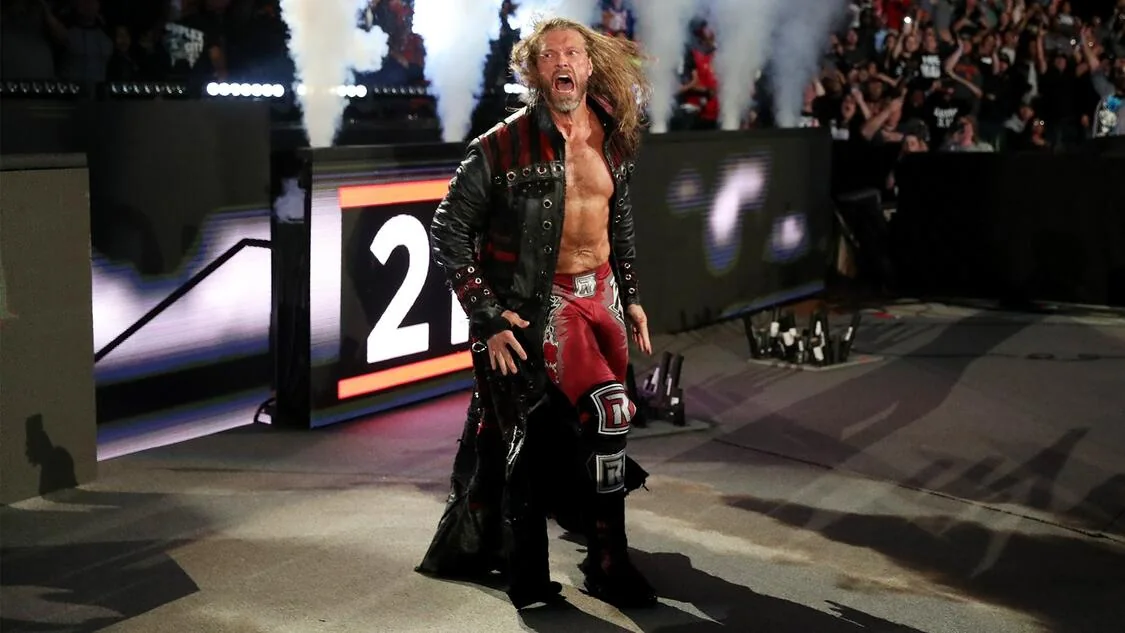
Adam Copeland is the wrestler WWE fans know as Edge
Adam Copeland and Edge are the same person. Edge is the name associated with his WWE career; Adam Copeland is the name used for his subsequent AEW chapter, where the shortened Cope also appears. A clip introducing Copeland is not footage of another wrestler who happens to share Edge's look or moves. The familiar performer is working in a different promotional setting.
The connection is explicit in WWE's own historical coverage. Its career feature about Adam Copeland traces the man behind the Edge identity. AEW's official biography uses Copeland and Cope. For a returning viewer, those two records establish the continuity more reliably than trying to infer it from an entrance song or a familiar nickname.
Different names belong to different parts of the same career
Use “Edge” when searching for his WWE tag-team matches, first Money in the Bank cash-in or Royal Rumble returns. Add “Adam Copeland” or “Cope” for AEW footage, and include the event year. That extra detail matters because recurring event names can produce matches separated by several years. Christian and Christian Cage likewise refer to his longtime partner's different presentations; Christian is another performer, not another name for Copeland.
His achievements also retain their original context. A WWE Championship reign is part of WWE's title history, while an AEW championship belongs to AEW's record. Combining every belt into one unlabeled total can make a decorated career harder to understand. The useful questions are which title he won, from whom, under what match conditions and what the result changed on that particular show.
This guide follows five stages: the identity, the tag-team and singles rise, the original retirement and comeback, the second WWE run, and the later AEW chapter. It includes match outcomes. It also separates an announced future retirement plan from a final match that has actually happened. That distinction is especially useful when a headline about his next chapter appears beside older footage of his 2011 farewell.
You can understand the main arc without watching every weekly episode. Pick an example from each stage and pay attention to the role he plays: partner, opportunistic challenger, returning veteran or rival with a personal score to settle. The name changes are easy to resolve; the shifting role is what makes the watchlist rewarding.
The Christian partnership and a cash-in shaped his WWE rise
Two different routes helped establish Edge: tag-team matches built around spectacle and a singles breakthrough built around timing. They are connected by a wrestler finding the opening that decides a contest. Watching one example of each makes his rise easier to understand than starting with an unlabeled championship total.
The ladder-match era made Edge and Christian essential viewing
At WrestleMania X-Seven on April 1, 2001, Edge and Christian defeated the Dudleys and Hardy Boyz in a Tables, Ladders and Chairs Match for the tag-team championship. The official event results preserve the winning team and format. In this kind of title match, the objective is retrieving the suspended championship, rather than securing a conventional pinfall. That changes how you read a wrestler being taken out of the action: it can create the time another team needs to climb.
WWE's X-Seven historical notes also distinguish it from WrestleMania 2000's preceding three-team Ladder Match. The teams overlap, but the event names and formats should remain distinct. If a highlight compilation blends several ladder spots together, return to the complete event listing before assigning a particular moment to the wrong year.
For a rewatch, follow how the three teams interrupt one another's progress. An opening can disappear because a wrestler who seemed finished returns to the ring, or because attention shifts to another side of the ladder. The match asks you to track positioning and opportunity as well as individual offense. Edge and Christian's part in that environment is an important foundation for his later singles identity, even though a tag-team retrieval finish and a championship pinfall operate differently.
New Year's Revolution 2006 established the opportunist
Edge won the inaugural Money in the Bank contract at WrestleMania 21 in 2005, then used it at New Year's Revolution on January 8, 2006. These were separate achievements in separate years. After John Cena survived the Elimination Chamber, Edge cashed in and defeated him for the WWE Championship. WWE's official result records Cena escaping the first Spear's pin attempt before the second Spear decided the match.
The circumstances are central to the on-screen opportunist. Edge did not need to win the Chamber himself; his contract created another championship match after Cena had already endured it. That is why the cash-in should be watched alongside the preceding scene, rather than as an isolated title celebration. The character's advantage came from choosing when to act. It supplied a clear reason for future opponents and viewers to distrust a seemingly quiet challenger holding an unspent opportunity.
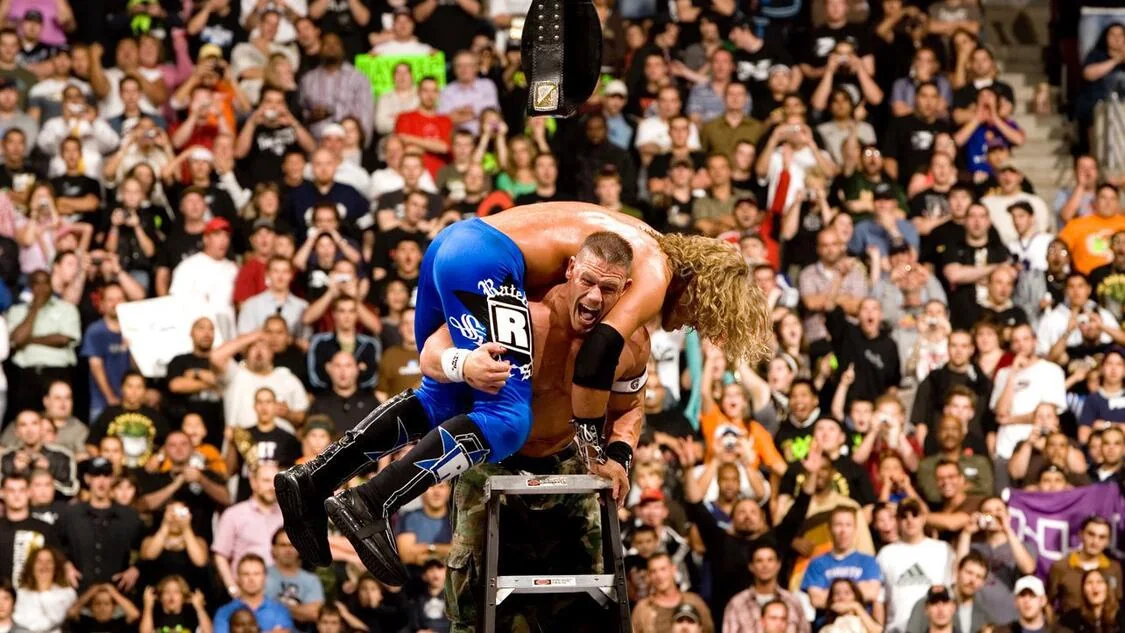
Pairing the 2001 team match with the 2006 cash-in reveals two different uses of timing. In one, opportunity must be created amid several moving opponents. In the other, a contract lets Edge choose an exhausted target. The comparison is an interpretation of the performances, not a claim that all his later championship wins followed the same formula.
His 2011 retirement and 2020 return are separate milestones
Edge announced his retirement from in-ring competition on April 11, 2011. WWE's contemporaneous announcement attributed the decision to injury and the medical assessment that he could not be cleared to compete. The significance was the interruption of an active wrestling career, rather than the planned finish of a final rivalry. His later return does not make that earlier retirement a fictional event.
When reading the original announcement, keep its date visible. It records the information and decision of 2011. It does not, by itself, describe his status nine years later or today. Equally, later footage of him wrestling should not be used to rewrite what he and WWE announced at the time. A career can have a genuine ending at one point and an unexpected new beginning later.
His WWE Hall of Fame induction followed in 2012. For fans encountering that ceremony before the comeback footage, the order is important: retirement first, Hall of Fame recognition next, renewed in-ring competition much later. Induction is recognition of a career, not a match result or a rule declaring that no inductee can ever compete again. That distinction makes the later surprise easier to place within the record.
The Royal Rumble return reopened a career that had ended
At the Royal Rumble on January 26, 2020, Edge entered the men's match at No. 21. WWE's official account of his return identifies it as his first in-ring competition since retirement. He survived until the final three before Roman Reigns eliminated him. Drew McIntyre won the match. Remembering the comeback as the event's defining surprise should not turn it into a victory that Edge did not score.
That is a useful distinction on a rewatch. The entrance answers whether he is back; the sustained participation shows what the return means inside a match; the elimination closes this particular contest. Those are separate beats. A compilation showing only the entrance can communicate the surprise while leaving the outcome unclear, so follow it with the full match result.
The following Raw announcement treated the Rumble as the start of renewed programming rather than a detached nostalgia appearance. For a chronological watchlist, place the 2011 retirement speech before the 2020 Rumble, then continue to the subsequent WWE run. That order preserves the uncertainty of the original farewell and the scale of the comeback without requiring speculation about unannounced plans or private medical decisions.
The second WWE run offered a different Edge
The 2020 entrance reopened the career, but the subsequent matches gave the comeback its substance. Edge could again be a contender chasing a championship, while established relationships supplied other reasons for conflict. His renewed WWE run is therefore best followed through specific arcs, rather than as an extended series of return celebrations.
The 2021 Royal Rumble led back to WrestleMania
On January 31, 2021, Edge won the men's Royal Rumble after entering at No. 1 and last eliminating Randy Orton. The official result and elimination table establish that sequence. It is a separate achievement from the surprise return a year earlier. In 2020 the question was whether he could participate again; in 2021 the outcome placed him on the route to a WrestleMania championship challenge.
At WrestleMania 37, he faced Roman Reigns and Daniel Bryan in the Universal Championship Triple Threat Match. WWE's event results record Reigns retaining in the Night 2 main event. Winning the Rumble did not make Edge the champion, and reaching the final match of the event did not guarantee a successful challenge. Keep those achievements separate when describing how far the comeback progressed.
For a short viewing route, pair the Rumble with that WrestleMania main event. The first match gives the veteran an opportunity; the second tests it against the champion and another challenger. It is a more useful comparison than judging an entire run by whether one championship changed hands. The format, opponents and result each contribute a different part of the story.
Later rivalries moved beyond championship pursuit
The second run also used personal conflict as its main stake. Immediately after the 2020 Rumble, WWE presented Randy Orton attacking Edge on Raw. That was an on-screen betrayal built around their history. It should be discussed as the show's storyline, rather than taken as proof of their private relationship.
Another useful later example is Edge's Hell in a Cell victory over Finn Bálor at WrestleMania 39 on April 2, 2023. There was no championship at stake in that match. Its purpose within the card was a confrontation between rivals, and the stipulation supplied the setting for the confrontation. A watchlist restricted to championship matches would miss this part of the second run.
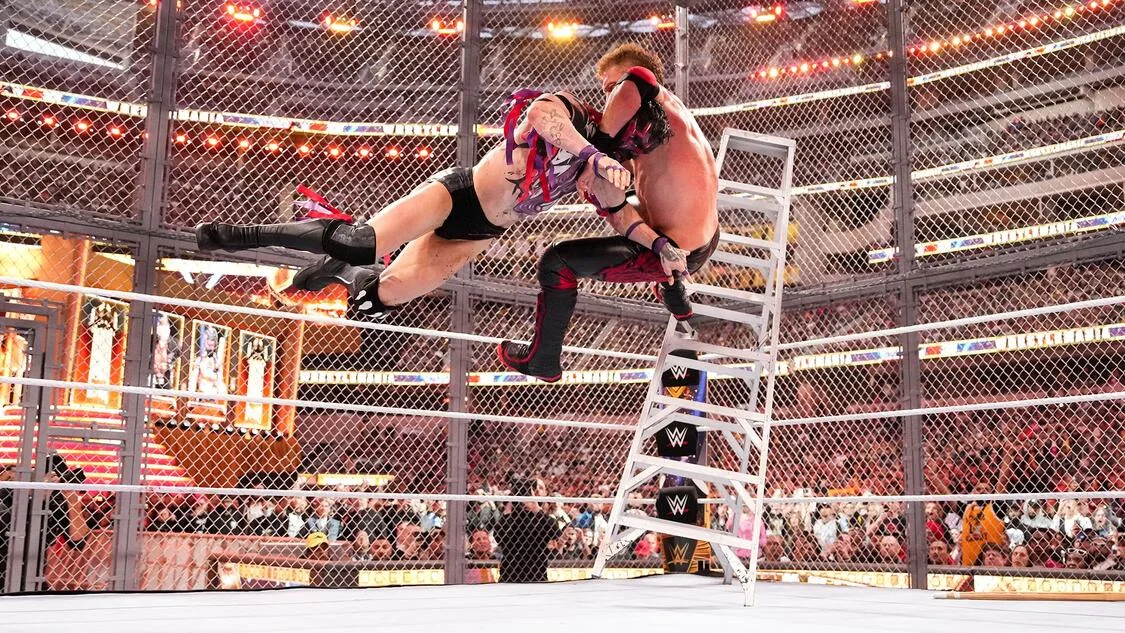
These selections show why comeback analysis needs more than a trophy count. A Rumble win, an unsuccessful title challenge and a victory in a personal feud answer different questions. Follow the announced stipulation and actual result before deciding what each appearance accomplished.
Follow the AEW chapter through dated announcements
Copeland arrived in AEW in October 2023, opening a chapter under his own name. The promotion's biography links that arrival to the first WrestleDream in Seattle. For WWE fans catching up, Christian Cage provides an immediately familiar connection, but the matches belong to AEW's programming and championship records. Familiar opponents do not make the two promotions' titles interchangeable.
A useful early AEW milestone is his March 20, 2024 TNT Championship victory over Christian Cage in an “I Quit” Match. That result illustrates why format belongs in a career summary. It was decided by the opponent giving up under the stipulation, not a conventional three-count. It also shows how a long-established relationship can supply new stakes in a different promotion. This is a dated historical title win, not a statement that Copeland remains TNT Champion today.
A retirement plan is different from a completed final match
As of October 19, 2026, Copeland had announced that 2027 would be his final year in wrestling. AEW's official October 14 Dynamite and Collision report records the statement after he defeated Josh Alexander to qualify for Clockwork Carnage at WrestleDream. That is a current, dated account of active participation and a future plan. It does not say his last match had already occurred.
Keep three different dates in mind when reading retirement coverage. April 2011 is the original retirement announcement. January 2020 is the return to in-ring competition. October 2026 is the later announcement identifying 2027 as his intended final year. Collapsing those into a single “Edge retired” label loses the part readers most need to understand: which stage of the career a report is describing.
A year also does not supply a final opponent, venue or exact date. The announcement supports the stated plan; it does not turn possible farewell matches into bookings. Before planning travel or purchasing a show specifically to see Copeland, check that promotion's current advertised card and its update policy. A retrospective photograph or a speculative opponent list is not an appearance announcement.
For a manageable catch-up, watch the 2001 tag-team example, the January 2006 cash-in, the 2020 return and one second-run WWE rivalry before moving to an AEW match. This route shows continuity without pretending every era is the same. Use our WWE results for the WWE record and AEW's official event coverage for his later appearances. The person behind the names remains Adam Copeland; the event, promotion, date and stipulation tell you which chapter you are watching.
Join the discussion
Comments