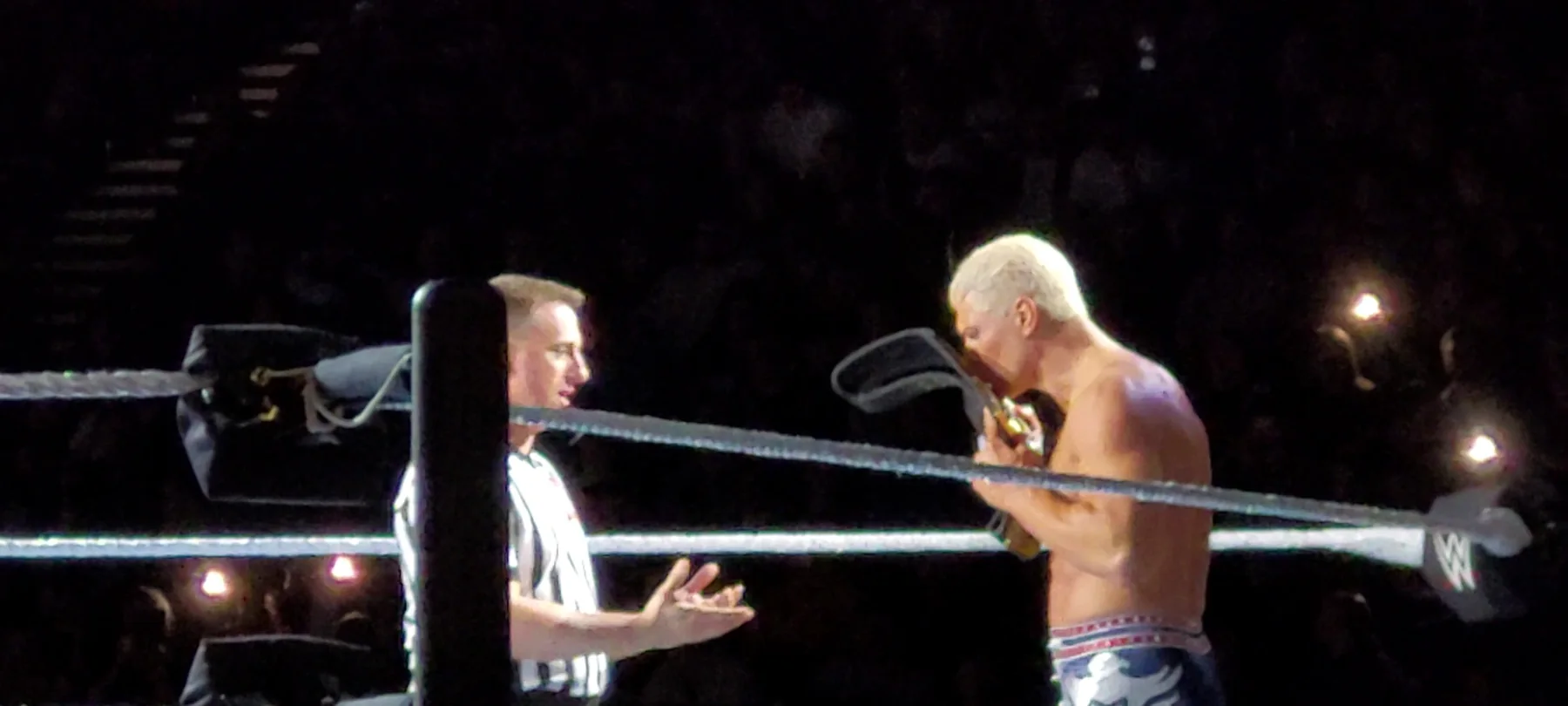
The short answer: WWE and Fanatics do not publish a complete, audited 2026 leaderboard for every Superstar. The most defensible picture comes from dated WWE Shop groups, official event-level records and direct comments from people who see internal reports—not from turning a retail carousel into invented revenue.
Merchandise is one of wrestling fandom’s favorite scoreboards because it feels visible. You see Cody Rhodes shirts at the barricade, hear an arena shout Jey Uso’s catchphrase and notice Austin 3:16 still sitting beside new releases decades later. But the public evidence measures different stores, moments and products. This guide keeps those boundaries intact while showing which names have the strongest documented signals and how to read the next ranking responsibly.
Is there an official WWE merchandise ranking for 2026?
No complete, audited wrestler-by-wrestler WWE merchandise ranking for 2026 is publicly available. WWE Shop has a live “Top Sellers” collection, and WWE or its retail partners sometimes highlight a group of hot-selling Superstars. Neither is the same thing as a financial table showing units, gross revenue, royalties, date range and sales channel for every performer.
That distinction matters because the Shop page ranks products, not careers. On the page checked August 9, 2026, the assortment mixed replica championship belts, an eGift card, event merchandise and wrestler shirts. A $549.99 replica title and a $34.99 T-shirt can both appear near the top, but their position does not tell us which Superstar generated the most unit sales or total dollars. Some products represent WWE, a championship or a legacy group rather than one active wrestler.
Evidence rule: this guide calls a name “documented” only when WWE, Fanatics, a direct participant or a clearly dated report supplies the signal. It does not promote social-media graphics, storefront guesses or estimated royalty figures into official rankings.
Location adds another variable. WWE’s consumer-products business covers global e-commerce and venue sales, while U.S. and European storefronts carry different stock, promotions and delivery options. A shirt moving quickly at a Raw arena can lose an online comparison to a replica belt; a U.S. launch may not yet be available in Europe. Even a genuine list needs a date, market and channel.
The honest 2026 answer is therefore a signal board, not a fictional top ten. We can identify performers who appear in credible snapshots, explain why those snapshots differ and show fans how to judge the next list that circulates. That is more useful than attaching precise positions to numbers WWE has not published.
The evidence behind a WWE top-sellers list
Merchandise claims become much easier to judge when you ask what the number is measuring. Fanatics has operated WWE’s global e-commerce business since 2022 and expanded into on-site retail in 2023, covering a calendar WWE described as more than 300 events a year. That creates a broad retail system, but a public figure for one event still cannot represent every online order, arena stand and international shop.
Strongest public evidence
A WWE or Fanatics statement with a date, event and defined comparison; a direct performer describing an internal report; or a live official storefront observed at a stated time.
Useful but limited
Named reporting that identifies its source and channel. It can capture a real snapshot, yet still omit unit counts, returns, bundles, discounts and international sales.
Weak evidence
A cropped “top ten” graphic with no date or publisher, an influencer repeating a backstage claim, or a list inferred only from the order of performer tiles.
Not a sales table
Crowd chants, television minutes, title status and social followers may explain demand, but none independently proves merchandise revenue.
Official event records provide scale without naming individual winners. WWE said WrestleMania 39 merchandise sales were 20% above the record set in 2022. Later in 2023, it said Payback merchandise sales were 182% above the previous Payback record from 2017. Those are valid, specific comparisons. They tell us demand around those events was strong; they do not tell us that the first shirt seen in the crowd outsold every other performer.
A credible ranking therefore needs four labels: publisher, date window, sales channel and metric. “Fanatics venue sales during WrestleMania weekend” is meaningful. “WWE top seller right now” without a date could refer to today’s Shop sorting, one arena, a promotional carousel or an old report recirculating after a storyline turn. The narrower statement is often the more trustworthy one.
For fans, that evidence ladder protects the fun of the discussion. You can still debate who is moving the most shirts, but you know whether the argument rests on an official event comparison, a reported snapshot or pure crowd-reading. That keeps popularity analysis connected to facts instead of turning every new design into a phantom quarterly report.
Which WWE stars have the strongest documented sales signals?
The safest group to discuss is not a numbered 2026 leaderboard. It is a set of names that recur in dated, attributable evidence: Cody Rhodes, Rhea Ripley, Jey Uso, Roman Reigns, CM Punk and John Cena. Steve Austin also matters because a direct comment from Rhodes placed the retired icon inside WWE’s nightly event-sales comparison, showing how legacy designs can compete with an active card.
| Name | Documented signal | What it does not prove |
|---|---|---|
| Cody Rhodes | Discussed WWE’s nightly top-five reports in a January 2024 AP interview; appeared in WWE Shop’s reported 2025 group. | That he ranks No. 1 across every 2026 channel. |
| Rhea Ripley | Rhodes said she was consistently in those nightly top fives; also appeared in the reported 2025 group. | A fixed position or gender-separated total. |
| Jey Uso | Named in Rhodes’ event comparison and in the reported 2025 Shop group. | That one “YEET” product equals all Jey merchandise. |
| Roman Reigns, CM Punk, John Cena | All featured in WWE’s reported 2025 promotional group alongside Rhodes and Ripley. | The promotional image’s layout was a revenue order. |
| Steve Austin | Rhodes used Austin as a live-event top-five benchmark in 2024; Austin 3:16 remains visible in the official Shop’s current best-seller assortment. | A verified all-time unit total. |
Rhea Ripley’s evidence is especially useful because it comes from a wrestler who saw WWE’s event report, not from a gendered marketing category. Rhodes said the nightly list could place her ahead of him, Jey Uso or Austin. That does not supply a yearly total, but it does establish that women’s merchandise competed in the same top-five conversation at those shows.
The 2025 group adds continuity. Multiple outlets reported the WWE Shop announcement with Rhodes, Jey and Ripley included, while the accompanying WWE promotion highlighted Cena, Reigns, Rhodes, Punk and Ripley. The important restraint is that the ten-name list was presented alphabetically. Turning its graphic placement into positions one through five would manufacture an order WWE did not state.
By August 2026, new launches and storylines may have changed the mix. Until WWE or Fanatics publishes a dated 2026 table, these names are best described as performers with strong documented sales signals, not the final order of an invisible race. Fans can pair that evidence with the current WWE schedule to understand when a PLE, return or hometown show may be driving a temporary surge.
Why WWE merchandise rankings change so quickly
A wrestling shirt can move like a storyline beat. A return, catchphrase, title win, heel turn or memorable segment creates an immediate reason to buy, and WWE can put the new design on television while the reaction is fresh. That launch velocity is real demand. It is also a short window, which is why a product leading a storefront for several days should not automatically crown its wrestler the year’s biggest seller.
TV moment
A phrase or finish becomes instantly identifiable when millions have just seen it on Raw, SmackDown, NXT or a PLE.
New release
Fresh products receive homepage placement and have no older sales period dragging down their momentum.
Inventory
Sizes, colors and stock limits cap what fans can buy, especially at a venue with finite booth space.
Price mix
One replica belt may produce more gross revenue than many shirts, while unit rankings reward the shirts.
Exclusivity
City and event-only products concentrate demand from fans who know the item may not return online.
Market
A U.S. arena, European Shop and global e-commerce campaign do not offer identical selections.
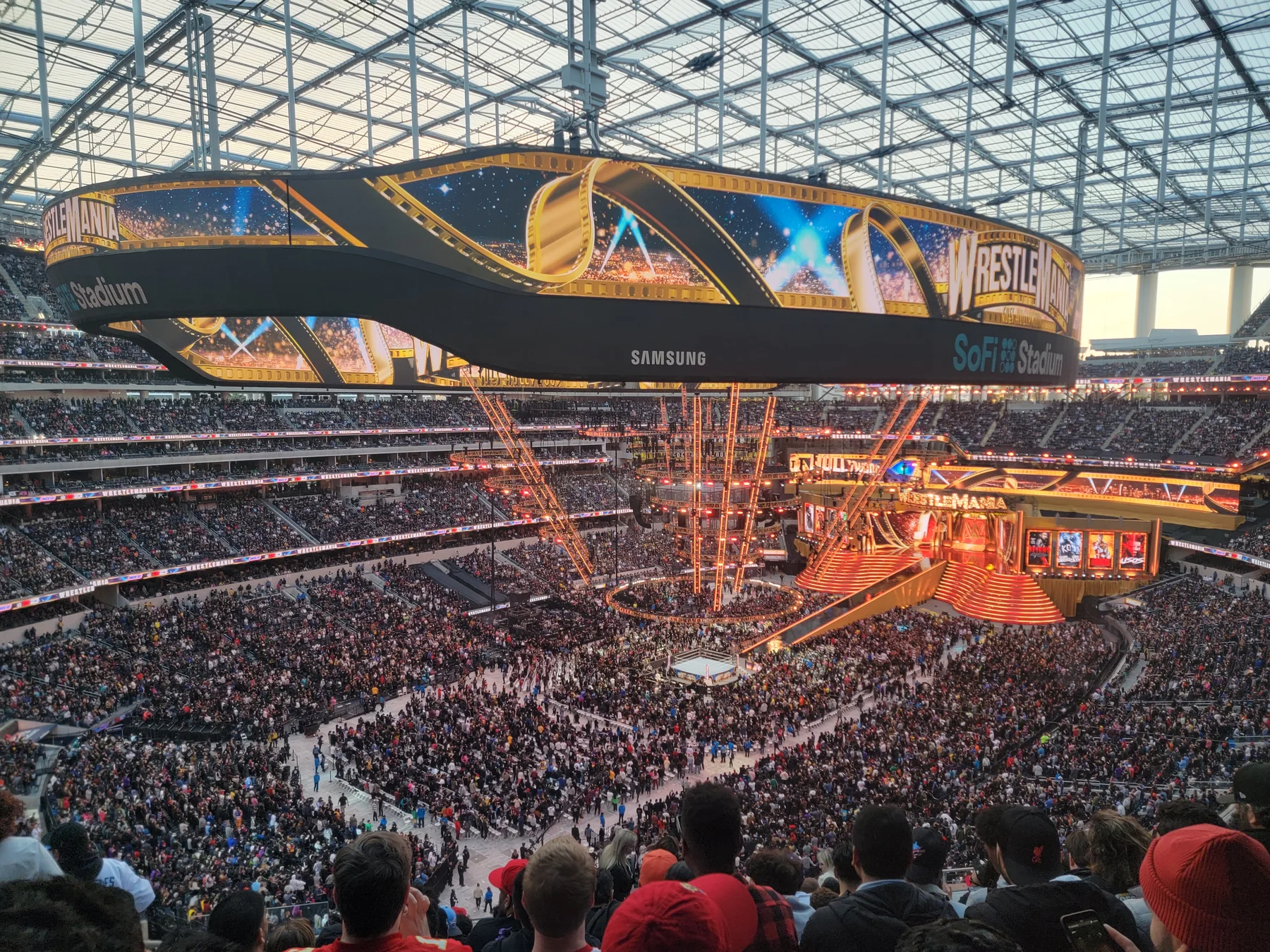
WrestleMania 42 supplied a clean example of exclusivity. WWE advertised artwork and collaborations available only at its Las Vegas Superstore. Those products competed inside a concentrated five-day fan trip, not under the same conditions as an evergreen shirt ordered from home in February. A reported stadium leader from that weekend answers “what sold here,” not “who led WWE worldwide all year.”
Inventory follows creative direction, too. A former WWE merchandising executive explained that a storyline change could force the team to use inventory controls rather than sit on obsolete merchandise. The reverse also applies: when a catchphrase catches fire, limited stock may suppress recorded sales because fans cannot buy a missing size. Demand and completed transactions are related, but they are not interchangeable.
The best fan interpretation is to watch the duration. One-day movement tells you a moment landed. Repeated presence across months, show types and markets says more about a durable star brand. For storyline context, check the latest WWE results; for release timing, compare the date of the shirt with the segment or return that made it relevant.
Current top sellers are not the same as all-time icons
“Who sells the most now?” and “Who is the greatest merchandise seller ever?” measure different things. A current list rewards velocity inside a defined window. An all-time argument can mean the largest peak, the most units from one design, the widest portfolio over a long run or the strongest sales decades after the wrestler stopped working a full schedule. Unless those definitions match, two rankings can disagree without either observing the same race.
Austin 3:16 has the clearest official historical language. In 2012, WWE called the original black shirt its most popular garment of all time. Steve Austin separately told WWE he did not know the unit count, although he understood it to have been the company’s No. 1 selling T-shirt. That combination supports the shirt’s iconic status while warning us not to repeat viral claims of a precise eight-figure unit total as audited fact.
| All-time lens | WWE example | Question it answers |
|---|---|---|
| Single-design cultural reach | Austin 3:16; classic nWo logo | Which shirt became recognizable beyond one storyline? |
| Long portfolio | John Cena’s regularly refreshed colors and slogans | Who sold many designs across a sustained main-event run? |
| Legacy tail | Austin and nWo products still offered today | Whose identity keeps producing demand after its original era? |
| Current momentum | A newly launched catchphrase or return shirt | What are fans choosing in this short window? |
John Cena illustrates the portfolio case. WWE’s own retrospective traces frequent shirt changes from his 2003 “Word Life” design through multiple Cenation color eras. Comparing that full catalog with one Austin shirt requires lifetime unit and revenue data WWE has not made public. It is fair to call both extraordinary merchandise brands; it is not fair to invent a dollar gap between them.
The nWo adds another wrinkle because its defining shirt began as WCW merchandise. WWE says it broke WCW sales records and rivaled Austin 3:16 in ubiquity, while today’s WWE Shop continues to license the design. A “WWE Shop all-time” total, a “WWE company history” total and a wider “pro wrestling” total could therefore include different years and owners.
For 2026 discussion, use two scoreboards: one for documented current signals and one for historically durable designs. A Cody Rhodes, Rhea Ripley or Jey Uso surge says something important about today’s audience. It does not erase Austin, Cena or nWo; nor does nostalgia invalidate a current star’s real movement at the booth.
How fans should read WWE Shop rankings in 2026
A useful merchandise ranking should survive a quick bell-to-bell check. Find the original publisher, note the publication date, identify whether it covers WWE Shop or venue retail, and look for the metric. If the post cannot answer those basics, treat it as a conversation starter rather than a standings table.
- Open the original source. A screenshot of a screenshot removes updates and qualifiers.
- Read the date. A return-week spike and a full-year group answer different questions.
- Name the channel. Online, one arena, a Superstore and global event retail are separate samples.
- Find the metric. Units, gross sales, royalties, product order and a promotional feature are not synonyms.
- Look for omissions. Discounts, returns, stockouts, bundles, geography and legends can change the comparison.
Does “Top Sellers” mean highest revenue?
Not necessarily. WWE Shop does not publish the formula behind its public product order. “Top Sellers” may be useful evidence that listed items are moving, but fans cannot see whether placement uses units, recent velocity, gross merchandise value, a rolling window or merchandising rules. Price alone makes the distinction important: a replica title and a shirt produce very different revenue per unit.
Are arena and online sales the same?
No. Fanatics can connect digital and physical inventory, yet venue retail remains constrained by booth space, local stock and the audience in the building. WWE also promotes localized and event-exclusive collections. An arena report can reveal which wrestler connected with that crowd; an online list samples people shopping from many places, often under different promotions. Combining them requires internal data the public does not have.
How can I tell whether a ranking is trustworthy?
Trust grows with specificity. WWE’s Payback 2023 announcement is a good model: it named the event, said merchandise sales rose 182%, and identified the comparison as the previous Payback record from 2017. A wrestler ranking should be equally clear about who, when, where and what was counted. Named reporting can still be useful, but it should be labeled “reported,” not quietly rewritten as official.
Finally, do not use merchandise as a substitute for every measure of being over. Shirts reveal a fan’s willingness to buy a wearable identity; television viewership, ticket demand and crowd response capture other relationships. For the current card, use the confirmed WWE match cards. For merchandise, enjoy the designs and keep the evidence label attached.
Bottom line: use current Shop order as a shopping clue, dated official or reported groups as evidence of momentum, and WWE’s own historical language for legacy claims. Before sharing a top ten, attach its date, channel and metric. That turns a viral list into a useful WWE discussion—and keeps an unpublished number from becoming fake fact.
Join the discussion
Comments